
You lift the hood and spot crusty white powder around the battery posts. What does a leaking car battery look like when you’re staring right at it? Usually it’s a wet, stained, or swollen case, and none of those are ignore-it problems.
The good news is that telling a real leak from harmless gunk takes about a minute.
A healthy 12-volt lead-acid battery holds roughly 12.6 volts at rest, with electrolyte near 1.265 specific gravity. When seals or seams fail, that sulfuric acid mix escapes and starts eating cables, trays, and paint. In our research across manufacturer service documentation, three failure points show up again and again.
Let’s start with how batteries actually leak.
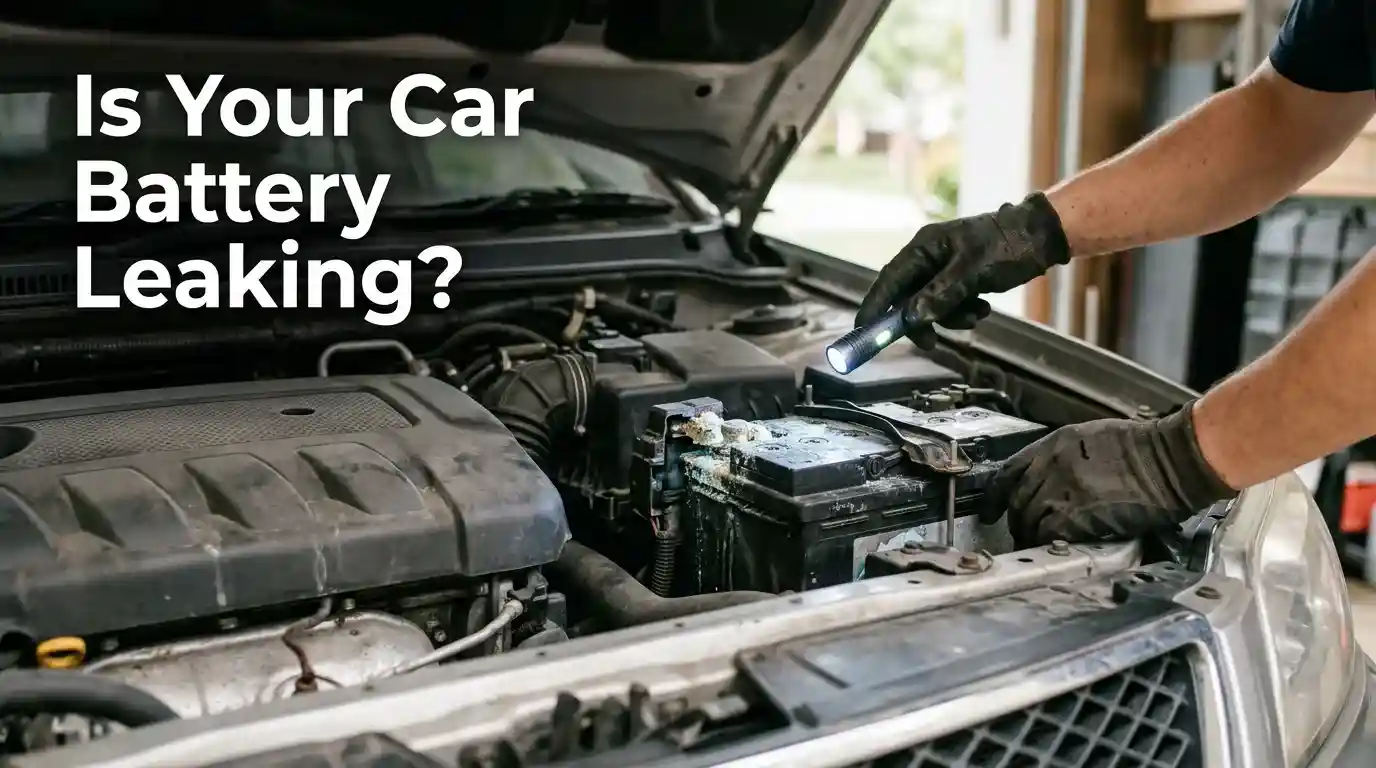
What Does a Leaking Car Battery Look Like
A leaking car battery looks like a wet, stained, or swollen case. Typical signs are an oily film on top and crystals at the vents. Rust-colored stains often appear on the tray below.
A bulging case signals a failing AGM battery. Blue-green crust on the terminals is corrosion, not a leak.
| What you see | What it usually means |
|---|---|
| Wet film on the case | Electrolyte escaping past a seal or crack |
| White or gray crystals at the vents | Acid mist drying into lead sulfate |
| Blue-green crust on the terminals | Corrosion, not a case leak |
| Rust-colored stains on the tray | Acid dripping and eating metal |
| Bulging case sides | Swollen AGM battery, replace it |
How Batteries Leak in the First Place: Vent Caps, Case Seals, and Post Seals
Every flooded lead-acid battery holds lead plates submerged in electrolyte, a mix of sulfuric acid and water. As the alternator recharges the battery, that water splits into hydrogen and oxygen gas. Pressure builds inside the case, and the gas escapes through small vent caps along the top.
A little acid mist rides along with it.
That mist is normal in small amounts. It dries on the case top as a faint white dust. Trouble starts when the battery gasses far more than it should, which usually means the charging system is overworking it.
Sustained charging voltage above about 14.7 volts points to a failing voltage regulator, and that forces acid-rich mist out on every drive. Per OSHA’s battery safety guidance, the hydrogen released during charging is explosive in concentrated amounts, so a heavily venting battery needs ventilation and distance, not a work light parked on top of it.
Acid escapes through three paths in practice:
- Vent caps: overcharging or extreme heat pushes gas and mist out faster than the caps can handle
- Case seams and cracks: vibration, impacts, or a frozen battery split the polypropylene case
- Post seals: acid wicks up the positive post and crystallizes
Cracks follow predictable causes. A loose or missing hold-down lets the battery flex on every pothole until the seams give. A deeply discharged battery can freeze, because weakened electrolyte freezes around 20°F, and expanding ice splits the case from the inside.
Once acid meets outside air, it reacts with the lead posts and copper clamps, which is the chemistry behind terminal corrosion.
Heat speeds all of this up. Underhood temperatures in hot climates dry the electrolyte faster and harden the seals, which is why leak complaints spike in summer. And even sealed maintenance-free batteries still have vents.
Sealed refers to the caps, not to a leak-proof promise.
The Five Visual Signatures of a Leaking Battery
Leaks announce themselves in five distinct ways. Here’s each one, starting at the top of the case and working down.
White or Gray Crystals Around the Vent Caps
Fuzzy white, gray, or pale teal deposits cluster around the vent caps or the base of the posts. The texture looks like crushed chalk or dry foam. It forms when vented acid mist dries and reacts with the lead underneath.
A light dusting is ordinary wear. Buildup that returns weeks after cleaning points to overcharging or a weeping seal.
A Wet or Oily Film on the Case Top and Sides
Press a white paper towel against the case top with a gloved hand. A true leak leaves a slick, slightly gritty film that road grime clings to. The spot reappears no matter how often you wipe the area around it.
Fresh electrolyte feels slippery, almost soapy, and it slowly darkens the plastic around it.
Cracks Weeping at the Posts or Seams
Look for hairline dark lines at the case seams, corners, and where the posts pass through the lid. A seeping crack leaves a damp trail, often with fresh crystals growing straight out of it. The positive post is the usual suspect, since it runs hottest during charging and its seal hardens first.
Rust-Colored Stains on the Tray and Hold-Down
Acid that drips past the case attacks bare steel, leaving orange-brown rust streaks on the tray and clamp. Nearby paint bubbles or peels. Here’s the giveaway: if the battery looks clean but the tray beneath it is rusting, a slow weep has been running for months.
A Bulged or Swollen Case: The AGM Failure Signature
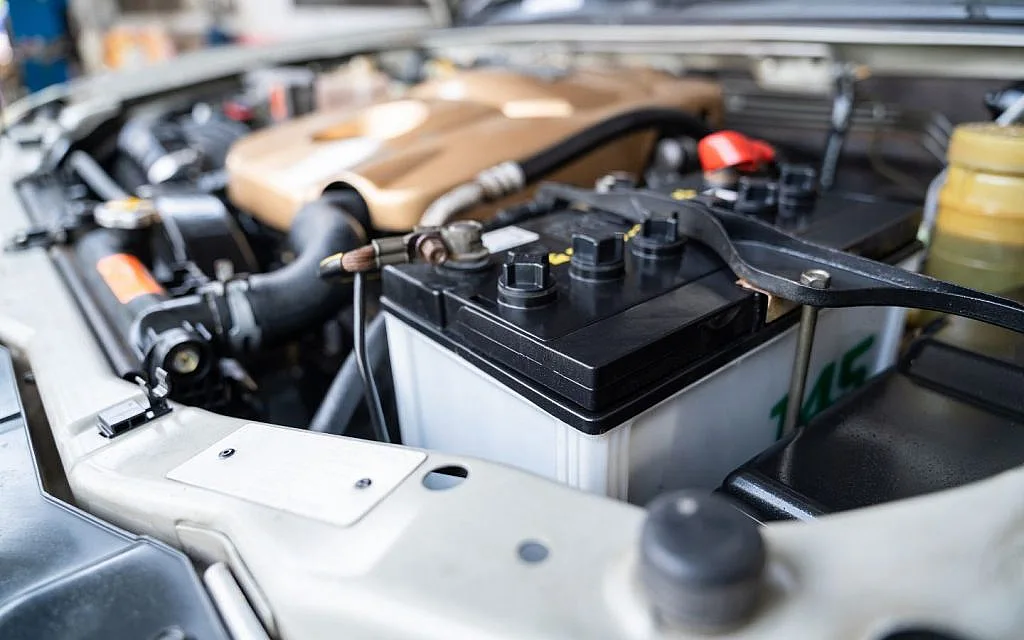
Image source: Web (Bing) / dubizzle.com
AGM batteries almost never drip, because their electrolyte is locked inside fiberglass mats. Their failure shows up as swelling. The sides bow outward, the lid domes, and the whole case looks pressurized.
Manufacturer documentation treats case distortion as an automatic replacement condition, with no repair path. A swollen AGM can still show a healthy resting voltage, which fools drivers into waiting. Don’t wait.
Terminal Corrosion vs. a Real Leak: The Mix-Up That Costs You a Good Battery
Terminal corrosion lives on top of the battery. A true leak comes from inside the case. Mixing them up means replacing good batteries and ignoring bad ones, so this distinction saves real money.
The two conditions look different up close:
| Clue | Terminal corrosion | True case leak |
|---|---|---|
| Location | Posts and clamps only | Case, seams, tray, or hold-down |
| Color | White, gray, or blue-green crust | Wet film or stains trailing from a crack |
| Smell | Usually none | Sharp and acrid, or rotten-egg |
| Case surface | Dry between the posts | Damp, grimy, or crystallized at one spot |
| Fix | Clean and protect | Replace the battery |
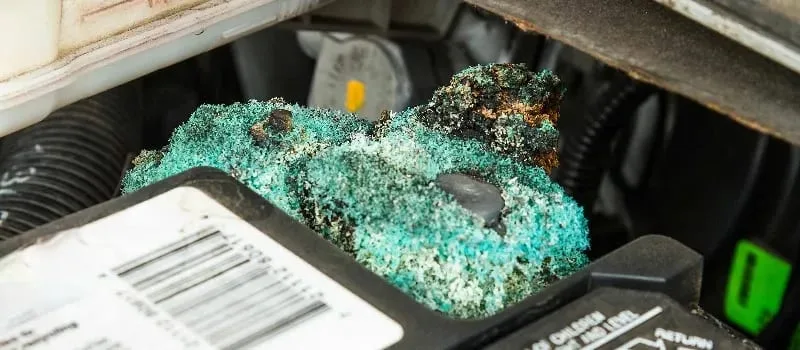
Image source: Web (Bing) / uti.edu (Web image (fair-use with source credit))
Corrosion forms when normal gassing reacts with the lead posts and the metal clamps. Every battery does it to some degree, even sealed maintenance-free units venting through their caps. It’s ugly, but it doesn’t mean the battery is dying.
A proper cleaning can buy years of service.
A case leak is a different animal. Liquid electrolyte is escaping, and every drop is eating cable insulation, the tray, and paint. If crust keeps returning within weeks of a thorough cleaning, suspect the post seal rather than the posts themselves.
That weeping seal means acid is escaping from inside, and the battery’s days are numbered.
A quick multimeter test settles the health question. If the case is dry and the terminals are merely crusted, a battery reading 12.6 volts at rest is probably fine. If the case is wet, cracked, or swollen, voltage doesn’t matter.
Replace it.
What Else Gets Mistaken for a Battery Leak Under the Hood
Engine bays share fluids, and the battery sits low where everything drains. Plenty of drivers condemn a healthy battery over someone else’s leak. Check what the fluid actually is before you do.
| Fluid | Typical source | How it differs from battery acid |
|---|---|---|
| Coolant | Radiator, hoses, overflow tank | Sweet smell, green, orange, or pink |
| Engine oil | Valve cover and other gaskets | Brown or black, greasy, collects dust |
| Washer fluid | Reservoir and hoses | Blue or pink, thin, faintly soapy |
| Power steering fluid | Pump and high-pressure hoses | Reddish or amber, oily |
| AC condensate | Drain tube, usually under the car | Clear, odorless water |
Identification takes one paper towel and one glove. Never handle unknown fluid with bare skin. Lay the towel over the wet spot and note two things.
Sweet means coolant. Sharp and acrid, enough to sting your nose from a distance, means acid. Burnt and oily means engine oil.
One test settles it completely. Sprinkle baking soda on the damp area. Battery acid fizzes on contact.
Coolant, oil, and washer fluid don’t react at all.
Location helps too. Look at what sits directly above the battery in your engine bay. In many vehicles, that’s a coolant hose, a brake fluid reservoir, or a cowl drain path.
A battery that stays wet only on the side facing a suspect hose isn’t leaking. It’s catching somebody else’s drip.
Timing tells a story as well. Battery acid grows crystals and rust rings that spread slowly over weeks. Fresh coolant or oil leaves a liquid puddle with no residue.
Crystals mean battery. Clean liquid means look uphill.
The 60-Second Inspection: What to Look At, Sniff, and Test
Gloves on, hood up, flashlight ready. Work from the top of the case down to the tray in one pass. This order catches nearly every failure the battery can throw at you.
| Tool | Why it matters |
|---|---|
| Nitrile gloves and safety glasses | Acid residue burns skin and eyes |
| Flashlight | Cracks and crystals hide in shadow |
| White paper towel | Reveals fluid color and texture |
| Baking soda | Fizzes on acid, nothing else |
| Multimeter | Confirms charge state in seconds |
- Scan the case top and sides. Look for a wet film, grimy rings, or white and gray crystals near the vent caps. Check whether the sides bow outward at all.
- Inspect the tray and hold-down. Orange-brown streaks or bubbling paint under a clean-looking battery point to a slow weep that’s been running for months.
- Read the posts and clamps. White or blue-green crust belongs at the metal connections. Location matters, because it separates corrosion from leaks.
- Sniff from about a foot away. A sharp, acrid bite means acid. Rotten egg means hydrogen sulfide and a serious overcharge. No smell is good news.
- Wiggle each terminal by hand. A loose clamp invites vibration damage and worsens weeping seals. Leave the tightening until the battery checks out dry.
- Take one voltage reading. 12.6 volts at rest means full charge. Anything under 12.4 after sitting overnight needs a closer look.
A dry case, tight clamps, and 12.6 volts close the file. Anything wet, stained, or swollen moves you into the cleaning-or-replacing decision coming up. Run this check monthly during hot months and before long trips.
Heat-cycled batteries vent harder, and a one-minute look beats a $200 tow call.
Safety Rules Before You Touch a Suspect Battery
Electrolyte is roughly one-third sulfuric acid. It burns skin on contact, and eye exposure is a genuine medical emergency. Suit up before your hands go anywhere near the case.
- Wear nitrile gloves and safety glasses. Crust transfers acid to bare fingers instantly. Cheap gloves beat an ER visit.
- Kill every ignition source. Hydrogen gas vents during and after charging, and it ignites at concentrations as low as 4 percent in air. No smoking, no sparks, no grinders nearby.
- Never jump-start a wet, cracked, or swollen battery. Pushing current through a case full of hydrogen risks an explosion. Keep to safe jump-starting practices on a battery that passes inspection first.
- Air it out if the smell is strong. A heavy rotten-egg hit means hydrogen sulfide. Step back, let the bay vent, and treat the battery as a scrap candidate.
- Flush any contact for 15 minutes minimum. Running water, right away, with contaminated clothing removed. Eyes get the same flush and a trip to urgent care.
- Neutralize before you wipe. Sprinkle baking soda on any spill and let it finish fizzing. Dry-brushing crust spreads lead dust across the engine bay.
- Never carry a leaking battery in the cabin. Move it upright in the trunk on an absorbent mat, with the seats protected.
One more line in the sand. A battery that feels hot to the touch or hisses gets no charging, no driving, and no second chances. Call for a mobile replacement instead.
Mistakes That Turn a Small Leak into a Big Repair
Most of the acid damage we’ve reviewed in owner reports traces back to a handful of avoidable moves. Skip these and a minor cleanup stays minor.
- Cleaning while still connected. A wrench that bridges the positive post to any grounded metal dumps full short-circuit current. Disconnect the negative cable first, every time.
- Dry-brushing the crust. That powder is lead sulfate, not harmless dust. Neutralize with baking soda first, then wipe with a wet rag.
- Calling a cleanup a fix. Crust that regrows within weeks means a weeping post seal. Cleaning treats the symptom while acid keeps escaping.
- Trusting a swollen case because the car still starts. Swelling is internal pressure. The case that cranks today can split next week.
- Guessing at mystery fluid. Baking soda fizzes on acid and nothing else. Skip the test and you may condemn a good battery over a leaking heater hose.
- Replacing the battery without fixing the cause. A failing voltage regulator pushing past 14.7 volts is what cooked the old one. Verify charging voltage at idle stays in the 13.8 to 14.4 volt window before the new unit goes in.
- Reinstalling without the hold-down. An unsecured battery vibrates on every pothole. That’s exactly how fresh cases crack and fresh seals start weeping.
None of this is complicated. It’s mostly about slowing down for two minutes before tools touch metal.
Clean It or Replace It? Your Decision Guide, With Real Costs
Dry case with crusted clamps means clean. Wet, cracked, or swollen means replace. Everything else falls between those poles, so run the conditions in order:
- If the case is dry, voltage reads 12.6 volts, and the only issue is clamp crust, then clean it and keep it.
- If crystals return within weeks of a proper cleaning, then the post seal is weeping. Budget for a new battery.
- If you find wet film, a crack trail, or rust staining on the tray, then replace it. Escaping electrolyte never heals.
- If the case bulges anywhere, then replace it immediately. No charging, no jumping, no driving on it first.
- If the battery smells like rotten eggs or feels hot, then replace it, and test the charging system before anything new goes in.
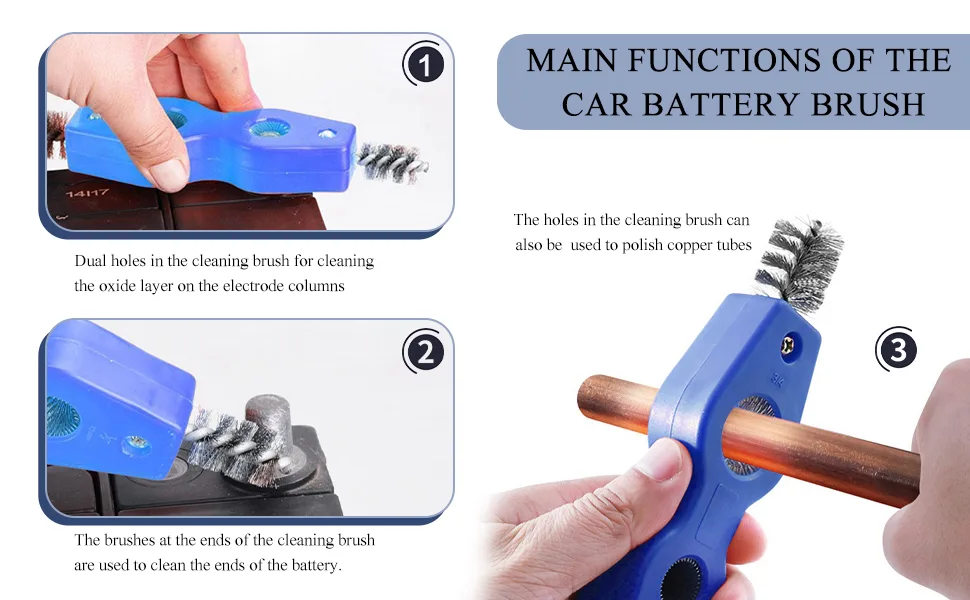
Image source: Web (Bing) / amazon.com
As of 2026, expect $100 to $300 installed for a flooded replacement and $200 to $400 or more for AGM. What pushes the price up is mostly lead content and group size, not the brand sticker. Return the old battery and the core charge comes back.
| Cost item | Typical range (2026) |
|---|---|
| Flooded battery, installed | $100-$300 |
| AGM battery, installed | $200-$400+ |
| Core charge | $10-$20, refunded on return |
| Cleaning supplies | Under $15 |
How to neutralize and clean a battery that’s only venting
- Disconnect the negative terminal first, then the positive. Tuck both cables clear of the posts.
- Mix baking soda with a splash of water into a spreadable paste.
- Scrub the crust on posts, clamps, and the case top with an old toothbrush. Let it fizz for a minute.
- Wipe everything down with a damp rag. Keep rinse water out of the engine bay and its drains.
- Dry the area completely with a clean towel.
- Protect what you just cleaned. Anti-corrosion spray on the posts, felt washers under the clamps.
- Reconnect positive first, then negative, snug both clamps, and torque the hold-down. A full set of correct installation steps covers the rest.
When replacement is the only safe answer
A wet case, any visible crack, a bulge, or vent crust that keeps coming back ends the discussion. Replace the battery. Refilling vent caps and driving on is how tray rust turns into harness damage worth far more than the part.
Take the old unit to a retailer take-back or a recycling center. The core charge gets refunded on the spot, and the EPA’s battery recycling rules exist because roughly 99 percent of lead-acid batteries get recycled. A leaky one counts too.
Local recycling and take-back options make the handoff simple.
Frequently Asked Questions
Can you drive with a leaking car battery?
Not if the case is wet, cracked, or swollen. Escaping acid keeps eating cable insulation and the tray, and vented hydrogen is a fire risk near ignition sources. Light terminal corrosion on an otherwise dry case is the exception.
Clean it, protect the posts, and drive on.
Is white powder on battery terminals a leak?
No. That white, gray, or blue-green crust is corrosion, formed when vented gas reacts with the lead posts and copper clamps. The case itself stays dry, which is the giveaway.
Clean it with baking soda. If it regrows within a few weeks, suspect a weeping post seal instead.
What does a leaking AGM battery look like?
Different from a flooded battery, and easier to miss. The electrolyte is locked in fiberglass mats, so nothing drips. Failure shows up as a bulging case, a domed lid, and sometimes a hot shell or rotten-egg smell.
Treat any swelling as an automatic replacement, whatever the voltage reads.
Why does my car battery smell like rotten eggs?
That’s hydrogen sulfide, released when a battery is severely overcharged or has a shorted cell. Replace the battery now and test the charging system right after. Sustained output above about 14.7 volts points to a failing voltage regulator.
The gas is flammable, so don’t sit on it.
What should you do if battery acid touches your skin?
Flush the area under running water for at least 15 minutes. Remove contaminated clothing as you go, and watch for lingering redness or burns over the next day. For eyes, flush continuously and get medical help immediately.
A baking soda paste can neutralize any dried residue afterward.
How long can a leaking battery keep working?
There’s no reliable answer, which is exactly the problem. A venting battery can crank normally for weeks, then die without warning. Treat any confirmed leak as the end of its service life, since most batteries only reach 3 to 5 years within realistic replacement intervals.
A leak just moves that date up.

Leave a Reply