
You know the moment. Turn the key, and a small amber icon glows on the dashboard — check engine, service engine soon, whatever your car calls it. No subtitle, no explanation, no price tag. The vehicle’s computer already knows exactly what is wrong, but it will not tell you. At least, not until you ask the right way. An OBD2 scanner is how you ask.
OBD2 (On-Board Diagnostics, second generation) is the standardized system every car built for the U.S. market since 1996 uses to monitor itself — including the 2026 models on dealer lots right now. This guide explains what an OBD2 scanner does, how to use one, which types are worth buying, and where the technology stops and a qualified mechanic takes over.
What Is an OBD2 Scanner?
An OBD2 scanner is a device that plugs into your car’s diagnostic port and reads the data your car’s computer is already generating. It translates thousands of cryptic sensor readings into plain-language information you can actually act on.
The diagnostic port itself lives under the dashboard, usually within arm’s reach of the driver’s left knee. It is a trapezoid-shaped, 16-pin connector defined by the J1962 standard from SAE International, the global engineering body that sets many automotive standards. Even on new hybrid and electric vehicles, the same connector carries the same core diagnostic data.
Scanners come in two broad shapes:
- Handheld scanners with a built-in screen and buttons.
- Smartphone adapters that plug into the port and beam data over Bluetooth or Wi-Fi to an app on your phone.
Both do the same fundamental job: they give you a window into your vehicle’s computer.
How Does an OBD2 Scanner Work?
Every modern car has a central computer — often called the engine control unit (ECU) or powertrain control module (PCM). It constantly watches sensors across the vehicle: engine speed, coolant temperature, oxygen levels in the exhaust, fuel pressure, airflow, and dozens more.
When a sensor reading falls outside an expected range, the ECU stores a diagnostic trouble code (DTC) in memory. If the fault is serious enough, it turns on the check engine light. The OBD2 scanner simply connects to that computer through the standardized port, requests the stored codes, and displays them.
The process is straightforward:
- Plug the scanner into the OBD2 port.
- Turn the ignition to the "on" position without starting the engine.
- The scanner powers up and establishes communication with the ECU.
- Select "Read Codes" to pull any stored fault codes.
- Use the data to diagnose the problem, or bring the codes to a mechanic.
Most generic scanners read the legally required emissions-related codes. Higher-end models also read manufacturer-specific codes for transmission, abs, airbags, and other systems — but that depth starts at a higher price.
What Information Can an OBD2 Scanner Provide?
A good scanner gives you far more than trouble codes. Depending on the model, expect to see:
- Diagnostic trouble codes (DTCs): The core readout, with a five-character code that pinpoints the fault.
- Pending codes: Early warnings in the computer's memory that have not yet triggered the check engine light.
- Permanent codes: Stored codes that can only be cleared by the vehicle's self-test after the repair is actually completed.
- Freeze frame data: A snapshot of engine conditions — speed, RPM, temperature, load — captured the moment the fault was logged.
- Live data: Real-time sensor readings like coolant temperature, oxygen sensor voltage, fuel trims, and ignition timing.
- Readiness monitors: The self-test status of emissions systems. Several states require all monitors to read "ready" before a smog check can pass.
- Battery and charging voltage: A quick health check for the electrical system.
Here is how typical scanner tiers compare:
| Capability | Basic Code Reader | Smartphone Adapter | Professional Scan Tool |
|---|---|---|---|
| Read & clear engine codes | ✔️ | ✔️ | ✔️ |
| Pending / permanent codes | Sometimes | ✔️ | ✔️ |
| Freeze frame data | Sometimes | ✔️ | ✔️ |
| Live sensor data | ❌ | ✔️ | ✔️ |
| ABS / airbag (SRS) codes | ❌ | Sometimes | ✔️ |
| Manufacturer-specific codes | ❌ | Sometimes | ✔️ |
| Bi-directional tests (activate parts) | ❌ | ❌ | ✔️ |
Why OBD-II Exists and Why It Still Matters
OBD-II was not created as a convenience for mechanics. It was an environmental regulation. In the early 1990s, the U.S. Environmental Protection Agency required automakers to install standardized emissions diagnostics in all 1996 model-year cars, so that faults affecting pollution control could be identified and repaired quickly.
That decision changed car repair forever. Because the EPA's On-Board Diagnostics program defined the connector, the code format, and the communication protocols, a single scanner now works on basically any car or truck sold in the U.S. in the last three decades. State emissions inspections also rely on OBD-II data; when you plug into the inspection machine, it is asking your car the exact same questions a $30 code reader does — just in a more official way.
Alongside the EPA, SAE International standardized the codes and the connector, which is why the letter you see in a scanned code means the same thing whether you drive a Ford, a Toyota, or a BMW.
How to Use an OBD2 Scanner: A Step-by-Step Guide
Using a scanner is genuinely easy. Here is the full process, including the parts most quick-start guides skip.
- Locate the diagnostic port. Under the dashboard on the driver’s side, usually near the steering column, fuse box, or hood release. If it is hidden behind a small cover, pop it off.
- Plug in the scanner. The connector fits only one way. Push it in until it clicks.
- Turn the ignition on. Press the start button without pressing the brake, or turn the key one notch. Do not start the engine for a basic diagnostic read.
- Pair the device, if it is a smartphone adapter. Open the app, let it discover the adapter, and connect. This usually takes under a minute.
- Select "Scan" or "Read Codes." The tool will query the ECU and display any stored codes.
- Write down every code, including pending ones. Take a photo of the screen or save a screenshot.
- Research the codes before touching anything. A code like P0301 has a definition, but the underlying cause still needs confirming.
- Repair, then clear the codes. After the fix is verified, use the "Clear Codes" function. The check engine light will reset, and the car will begin running its self-tests again.
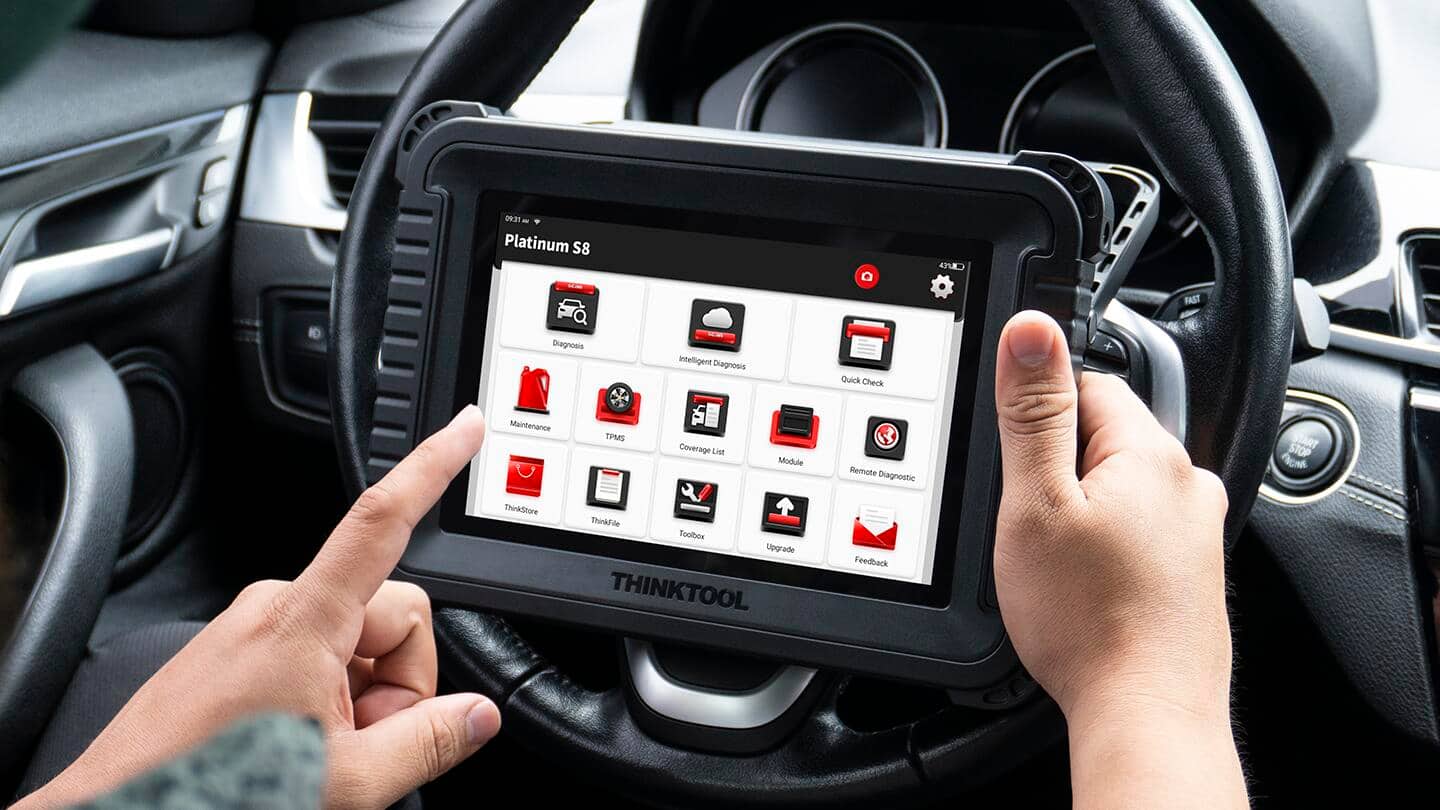
Plug in the scanned, turn the key to "on," and let the tool communicate with the engine computer.
Credit: www.homedepot.com
A common rookie mistake is clearing codes immediately just to make the light disappear. The fault may still be there, and clearing the code without a repair also resets the readiness monitors your state might require at inspection time. Use the clear function only after the underlying problem is fixed.
How to Read OBD2 Codes Like a Pro
OBD2 codes follow a strict format: one letter followed by four digits. The letter tells you which major system is involved:
- P — Powertrain (engine, transmission, fuel, emissions)
- B — Body (airbags, climate control, power seats)
- C — Chassis (brakes, suspension, steering)
- U — Network (communication between modules)
The first digit distinguishes generic, standardized codes from manufacturer-specific ones. A code starting with "P0" means any scanner in the world can read it. A "P1" code is specific to that automaker and needs a more capable tool or an online lookup.
For example, P0301 breaks down as:
- P — Powertrain
- 0 — Generic, standardized code
- 301 — Misfire detected in cylinder 1
Here are the codes you are most likely to meet:
| Code | Meaning | Common Causes |
|---|---|---|
| P0171 | Engine running too lean (too much air / too little fuel) | Vacuum leak, dirty mass airflow sensor, weak fuel pump |
| P0300 | Random misfire across multiple cylinders | Worn spark plugs, failing ignition coils, fuel delivery issues |
| P0420 | Catalyst efficiency below threshold | Failing catalytic converter, exhaust leak, bad oxygen sensor |
| P0442 | Small evaporative system leak | Loose gas cap, cracked EVAP hose |
| P0128 | Coolant temperature below thermostat range | Thermostat stuck open, low coolant level |
Read the code as a starting point, not a verdict. P0420 often sends people straight to a new catalytic converter, but in practice it is sometimes a lazy oxygen sensor or a minor exhaust leak. Verify with live data before spending serious money.
Types of OBD2 Scanners
Handheld Code Readers
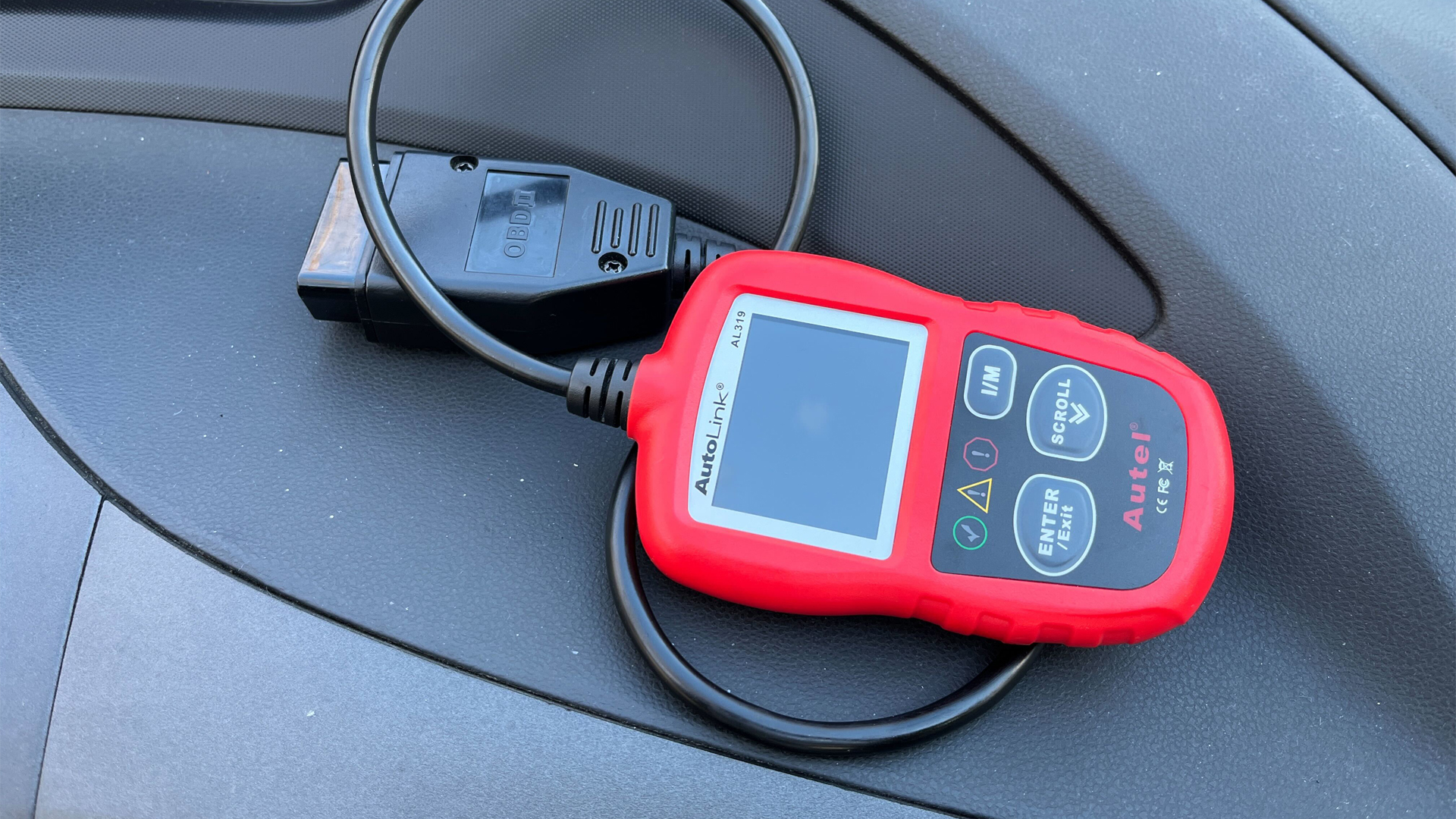
These standalone devices have a screen, a few buttons, and no phone required. Entry-level models read and clear engine codes and show basic definitions. They are reliable, work instantly, and eliminate the need to pair an app. The downside is limited live data on cheaper units.
Bluetooth and Wi-Fi Smartphone Adapters
The most popular choice for DIY owners. A tiny adapter plugs into the port, and the phone becomes the display. Apps can show live sensor graphs, emissions readiness status, and historical trip data. Because the phone handles the interface, hardware stays cheap — but app quality varies, and you may need to pay for a premium app subscription to unlock advanced features.
Professional Scan Tools
The heavy-duty option: full-system code reading (ABS, airbags, transmission), bi-directional control to activate components like fuel pumps or cooling fans, guided diagnostics, and often manufacturer-specific coverage. They also cost more and have a learning curve, which is why most drivers are better off skipping straight past this tier.

Entry-level handheld scanners show the code on a built-in screen — no phone required.
Credit: www.amazon.com
| Type | Approximate Price | Best For | Trade-Off |
|---|---|---|---|
| Handheld code reader | $20–$60 | Quick code reads and clears | Limited or no live data |
| Smartphone adapter | $15–$80 | Live graphs, data logging, app ecosystem | Depends on app quality |
| Professional scan tool | $200–$2,000+ | Full-system diagnostics and repairs | Overkill for most owners |
Advanced Scanner Features: What's Worth Paying For
Modern scanners do far more than read codes. Useful advanced features include:
- Live data graphing — Watching oxygen sensor voltage or fuel trim in real time can reveal an intermittent fault that never logged a code.
- ABS and airbag diagnostics — Reading brake and safety system codes requires a model with this coverage; basic readers cannot touch them.
- Service light reset — Some models can reset oil-life and maintenance reminders after a DIY service.
- Battery and charging system tests — A quick read of cranking voltage and alternator output.
- EVAP system tests — Triggering the car’s own leak detection test instead of guessing.
- Hybrid and EV data — Same OBD2 port, but useful readings like traction battery health often need enhanced software.
The honest trade-off: most owners will rarely use a tool’s advanced functions. If you primarily want to know why the check engine light is on, a $30 adapter is enough. Before paying extra, think about which features genuinely matter for the way you drive.
What an OBD2 Scanner Can't Do
It helps to be clear about the limits.
- A scanner does not fix cars. It identifies symptoms. The repair work is still up to you or a mechanic.
- Codes are clues, not diagnoses. P0301 says cylinder 1 is misfiring; it does not say whether the spark plug, coil, or fuel injector is at fault.
- Cheap scanners miss whole categories. Most budget models only cover engine and emissions systems, not airbags, ABS, or the transmission.
- A clean code read does not mean a healthy car. Mechanical issues — worn brakes, a failing water pump, bad bushings — often produce no codes until the part fails.
- Clearing codes can do more harm than good. If you erase a code before a mechanic can inspect the car, you erase the freeze frame data they would have used to diagnose it.
Diagnostic tools are exactly that: tools that aid diagnosis. A code from a scanner is a starting point that narrows the list of possibilities; in practice, a good mechanic still confirms the fault before replacing parts.
OBD1 vs. OBD2: A Quick Comparison
Before OBD-II became the standard, vehicles from the early 1980s through 1995 used OBD1 — a collection of proprietary systems that varied wildly between automakers. Some used flashing dashboard lights; others had diagnostic connectors under the hood. None spoke the same language.
| Feature | OBD1 | OBD2 |
|---|---|---|
| Introduced | Early 1980s–1995 (varies) | 1996 U.S. mandate |
| Standardization | Brand-specific | Universal, one connector |
| Codes | Rarely standardized | Standardized P/B/C/U format |
| Data available | Limited codes | Codes, live data, freeze frame, readiness |
| Scanner compatibility | Brand-specific tools | One universal scanner |
If you own a pre-1996 vehicle, a standard OBD2 scanner will not help you. You need the automaker-specific tooling or a specialized vintage-diagnostic adapter.
How an OBD2 Scanner Saves You Money
The most obvious savings starts the moment the check engine light turns on. Many shops charge for a diagnostic scan before they even begin a repair — work you can do yourself in about two minutes at home. You also eliminate the fear factor: instead of bracing for a worst-case quote, you know the actual code and can research what it realistically costs to fix.
An OBD2 scanner pays for itself even faster when you are shopping for a used car. A quick scan before purchase can expose hidden problems the seller never mentioned, giving you leverage to negotiate or walk away. This is also where the scanner ties into a wider DIY car-care routine — if you already spend time maintaining the vehicle, a $40 scanner completes the kit alongside a decent socket set and a solid interior vacuum for keeping the cabin tidy.
A quick scan before buying a used car can expose hidden faults that are not obvious during a test drive.
Credit: www.thedrive.com
Preventive maintenance is the quieter money-saver. Catching a failing thermostat or a worn oxygen sensor early avoids the secondary damage—overheating, poor fuel economy, failed emissions tests—that turns a $50 part into a $500 repair. And when you do a full at-home clean-out, you may be surprised by how much cleaning power you need versus the overbuilt machines marketed for the job. Many owners also discover they can get by with household vacuums instead of buying a dedicated unit, which frees up budget for better car-care tools.
Small electronic jobs around the car are also more DIY-friendly than they look. Simple tasks like resetting oil-life reminders, pairing a phone, or digging through your stereo's setup menus take minutes when you know exactly which menu you are looking for.
When You Should Still See a Mechanic
A scanner is not a substitute for a professional opinion. Make an appointment when:
- Safety-system codes appear — anything involving airbags, ABS, or electronic stability control.
- The same code returns immediately after a repair.
- The car is behaving dangerously — stalling, losing power, overheating, or pulling hard to one side.
- Live data looks abnormal but you do not know why — unusual fuel trims or oxygen sensor voltages require context and training.
There is no shame in the second step. Smart owners use the scanner to understand the problem, get an informed quote, and then decide whether the repair is within their skill level.
How to Choose the Right OBD2 Scanner for Your Car
Work through these questions before buying:
- What car do you drive? Check the connector location and whether the model needs enhanced manufacturer coverage. A typical gasoline car from the last 15 years works fine with a universal scanner.
- What do you want it to do? Reading engine codes only is a $25 job. Live data, ABS, and airbag coverage push the price up.
- Which app does it use? For smartphone adapters, the app is the real product. Look for an app with clear code definitions, live graphs, and good reviews. You will live with that interface every time you scan.
- Does it update? Some budget scanners can update software for newer models; others are frozen at the firmware level.
- Is the warranty decent? A one-year warranty is a reasonable baseline.
Common buying mistakes include purchasing a professional scan tool you will never fully use, choosing a no-name adapter whose app is abandoned, or grabbing a scanner that only reads engine codes when you actually need ABS and airbag coverage.
If you are new to this, start with a basic Bluetooth adapter and a well-reviewed app. Once you understand the data, you can upgrade to a more capable handheld or professional tool — but most drivers discover they never need to.
Frequently Asked Questions
Can an OBD2 scanner fix my car?
No. A scanner only diagnoses. It tells you which system is faulting, but you must perform the repair or take the vehicle to a mechanic.
Will using a scanner void my car's warranty?
Reading and clearing codes yourself does not void a warranty. However, if you attempt a repair and cause damage, that specific repair may not be covered. Check your warranty terms before doing anything beyond diagnosis.
Are OBD2 scanners easy for beginners?
Yes, especially Bluetooth adapters with app-based guidance. Basic code reading is essentially plug-in, scan, and read the on-screen explanation. The harder part is determining the underlying cause of a code, which comes with research and experience.
Should I clear the codes with my scanner?
Only after the underlying problem is actually fixed. Clearing codes early erases freeze frame data and resets readiness monitors, which can leave you unprepared for a state emissions inspection.
Do OBD2 scanners work on hybrids and electric vehicles?
Most modern hybrids and EVs still have an OBD2 port and respond to generic scanners. Their most useful data — like individual battery module health — usually requires automaker-specific software.
Where can I find reliable information about OBD2 codes?
Start with the scanner’s own built-in definitions and the manufacturer’s documentation. For context, consult the EPA’s emissions diagnostics resources and reputable automotive repair sites. Be skeptical of forum answers that claim one exact fix for every code; symptom-plus-data confirmation is always required.
Final Thoughts
An OBD2 scanner replaces guesswork with information. For the price of a tank of gas, it tells you why that dashboard light is on, whether the car is ready for an emissions inspection, and when a used vehicle is hiding something under the hood.
Start simpler than you think you need. A basic Bluetooth adapter and a trusted app are enough for most drivers; buy up only if you genuinely need ABS, airbag, or bi-directional coverage. Use the codes as clues, verify before you replace parts, and bring the data with you when a repair is beyond your comfort zone. That small step — understanding what your car is telling you — is the difference between a passive owner and a confident one.
Want more guidance on keeping your vehicle in shape? Browse our step-by-step car guides for practical maintenance, safety, and cleaning advice you can put to use this weekend.

Leave a Reply