
Every parent knows the dilemma: you need groceries, your baby is safely asleep in the car seat, and you’re standing at the store entrance wondering how to keep them secure while you shop. The honest truth is that shopping carts are not designed to hold car seats, and using them incorrectly can put your child at risk.
In this guide, I’ll walk you through the practical options that actually work — from using the cart’s built-in seat to knowing exactly when to leave the car seat behind. You’ll also learn the common mistakes that lead to cart tip-overs and what safety experts say you should never do.
Quick Answer: Where Should the Car Seat Go?
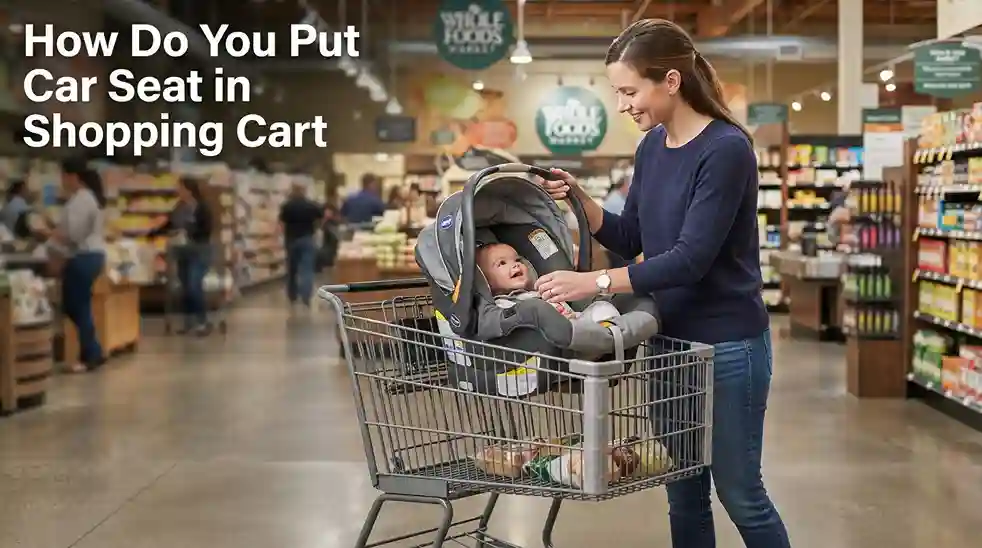
The short answer: do not place a full car seat on top of a shopping cart. The cart’s upper seat area is not engineered to support the weight and shape of a car seat, and even a small bump can cause the whole unit to tip.
The safer options, in order of preference:
| Option | Safety Level | Best For |
|---|---|---|
| Put baby directly in the cart’s built-in seat | Safest | Babies who can sit upright unassisted |
| Place the infant carrier in the main basket | Moderately safe (with strict checks) | Newborns and infants who can’t sit up yet |
| Wear your baby in a carrier | Safest alternative | Any age, especially fussy babies |
| Use a shopping cart designed for car seats | Safest when available | Stores that offer them |
| Skip the cart entirely | Safest | Quick trips or when stores are crowded |
Before we get into the details, it helps to understand why shopping carts and car seats don’t mix. Carts are built for groceries, not humans. Their narrow wheelbase and high centre of gravity make them easy to tip when weight is added above the basket line. The National Safety Council reports that shopping cart-related injuries send thousands of children to emergency rooms every year — and car seats placed on top of carts are a leading cause.
Why the Cart’s Top Seat Is Not a Car Seat Holder
Many parents assume that because the cart has a molded seat area, it must be a safe spot for an infant car seat. It isn’t.
The child seat area of a standard shopping cart is designed for a toddler who can sit up on their own. The plastic flaps are meant to contain a small child, not to support a car seat — which can weigh 10 pounds or more even without a baby inside.
Here’s what happens when you place a car seat there:
- The car seat’s curved base doesn’t sit flush against the plastic, leaving it unstable.
- The weight shifts the cart’s centre of gravity upward, increasing tip risk.
- The car seat can slide off when you turn or stop suddenly.
- The cart’s harness straps are not designed to clip into a car seat base.
A simple test: place the car seat on the cart seat and give the cart a gentle push. If the car seat wobbles at all, it’s too unstable — and that’s with an empty seat. Add a 15-pound baby, and the risk multiplies.
Option 1: Use the Cart’s Child Seat (for Older Babies)
If your baby can sit upright without support — usually around 6 months or older — the cart’s built-in seat is the safest option.
How to Position Your Baby Correctly
- Check the harness first. Make sure the cart’s straps are present, not frayed, and buckle securely.
- Place your baby facing you. This keeps them in view and reduces the chance of them trying to climb out.
- Use the leg holes. The plastic seat has openings for each leg. Sit your baby so their legs dangle through — this anchors them in place.
- Buckle the harness snugly. The strap should be tight enough that you can’t pinch excess fabric at the shoulders.
- Keep heavy items in the main basket, not the child seat. The seat area is not a second storage compartment once your baby is in it.
If your baby is younger than 6 months or can’t sit up yet, this option isn’t safe. Your baby’s neck and spine aren’t strong enough to handle the position, and the harness won’t keep them properly supported.
Option 2: Place the Infant Carrier in the Main Basket
For newborns and younger infants, the most common workaround is placing the infant carrier — not the full car seat — into the main shopping cart basket. This can work, but only under specific conditions.
Step-by-Step: How to Do This Safely
- Remove the carrier from its base. The full car seat with its base attached is too bulky and unstable. Use only the carrier portion.
- Test the fit. Place the carrier in the basket so its base sits flat against the bottom, not leaning on the sides at a tilt.
- Check for movement. Push the carrier gently in all directions. If it rocks, shifts, or slides, it’s not secure enough — find a different cart or a different approach.
- Position the handle correctly. The carrier’s handle should be down and locked in place so it doesn’t catch on anything.
- Keep the carrier away from the cart’s edges. Make sure the carrier isn’t hanging over the side or touching the front bar where it could catch on shelving as you turn.

Image source: Pexels / Sóc Năng Động (Pexels License)
When This Works vs. When It Doesn’t
| It Works When… | It Fails When… |
|---|---|
| The carrier sits flush on the basket floor | The carrier tilts or rocks because the basket is too narrow |
| The carrier stays put when you push the cart | The carrier slides side-to-side on turns |
| The basket is deep enough to hold the carrier’s weight | The basket’s shape forces the carrier to lean at an angle |
| The carrier harness is properly buckled | You’ve loaded heavy groceries around the carrier, shifting weight |
The trade-off is obvious: the carrier takes up most of the basket. You’ll have very little room for groceries, which means smaller trips or a second person to carry items.
Option 3: Babywearing — The Hands-Free Solution
If you want to skip the cart dilemma entirely, wearing your baby in a soft carrier or wrap is often the best solution — especially for newborns.
Why it’s safer: Your baby stays close to your body, at your centre of gravity, and you have complete control. There’s no cart to tip, no car seat to slide, and your hands are free to shop.
How to make it work:
- Use a structured carrier (like an Ergobaby or BabyBjörn) or a stretchy wrap for newborns.
- Keep the car seat in the car — you don’t need it in the store.
- Place groceries in the cart’s main basket as normal.
- For older babies, a hip seat carrier can distribute weight more comfortably.
If you’re new to babywearing, practice at home first. Make sure your baby’s airway is clear — their chin should be off their chest, and their face should be visible.
Option 4: Shopping Carts Designed for Car Seats
Some stores — particularly larger chains and warehouse clubs — now offer carts with a shelf or platform specifically designed to hold a car seat or infant carrier.
These carts usually have a plastic or metal shelf at the front or side, positioned low to the ground, where the carrier clicks or nestles in securely.
How to use them:
- Look for carts with a dedicated slot that visually matches a car seat’s shape.
- Place the carrier in the designated area and check that it doesn’t rock.
- Keep the carrier’s carrying handle locked.
- Never place a car seat base on these shelves — they’re designed for carriers, not bases.
If your local store doesn’t have these carts, ask the manager if they can order one. Stores often respond to customer requests, and these carts are becoming more common as car seat-related accidents get more attention.
Option 5: The “Leave It in the Car” Strategy
Here’s a question worth asking: do you actually need the car seat in the store?
If your baby is awake and alert, or if the store is small, leaving the car seat in the car and using a cart’s built-in seat or a baby carrier is often simpler and safer.
This approach works best when:
- You’re making a quick trip (under 20 minutes).
- Your baby is content to be held or carried.
- The store is quiet and you can move quickly.
- You have another adult to help carry items.
It also protects your car seat from being jostled, dropped, or exposed to the germs on shopping cart handles — a point worth noting if you’re particular about keeping your car seat covers clean.
Common Mistakes That Put Babies at Risk
Even well-intentioned parents make errors. Here are the ones safety advocates see most often — and why they’re dangerous.
Mistake 1: Hooking the Car Seat onto the Cart’s Top Edge
This is the most dangerous practice. Hooking a car seat handle over the cart’s top bar makes the cart top-heavy and extremely prone to tipping. A child’s weight hanging above the cart’s wheelbase is a recipe for a fall.
Why it’s risky: The cart’s centre of gravity shifts dramatically upward. Even a light bump against a shelf can send the entire cart — car seat included — toppling forward.
Mistake 2: Placing the Full Car Seat (With Base) in the Basket
Some parents try to put the entire car seat assembly, base and all, into the main basket. This usually doesn’t fit and leaves the seat at an angle, which compromises the harness and puts pressure on your baby’s neck.
Mistake 3: Assuming the Cart Seat Is Set Up Correctly
Shopping carts get heavy use. The harness straps are often broken, the plastic seat can be cracked, and the cart itself can be unstable. Always inspect the cart before using it — look for bent wheels, loose screws, or a wobbly frame.
Mistake 4: Leaving the Baby Unattended
Never — not even “just for one second” — leave your baby alone in a shopping cart. The risk of tip-over or your baby standing up and falling out is simply too high.
How to Test if Your Setup Is Stable
Before you even head into the aisle, do the three-point stability check:
- The Shake Test — Grip the cart handle and shake it side to side. If the carrier or car seat moves more than an inch, it’s not secure.
- The Tilt Test — Press down on the front edge of the carrier. If the cart lifts or the carrier shifts, the setup is unstable.
- The Turn Test — Push the cart in a tight circle. Listen for scraping, rattling, or sliding noises. Anything moving is a hazard.
If the setup fails any of these checks, don’t use it.
When to Rethink Your Entire Approach
Sometimes, no option works. The cart is damaged, your baby is fussy, the carrier doesn’t fit, or the store is too crowded.
Signs it’s time to change plans:
- The infant carrier slides no matter how you position it.
- Your baby is crying and arching their back — they’ll fight being contained.
- You’re shopping during peak hours and the aisles are packed.
- You’re sleep-deprived and feeling frazzled — honest self-reflection matters here.
When this happens, the safest move is to head to the car, place your baby properly in their correctly installed car seat, and either:
- Place a store pickup order from your phone.
- Ask a partner or friend to watch the baby while you shop.
- Come back at a quieter time.
There’s no shame in any of these — a safe shopping trip is more important than a completed list.
What the Safety Organizations Say
The Consumer Product Safety Commission (CPSC) has documented hundreds of shopping cart injuries to children each year, and the agency has explicit guidance: never place an infant car seat on top of a shopping cart. The cart isn’t designed for it, and the results can be catastrophic.
The American Academy of Pediatrics offers similar guidance, recommending that parents use a cart’s built-in seat only for children who can sit independently, and otherwise use a stroller or baby carrier.
Shopping cart manufacturers have responded by introducing carts with lower, dedicated car seat platforms — but these aren’t universal, and the default cart remains a risk.
Keeping Your Car Seat in Good Condition
Shopping trips take a toll on car seats even when they stay in the car. Sun exposure, temperature swings, and moisture from wet carts can degrade the plastic shell and fabric over time.
If you regularly shop with your car seat, it’s worth checking the harness and padding for wear. A car seat that’s been banged around in carts or exposed to the elements needs extra scrutiny. If you’re unsure whether your seat is still in good shape, reviewing the difference between convertible seats and infant carriers can help you decide whether your current setup is still the right one for this stage.
Frequently Asked Questions
Is it safe to put an infant car seat on top of a shopping cart?
No. The Consumer Product Safety Commission advises against placing car seats on top of shopping carts. Carts are not tested for this use, and the added weight above the wheelbase significantly increases the risk of tipping. Use the cart’s built-in seat for babies who can sit upright, or place an infant carrier in the main basket if it fits securely.
Where do you put a car seat in a shopping cart?
The safest spot is the main basket — but only the infant carrier portion, not the full car seat with the base. The carrier must sit flat on the basket floor with no rocking or sliding. For older babies who can sit up, use the cart’s built-in child seat with the harness buckled snugly.
Can I place the car seat in the shopping cart basket?
You can place the infant carrier in the basket, provided it sits flush and doesn’t shift when you push the cart. The full car seat with its base attached is too large and unstable for the basket. Test the fit before loading any groceries, and never stack anything on top of the carrier.
How do you attach a car seat to a shopping cart?
You don’t. No standard shopping cart has a mounting system for car seats. Some newer carts include a dedicated shelf or platform designed to hold an infant carrier — these are safe to use. But there is no universal way to “attach” a car seat to a standard cart, and any DIY attempt is unsafe.
What age can a baby sit in the shopping cart seat?
Most experts recommend waiting until your baby is at least 6 months old and can sit upright without support. The cart’s harness is minimal, so your baby needs strong neck and trunk control to be safe in the position. For younger infants, use an infant carrier in the basket, a baby carrier, or a stroller.
Is it safer to wear your baby instead of using a cart?
Yes. Babywearing eliminates the risk of cart tip-overs entirely and keeps your baby close to your body’s centre of gravity. It also frees up the entire shopping cart basket for groceries. Just make sure the carrier is properly adjusted and your baby’s airway is unobstructed.
Conclusion
The question “how do you put car seat in shopping cart” has a clear answer: most of the time, you shouldn’t. Shopping carts are built for groceries, not for car seats, and the risk of tipping is simply too high.
Instead, prioritize the safest option for your baby’s age and development:
- Under 6 months: Infant carrier in the main basket (if it fits snugly), babywearing, or leaving the seat in the car.
- 6 months and up: The cart’s built-in child seat with harness properly buckled.
- Any age: Babywearing is always a safe alternative.
Before your next shop, run through the stability checks, inspect your cart, and have a backup plan if the fit isn’t right. A little preparation goes a long way toward a safe, stress-free trip. The next time you’re preparing for a family outing, take a few minutes to double-check that your child’s age matches the right seat type — and keep those grocery trips simple, safe, and focused on what matters most.

Leave a Reply