
Ever had that moment where you reach for your seat belt and your hand lands right in a warm, sticky wad of gum? It's one of those small frustrations that feels surprisingly big. You're late, the gum is smeared across the fabric, and you know that scraping it with your keys will only make it worse.
Learning how to get chewing gum off a car seat doesn't require expensive chemicals or a trip to the detailer. It just requires picking the right method for your specific situation.
Chewing gum is made of a synthetic rubber base, plasticizers, and sweeteners. That combination is why it bonds stubbornly to porous fabric fibers once it melts. Gum softens at body temperature, around 37°C (98.6°F), which is why a warm parked car turns a fresh piece into a sticky disaster within minutes.
But the same physics that make gum melt also give us the key to removing it. Freeze it, and the gum becomes brittle and loses its grip. As of 2026, the best-rated methods all revolve around this temperature principle.
Let's walk through the exact steps to get your seat clean without damaging the upholstery.
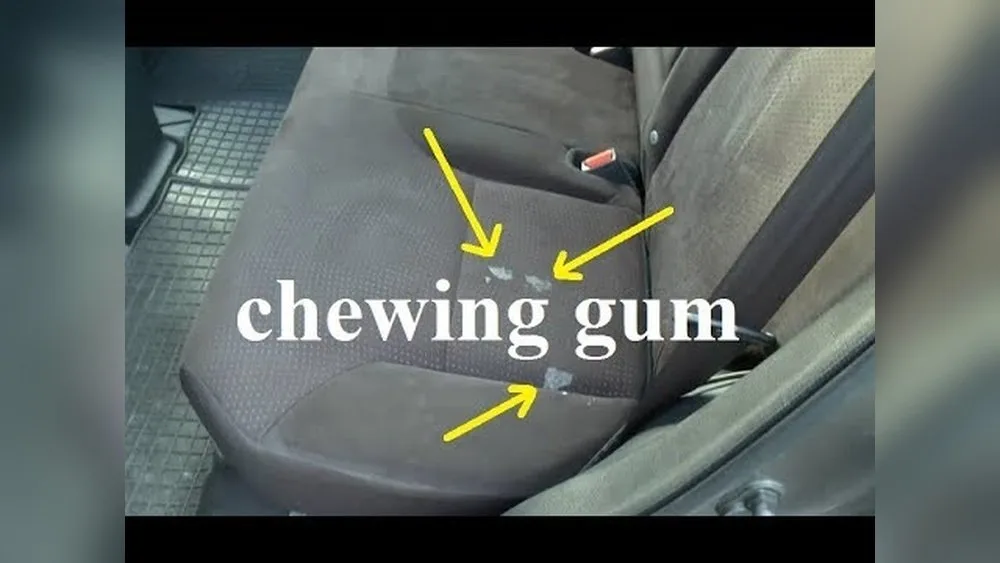
Image source: Bing (Web (fair-use with source credit))
The Sticky Situation: Why Gum on Upholstery Feels Like a Disaster
Gum isn't like coffee or mud. It doesn't just sit on the surface of your seat. When gum warms up, it liquefies slightly and seeps down between the individual fibers of your upholstery.
Once it cools again, it hardens in place, creating a mechanical bond that's tough to break with simple wiping. That's why rubbing at it with a paper towel usually ends with gum smeared over a larger area than where you started.
The pressure you apply matters just as much as the temperature. Pressing down on warm gum pushes it deeper into the foam padding underneath the fabric. That's the worst-case scenario, because now you're dealing with gum embedded in the seat structure, not just on the surface.
Loose weave fabrics like polyester blends are especially vulnerable. The loops in the fabric catch the gum like tiny hooks, trapping it securely.
The good news is that every type of gum, including sugar-free varieties, loses its adhesive strength when exposed to extreme cold. This is the principle behind every effective removal method. Understanding that one fact is what separates a clean seat from a $150 detailing bill.
Think of it like this: your job isn't to wipe the gum away. Your job is to change the gum's physical state so it releases its grip on the fabric.
Quick Answer
Freeze the gum with ice for 5 to 10 minutes. Scrape it off with a plastic card. For leather seats, use heat instead.
Apply a hair dryer for 30 seconds. Wipe the softened gum away. Clean any residue with dish soap and water.
Dry the area completely.
Step 1: Figure Out What Your Seat Is Made Of
Before you grab anything from your kitchen or garage, you need to identify your seat material. This single decision determines whether you use heat or cold, and whether you can safely apply chemical removers. Get this wrong, and you can permanently stain or crack your upholstery.
Cloth and Fabric Seats
Fabric seats are the most common in economy and mid-range vehicles. They're made from woven polyester, nylon, or a blend of both. The key trait here is porosity.
Fabric has gaps between the fibers, which means gum can sink in deeply. However, fabric is also forgiving. It tolerates cold, it tolerates moderate heat, and it tolerates most household solvents without visible damage.
For cloth seats, you'll generally want the cold method. Freezing the gum makes it shrink and pull away from the fibers, which allows you to scrape it off in one piece. Avoid soaking cloth seats with oil-based products like peanut butter, as the oil can leave a dark stain that's worse than the gum.
If you're unsure whether you're dealing with cloth or a synthetic blend, check your owner's manual or look at the seat's tag. The manufacturer specifies the material composition and any cleaning restrictions.
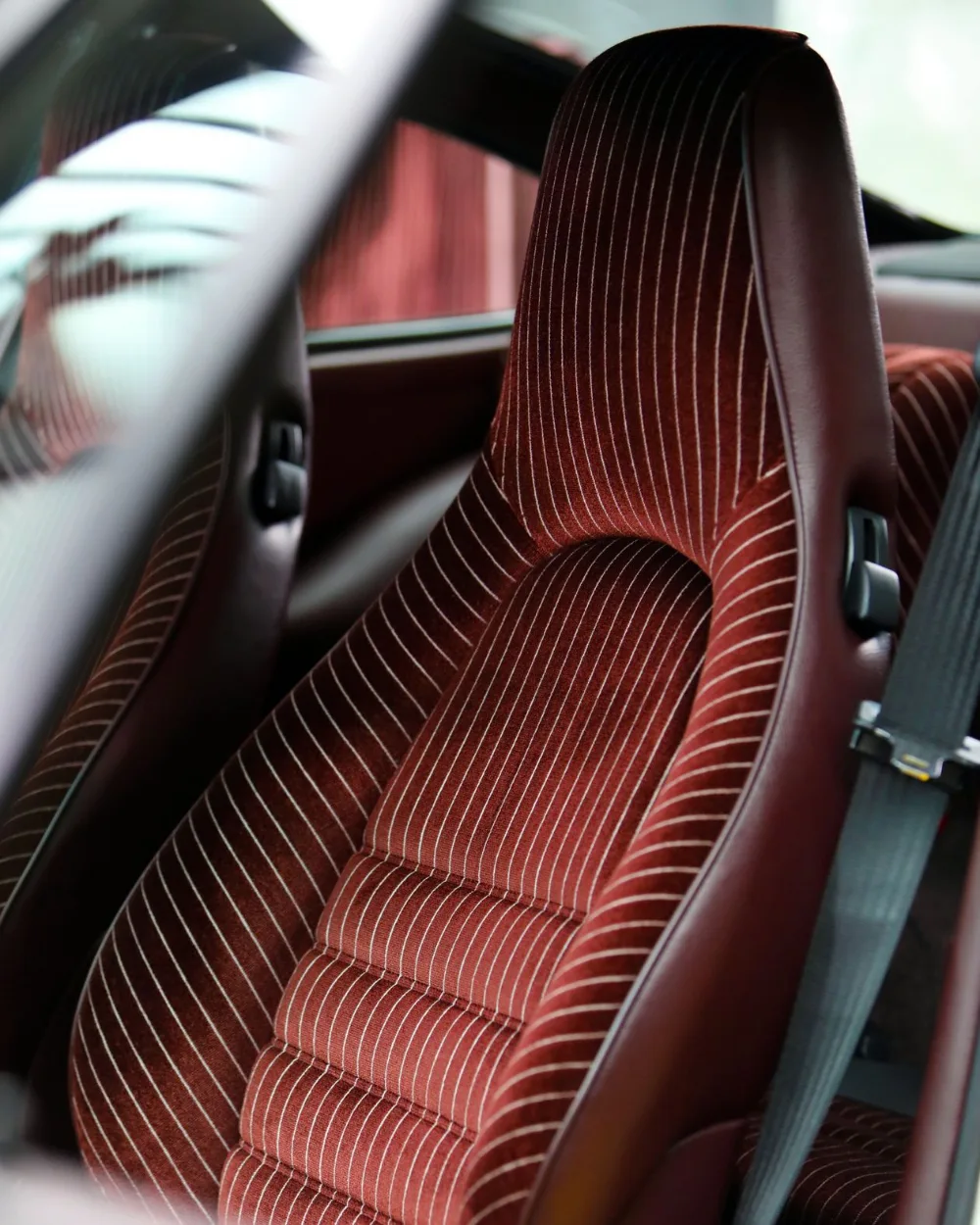
Image source: Web (Bing) / pinterest.com (Web image (fair-use with source credit))
Leather and Vinyl Seats
Leather and vinyl are non-porous. That means gum doesn't penetrate the surface; it just sits on top. But these materials are sensitive to both heat and chemicals.
Direct heat above 60°C (140°F) can cause the leather to dry out, crack, or discolor permanently. Petroleum-based solvents like WD-40 can strip the protective coating and leave a sticky residue that attracts dust.
For leather and vinyl, the approach inverts. You want to warm the gum slightly, not freeze it. A hair dryer on low heat for 30 to 60 seconds loosens the gum's grip, and you can roll it away with your fingers or a soft cloth.
Avoid any type of scraper, even plastic, because it can scratch the leather's surface finish. If you own a car with genuine leather seats, the care instructions in your manual likely recommend only pH-neutral cleaners. This is one situation where checking the manufacturer's guidance before acting matters.
Proper protective covers can also prevent future incidents, and there are specific considerations when installing them on leather.
Step 2: Check the Gum's Condition — Fresh or Hardened
The age of the gum changes your game plan. Fresh gum that's still soft is easier to remove but also messier. Hardened gum, like what you find after the car has sat in cold weather overnight, is brittle and may simply break apart when touched.
Each state requires a different approach.
If the gum is fresh, meaning it's been on the seat for less than an hour, you might not need to freeze it at all. The colder it gets, the more brittle it becomes. But fresh gum also smears easily, so you need to be gentle.
Press a plastic bag filled with ice against the gum for a full five minutes. Don't rush this step. The center of the gum needs to get cold too, not just the surface.
If the gum has been sitting for days or weeks, it may already be hard and crusty. In warm weather, gum melts into the fibers and re-hardens, creating a dense, sticky plug. In this case, heat is often the better option for cloth seats too.
A hair dryer on medium heat softens the gum, and you can blot it up with a microfiber towel. Aggressive scrubbing will push gum deeper into the loops of fabric, which is how you get a permanent dark spot. Always test your approach on an inconspicuous corner of the seat first, especially if you're using heat or chemicals.
The Cold Method: Freeze and Scrape (Best for Cloth Seats)
This is the go-to method for fabric seats, and it's also the cheapest. All you need is a plastic bag, ice cubes or a freezer pack, and a plastic scraper like an old credit card or a plastic putty knife. The science is straightforward: chewing gum becomes brittle at temperatures below -10°C (14°F).
Once it's frozen, it can't flex or adhere; it simply shatters and lifts off.
How to Do It Right
First, place several ice cubes in a zip-top plastic bag. You want the bag to conform to the shape of the seat, so don't overfill it. Press the bag against the gum and hold it there for a full 5 to 10 minutes.
Setting a timer helps, because most people stop too early. The gum needs to freeze all the way through, not just on the surface.
Once the gum feels rock-hard, use your plastic scraper to gently pry at the edges. Work your way under the gum from one side, lifting rather than dragging. The frozen gum should pop off in chunks.
If it starts to soften during the process, stop and reapply the ice for another few minutes. For gum embedded in deep seams, use the edge of a butter knife to break it into smaller pieces first. This method also works well for cleaning up crumbs and debris, so you could follow up with a good car vacuum to catch the leftover bits.

Image source: Web (Bing) / menuthai-fleet.co.uk (Web image (fair-use with source credit))
When Cold Won't Work
Cold fails when you can't get the gum cold enough. This happens if the gum has been heavily smeared into a large, thin layer across the fabric. The ice can't penetrate evenly, and you end up with a half-frozen mess.
It also fails if you're dealing with leather. Freezing leather doesn't harm it, but the gum won't contract away from the smooth surface the way it does from fabric. Instead, the gum just gets harder and harder to pick off.
In those cases, switch to the heat method or use a chemical remover. Also, avoid this method entirely if your seat has a heating element. Ice and electronics don't mix, and water damage to the seat's wiring is a real possibility.
In that scenario, heat-based removal is safer.

Leave a Reply