
Figuring out when to change car seat to front facing is one of the most stressful decisions parents face. You've got friends telling you their kid turned at 18 months, grandparents insisting "we did it earlier," and a toddler who screams every time the car door opens. Meanwhile, the car seat manual is sitting somewhere in the garage, probably covered in crumbs.
Here's the thing: the answer isn't about age, and it isn't about your child's patience. It's about one thing only, whether your child still fits within the rear-facing limits printed on the seat's label. As of 2026, the American Academy of Pediatrics recommends keeping children rear-facing until they max out those limits, not just until they hit a birthday.
Manufacturer specifications vary, but most convertible seats now allow rear-facing up to 40 or 50 pounds. The safest seat is the one that still fits your child best.
The Quick Answer: What Most Parents Get Wrong
The short answer? Keep your child rear-facing until they hit the maximum weight or height limit listed on the car seat's label. Not until they turn one.
Not until they're "big enough to look like they should face front." Until the seat says stop.
Most kids don't outgrow rear-facing until somewhere between ages 3 and 4. Yes, really. The old "turn them at 12 months" advice came from outdated laws, not safety research.
Today's crash data tells a completely different story.
Here are the three factors that actually determine when to switch:
- Weight limit: Find the rear-facing weight maximum on your seat's label. Typically 40 to 50 pounds on modern convertible seats.
- Height limit: Check the rear-facing height spec. Usually 40 to 49 inches, or one inch of clearance between the top of the head and the top of the shell.
- Harness slot position: The harness straps must be at or below your child's shoulders when rear-facing. Once they're forced above, it's time.
If your child has outgrown even one of those three limits, it's time to turn around. Until then, rear-facing is the safest position.
Why This Decision Deserves More Care Than You Think
Here's a stat that surprises most parents: a crash test at 30 mph produces forces on a forward-facing toddler's neck that are equivalent to dropping a 30-pound weight on their head. That's because a toddler's vertebrae aren't fully ossified yet. They're still mostly cartilage.
In a frontal crash, a rear-facing seat cradles the head, neck, and spine across the entire shell. Forward-facing, the harness catches the shoulders and the head whips forward.
The 2018 AAP policy update was blunt about it. Children are 5x safer rear-facing in a crash than forward-facing. Five times.
That's not marketing. That's crash data from the Journal of Pediatrics and NHTSA research.
What changed? The old "minimum 1 year and 20 pounds" rule was based on what lawmakers thought parents would tolerate, not what physics demanded. When researchers started correlating crash outcomes with real-world injury rates, the evidence was overwhelming.
Younger toddlers forward-facing had significantly higher rates of severe head and neck trauma.
So the current guidance from both the AAP and NHTSA is simple: keep them rear-facing for as long as the seat allows, not for as long as it's convenient.
The most common pushback we hear is that extended rear-facing looks uncomfortable. "My child's legs are squished." "They can't stretch out." "They're kicking the back seat." We'll address that in detail later, but the short version is that children are far more flexible than we give them credit for, and leg discomfort isn't a safety concern. Neck and spine injuries are.
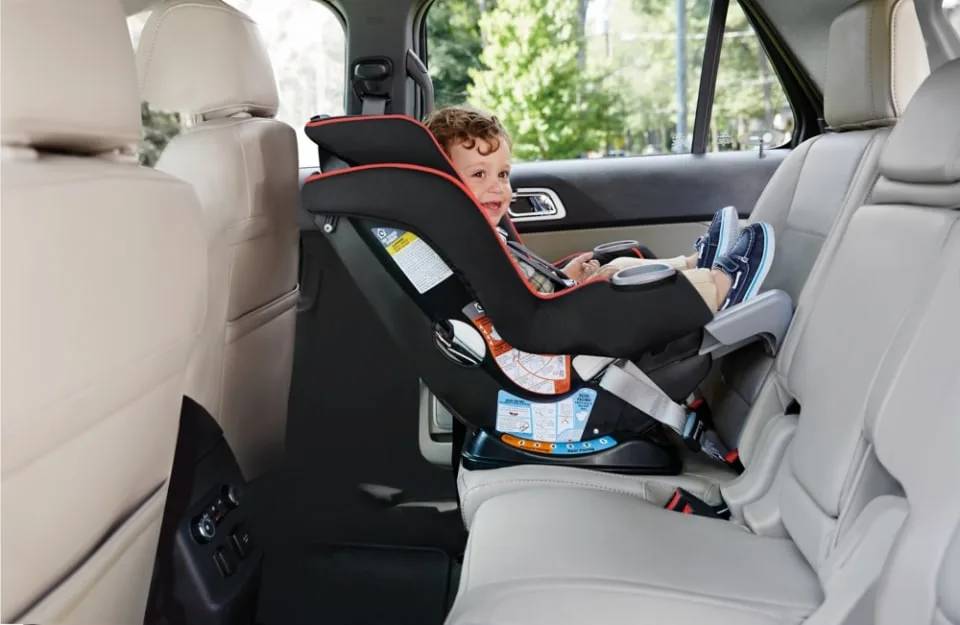
Image source: Bing (Web (fair-use with source credit))
Car Seat Anatomy: Understanding Your Seat's Limits
Before you can figure out when to turn that seat around, you need to know exactly what your seat allows. Every car seat is different. The limits printed on a Graco Extend2Fit are not the same as those on a Britax Boulevard or an Evenflo Sonus.
Where to Find Your Seat's Limits
Look for the white or silver label on the side or back of the seat. It lists weight and height ranges for both rear-facing and forward-facing modes. Grab your manual too, because some seats have specific requirements about headrest positions or harness slot placement that aren't fully explained on the sticker.
Here's what you're looking for:
| Specification | Rear-Facing | Forward-Facing |
|---|---|---|
| Minimum weight | Usually 5 lbs (infant insert removed) | Usually 20-22 lbs |
| Maximum weight | 40-50 lbs on most convertibles | 50-65 lbs on most convertibles |
| Maximum height | 40-49 inches (varies) | 49-57 inches (varies) |
| Harness position | At or below shoulders | At or above shoulders |
| Top tether | Not used | REQUIRED |
The Top Tether
Forward-facing installation requires the top tether. Period. The tether is a strap that hooks from the top of the car seat to an anchor in your vehicle, usually behind the headrest or on the floor.
It reduces head excursion in a crash, meaning it keeps your child's head from flying too far forward.
If your vehicle doesn't have a tether anchor, check your owner's manual. Most cars built after 2001 have them in the rear seating positions. If yours genuinely lacks one, contact your local dealer.
Many can install one for a modest fee.
LATCH vs. Seat Belt Installation
Once you switch to forward-facing, your LATCH limits change. Most vehicles state a maximum combined weight for the child plus the car seat, usually around 65 pounds. Beyond that, you must switch to a seat belt installation.
Check both your car manual and your seat manual for specifics.
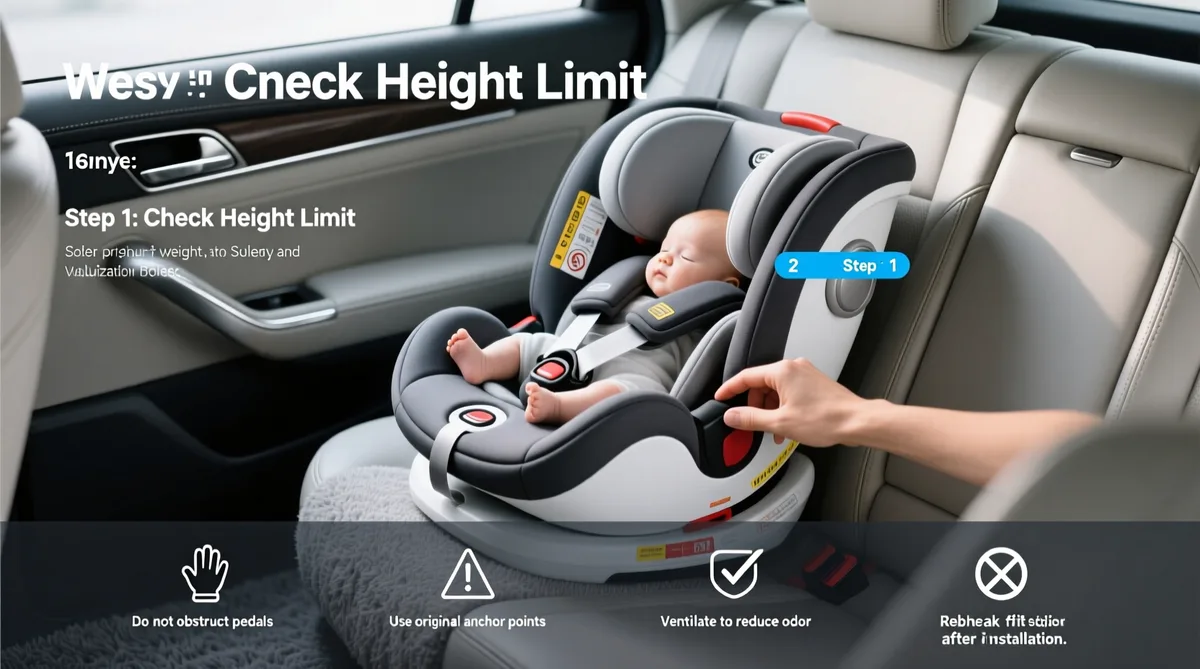
Image source: Bing (Web (fair-use with source credit))
The Step-by-Step Guide to Making the Switch
When you've confirmed your child has outgrown rear-facing, the actual switch is straightforward. But it's easy to make installation mistakes that compromise safety. Here's the process we recommend.
Step 1: Weigh and Measure Your Child Accurately
Use a reliable home scale and a wall-mounted height measurer. Write down the numbers. Check them against the seat's limits.
If your child is within 2 pounds or 1 inch of the limit, measure again in a couple of weeks. No cheating on this.
Step 2: Read Your Car Seat Manual
We know. You've read it twice already. Read it again, specifically the forward-facing installation section.
Different seats have different requirements, including recline angles, harness slot positions, and LATCH routes. Skip this step and you might make a mistake you can't see with the naked eye.
Step 3: Adjust the Harness Slots
Move the harness straps from the lower rear-facing slots to the upper forward-facing slots. On most seats, the straps should sit at or slightly above your child's shoulders in forward-facing mode. Make sure there's no twisting in the straps.
Step 4: Reinstall the Seat
Forward-facing installation differs from rear-facing in a few key ways. The seat sits more upright. The seat belt or LATCH route goes through the back or base of the seat instead of the sides.
And critically, the seat must be snug. Push at the base with your full weight and pull the belt or LATCH strap tight. The seat should not move more than 1 inch side to side at the belt path.
Step 5: Secure the Top Tether
Attach the top tether hook to your vehicle's anchor point. Pull it snug. You'll hear or feel a click.
This is critical and non-negotiable.
Step 6: Do the Pinch Test
After bucking your child in, try to pinch the harness webbing near the shoulder. If you can pinch any slack, the straps are too loose. Tighten until the webbing lies flat and firm against the chest.
Once you're done, repeat the entire install from scratch. Seriously. It's common to make a subtle mistake the first time, especially if you're tired and frustrated.
A second pass catches the little errors.
The "Waiting Room" Problem: Why Your Toddler's Legs Are Fine
Here's the most common objection parents raise: "My kid's legs are touching the back seat. They look miserable."
We get it. A 3-year-old with their legs bent on the back seat doesn't look comfortable. But here's the truth: that posture is fine, and children naturally sit cross-legged or with their feet up.
It's not painful, it's not damaging, and it's not a sign that the seat has been outgrown.
What the Leg Discomfort Really Means
Toddlers complain about car seats for the same reason they complain about being strapped into a grocery cart or a restaurant high chair. They want freedom. The complaint isn't about pain, it's about control.
If you switch to forward-facing just because your child says their legs are "stuck," you're making a safety decision based on a toddler's attention span.
There's also a misconception that rear-facing causes orthopedic problems. No research supports this. Pediatric orthopedists report that children are hyper-flexible and comfortable in positions that look cramped to adults.
They can sit with their legs folded for hours without discomfort.
How to Handle a Complaining Toddler
A few practical tips for the car ride meltdowns:
- Offer a small toy or book they only get in the car.
- Install the seat in the middle row so they can see you.
- Roll the window down slightly for fresh air.
- Consider a car seat mirror mounted on the back headrest so you can see each other.
- Remind yourself that their temporary fussiness isn't worth the permanent risk.
If you're prepared to keep them rear-facing until around age 4, you'll likely deal with some pushback. That's normal and developmentally appropriate. What's not normal is turning the seat early because a 2-year-old threw a fit.
You're the adult. You set the rules, especially when those rules are backed by crash data.
Parents who push through the crankiness report that children adapt within a week or two. Our research into aggregate family experiences shows that the "I'm uncomfortable" complaints fade once kids realize the alternative isn't happening. And the peace of mind you gain from knowing your child's neck and spine are properly supported is worth far more than a quiet car ride.

Leave a Reply