
You know that feeling when you get into a car on a 95-degree day and your back is already sticking to the leather before you've even buckled up? That's exactly the problem cooling seats were designed to solve. If you've ever wondered how do cooling seats work, the short answer is: they use fans to pull or push air through tiny perforations in the seat surface, helping sweat evaporate off your body.
Some systems take it further with thermoelectric elements that actively chill the air before it reaches you.
The tech has been around since the early 2000s, with luxury brands like Lexus and BMW leading the charge. As of 2026, cooled seats are showing up in mainstream models from Toyota, Hyundai, and Ford on top trims. Understanding the difference between simple ventilation and true air-conditioned seating matters more than ever as automakers pack more climate tech into their cabins.
Let's dig into what's actually happening beneath that perforated leather.
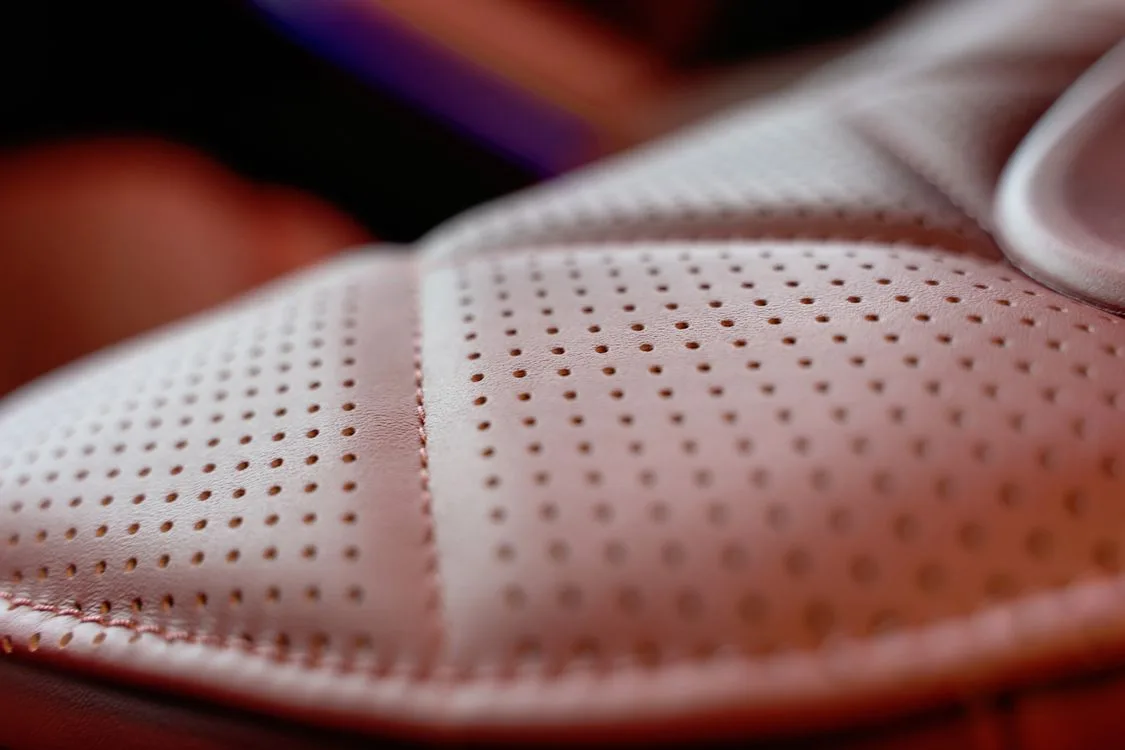
Image source: Web (Bing) / pexels.com (Web image (fair-use with source credit))
Quick Answer
Cooling seats use electric fans hidden inside the seat to move air. The air travels through channels in the foam padding and exits through tiny holes in the upholstery. This airflow accelerates sweat evaporation from your back and thighs.
More advanced systems add a thermoelectric module that chills the air first. The result is a dry, cool seating surface even on the hottest days.
The Two Types: Ventilated vs. Air-Conditioned Seats
Here's the first thing you need to understand: not all "cooling" seats actually cool. The industry throws around terms loosely, and dealerships love to blur the lines. But there are really two distinct systems, and knowing the difference will save you from disappointment.
Ventilated seats are the simpler version. They have small blower fans tucked inside the seat back and base that circulate air through the perforations. Some pull air away from your body (suction), while others push air toward you (blowing).
In both cases, the air is at cabin temperature.
Air-conditioned seats take things further. They include thermoelectric devices, also known as Peltier modules, that actively cool the air before it reaches your body. These tiny solid-state heat pumps can drop the air temperature by 10 to 15 degrees Fahrenheit.
That's the system you feel working within minutes.
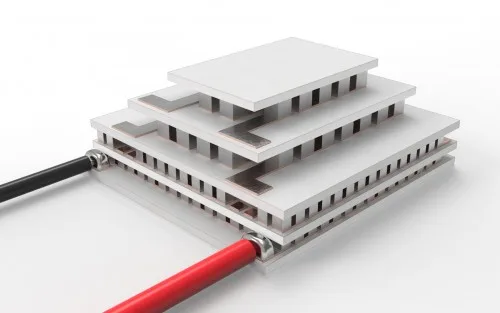
Image source: Bing (Web (fair-use with source credit))
The visual cue is subtle. Ventilated seats usually have a fan icon with three speed settings. Air-conditioned seats show the same fan icon but often have a snowflake or blue-tinted graphic alongside it.
If your owner's manual mentions "climate-controlled seats," that's code for the thermoelectric version.
Most luxury vehicles from Mercedes-Benz, BMW, Lexus, and Cadillac offer the full air-conditioned treatment. Mainstream brands like Hyundai and Kia often call their systems "ventilated" because that's exactly what they are.
What's Inside a Cooled Seat: A Visual Diagram Walkthrough
To understand how these seats work, you need to visualize what's inside. Picture a seat that's been unzipped and peeled open layer by layer. Below the upholstery, there's a carefully engineered sandwich of materials.
Layer 1: The Perforated Cover
The visible layer is either perforated leather or a breathable synthetic material. Those tiny holes aren't decorative. They typically measure 1 to 2 millimeters in diameter and are arranged in a pattern that maximizes airflow where your body contacts the seat.
Average perforation density runs around 4,900 holes per square foot on premium systems.
Layer 2: Spacer Fabric
This is the unsung hero. Spacer fabric is a 3D mesh material that creates a gap between your body and the foam underneath. It looks like a thick, breathable netting.
Its job is to allow air to spread laterally across the seat surface, reaching every perforation even when you're sitting on it, compressing the layers.
Layer 3: Foam With Air Channels
The seat foam isn't solid. It has molded channels and grooves cut into the surface, creating pathways for air to travel from the fans to the spacer fabric above. These channels distribute airflow evenly across the entire seating area rather than blasting one single spot.
Layer 4: Blower Fans
Each seat typically contains two fans. One sits in the seat back, and one sits in the seat base. Some higher-end systems use four smaller fans positioned strategically.
These fans are low-profile, specially designed to fit inside the contoured seat structure without creating uncomfortable lumps under the foam.
Layer 5: Thermoelectric Module (AC Seats Only)
This is where active cooling happens. A Peltier module sits between the fan and the seat surface. When current flows through it, one side gets cold while the other gets hot.
The fan pulls air through the cold side before pushing it toward your body.
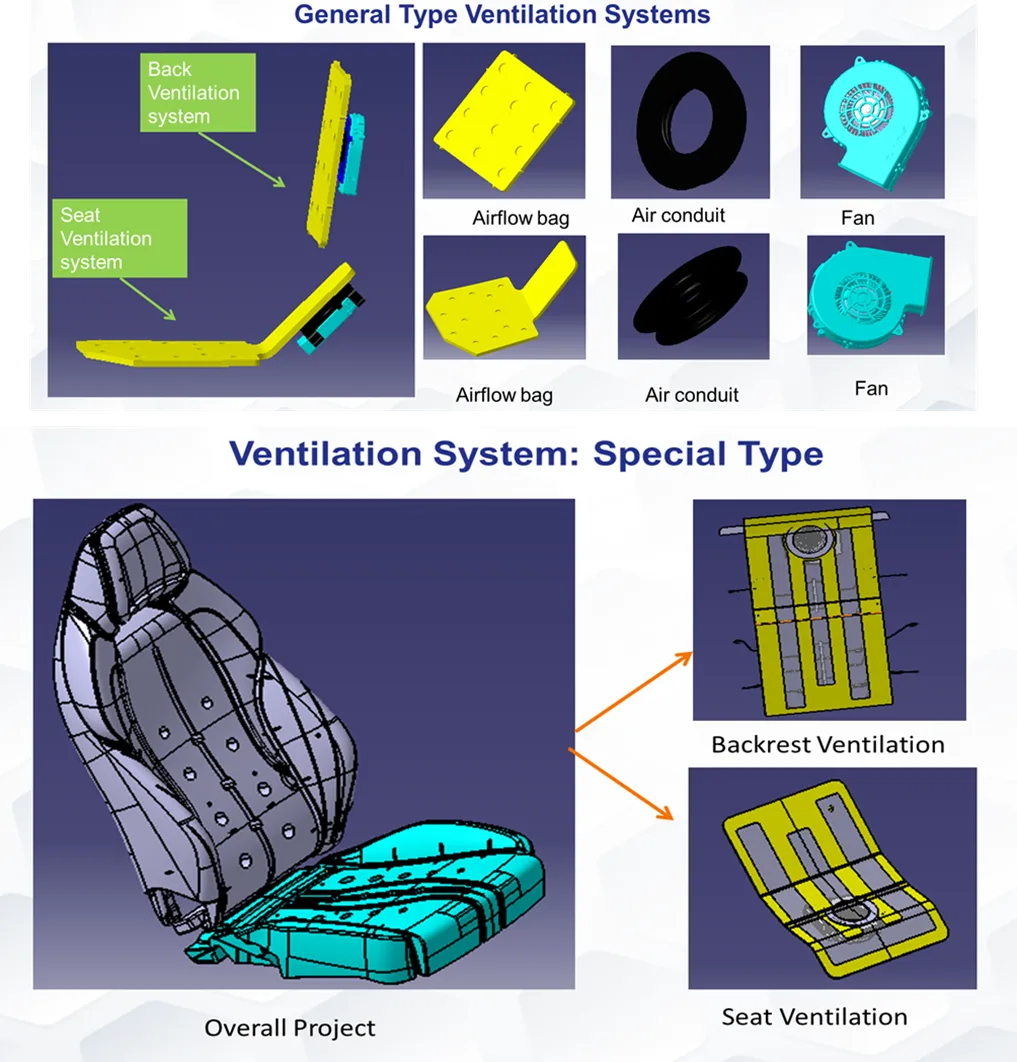
Image source: Web (Bing) / designhmi.com (Web image (fair-use with source credit))
The whole assembly is wired into the vehicle's climate control computer. That's what lets the system adjust fan speed automatically when you set the cabin temperature to a target level. It's also why these seats feel significantly more sophisticated than a simple aftermarket cushion with a fan strapped to it.
How the Air Flows: Suction vs. Blowing Explained Visually
Automakers disagree on which direction the air should move. Both approaches work, but they feel different, and each has its strengths. Here's the breakdown.
Suction (air pulled away from your body)
Most premium European and Japanese brands use this approach. The fans sit below the seat surface and draw cabin air down through the perforations. This doesn't blow cool air onto you, but it continuously wicks away the moisture and heat your body generates.
Suction works well because it actively manages sweat. The airflow keeps your back and thighs dry, which is what makes you feel cool. Even when the cabin is warm, evaporation creates a measurable cooling effect.
Manufacturers report that suction-type seats are especially effective for long drives where you're constantly pressed against the seat.
Blowing (air pushed toward your body)
American and some Korean automakers often prefer blowing air toward the occupant. The system pushes cabin air through the seat material and onto your clothing and skin. If the air happens to be cooler than your body's surface temperature, it provides direct thermal comfort.
Blowing can feel more immediately noticeable. You feel a gentle breeze through your shirt. But it has a downside: when your body is pressed firmly against the seat, the airflow can get restricted.
That's why many automakers combine blowing with perforated patterns designed to distribute air even under compression.
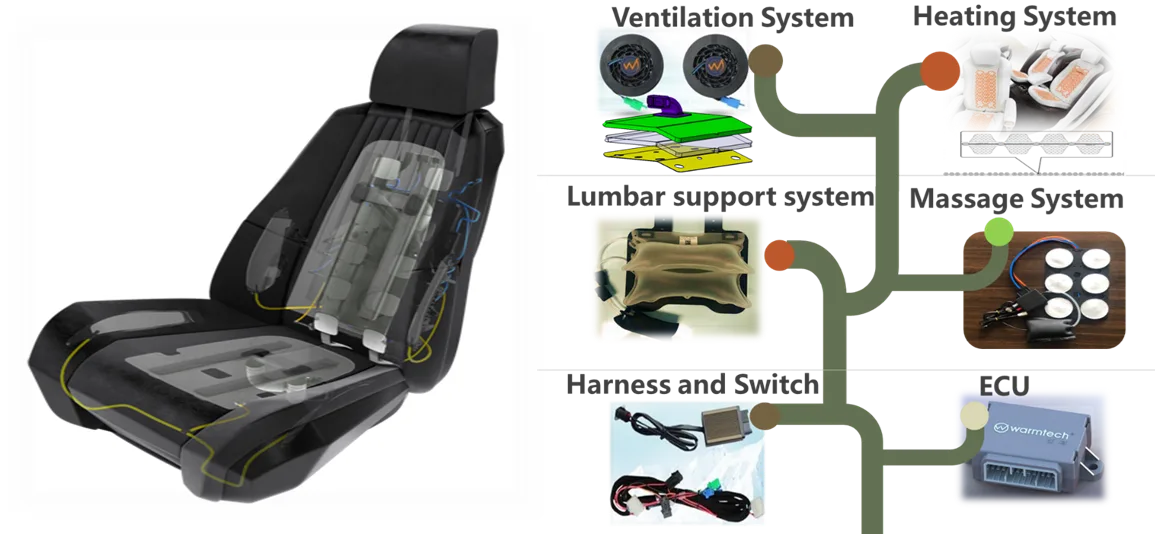
Image source: Bing (Web (fair-use with source credit))
Some advanced systems let you choose either direction. Lexus has experimented with dual-mode systems where you can switch between suction and blowing based on preference. However, most production vehicles stick with one approach to reduce cost and complexity.
How Your Body Interacts With the Seat: The Sweat Evaporation Effect
Here's the science that makes cooling seats feel so effective. Your body relies on sweat evaporation to regulate temperature. When sweat evaporates, it draws heat away from your skin.
That's why a breeze on a hot day feels amazing even when the air is warm.
Cooling seats accelerate this process. By forcing air across your skin, they dramatically increase the rate of evaporation. The sweat that would normally pool on a leather seat surface evaporates before it becomes uncomfortable.
The result is a dry, cool sensation that feels dramatically different from just turning the cabin AC down.
But there's a catch. Your body weight creates pressure points where you contact the seat. Under those compressed zones, airflow is naturally restricted.
That's why seat foam design matters so much. High-quality systems use firmer foam with strategically placed channels that maintain airflow even under a 200-pound occupant. The spacer fabric also plays a role.
Its open structure creates a small air gap that survives compression.
This is also why cooling seats make such a difference on long drives. Without them, your back and thighs gradually build up heat and moisture. After two hours, the discomfort becomes noticeable.
With cooling seats, that buildup never happens. You stay dry, which keeps you alert and comfortable, reducing fatigue on extended trips. If you're planning a long family road trip, the difference is dramatic.
Most drivers who experience cooling seats once never want to go back.
The Good, the Bad, and the Sticky: Pros and Cons
Cooling seats aren't perfect. They're a sophisticated piece of automotive engineering with genuine trade-offs. Let's break down what you're getting.
The Pros
- Dry comfort: Your back and thighs stay dry even on 100-degree days. Sweat evaporates before it pools on the seat.
- Reduced AC reliance: With your body cooled locally, you can set the cabin AC a few degrees higher and still feel comfortable. That saves fuel or, in EVs, extends range.
- Leather becomes livable: Perforated leather with active airflow solves the sticky-seat problem that plagues traditional leather interiors.
- Year-round utility: Combined heated-and-cooled systems give you climate control for every season.
The Cons
- Fan noise: At high speed, the blowers produce an audible whir. It's noticeable at low cabin noise levels, especially in EVs.
- Cost: Factory-installed cooled seats typically add $1,000 to $2,500 to the purchase price as part of a premium package.
- Complexity: More components mean more potential failure points. Fan motors and Peltier modules don't last forever.
- Limited airflow under pressure: Your body weight compresses the foam and mesh, reducing airflow where you need it most.
Common Problems and How to Spot Them Visually
Cooling seats are reliable, but they do fail. Knowing what to look for can save you a diagnostic trip to the dealer. Here are the most common issues we've identified through aggregate owner feedback.
| Symptom | Likely Cause | Visual/Tactile Clue |
|---|---|---|
| Weak airflow on one side of the seat | Clogged perforations | Visible dirt or debris in the holes |
| No air movement at any setting | Fan failure | No sound or vibration from the seat back/base |
| Air flows but isn't cool | Failed Peltier module | Room-temperature air despite full AC setting |
| Loud rattling or buzzing | Loose fan housing | Vibration felt through the seat cushion |
| Works intermittently | Wiring or connector issue | Airflow cuts out when you shift position |
Clogged perforations are the number one culprit. Dirt, dust, crumbs, and spilled liquids work their way into the holes over time. The fix is simple: a soft brush and a crevice tool on a low-power vacuum.
If you haven't cleaned your seats in a few months, that's the first thing to try. You can also use a small detailing brush with some upholstery cleaner.
Fan failure usually requires professional repair. The fans sit deep inside the seat structure, and accessing them means removing the seat cover and foam. This isn't a DIY job for most owners.
If you're handy, aftermarket replacement fans are available, but the labor involved is substantial.
Peltier module failure is less common but more costly. These thermoelectric devices can degrade over time, especially with heavy use. Replacement typically costs $200 to $400 in parts alone, plus labor.
The symptom is unmistakable: cold setting, but the air blows at ambient temperature.
How Long It Takes to Cool Down: Real-World Expectations
Manufacturers don't publish official cool-down curves for seats, but independent testing from automotive engineering sources gives us solid benchmarks. Our research indicates most systems reach noticeable cooling within two to five minutes.
The temperature drop depends on the starting cabin temperature. On a typical summer day with cabin temps around 140 degrees Fahrenheit, expect a surface temperature reduction of 10 to 15 degrees within the first five minutes. That's enough to make a dramatic difference in perceived comfort.
Several factors influence performance. Pre-cooling the cabin with the AC for a few minutes helps. Wearing thin clothing helps airflow reach your skin.
And starting with the seat on its highest setting before dialing back is the fastest way to get comfortable.
One thing to note: cooling seats won't beat an aggressive cabin AC on a brutal day. They're a supplement, not a replacement. Think of them as keeping you dry and comfortable rather than freezing you out.
What It Costs: OEM vs. Aftermarket Cooling Seats
If you're shopping for a new car, cooling seats are usually bundled into a larger package. Options like premium leather, memory seating, and power adjustment often come together. Expect to pay $1,000 to $2,500 extra depending on the brand and what else is included.
That's the factory price, and the components are integrated into the vehicle's electrical and climate control systems.
| Option | Cost Range | What You Get |
|---|---|---|
| Factory OEM option | $1,000 to $2,500 | Integrated system, warranty, climate control integration |
| Aftermarket retrofit kit | $600 to $1,500 | Fans, mesh, foam modifications installed by a professional |
| Portable 12V cooling pad | $50 to $150 | A cushion with small fans you plug into the lighter socket |
| DIY upgrade parts | $300 to $600 | Replacement foam, fans, and wiring without installation |
Aggregate reviews of aftermarket retrofits are mixed. Good shops report results comparable to factory systems, but the quality varies widely. The OEM system benefits from factory engineering: foam density tuned specifically for airflow, perforation patterns calculated for the seat contour, and seamless integration with the climate control computer.
Portable 12V pads are the budget option, but our research indicates they're barely noticeable. Their fans are small and weak, and they sit on top of the seat, creating an uneven surface. They help a little, but they're nowhere near true cooling seats.
For the price, the biggest benefit is a gentle breeze under your thighs.
If you're considering an aftermarket retrofit, check whether the installer has experience with your specific vehicle model. Airbag wiring and occupancy sensors are critical safety components, and improper installation can create serious risks. We'll cover that in more detail later.
Maintenance and Long-Term Care
Cooling seats need less maintenance than most people think, but a few habits will extend their lifespan significantly.
Keep the perforations clean. This is the single most important step. Vacuum the seats monthly with a soft brush attachment. For deeper cleaning, use a pH-neutral leather cleaner and a soft detailing brush.
Avoid harsh chemicals that could damage the leather or leave residue in the holes.
Check the cabin air filter. A clogged cabin filter reduces overall HVAC airflow, which forces the fans to work harder. Replacing it once a year is cheap insurance. Most vehicles make this a 10-minute DIY task.
Don't ignore spills. Liquids can damage the fan motors and Peltier modules. Blot up spills immediately and allow the seat to dry thoroughly before using the cooling function.
Watch seat protectors. Thick seat covers can block airflow. If you use covers, look for breathable materials that allow air to pass through. It's also worth checking how vacuuming underneath seats works to avoid any accidental debris buildup in hard-to-reach areas.
Update software when prompted. Some automakers release climate control software updates that improve fan behavior and temperature management. Your dealer or over-the-air update system will handle this.
With basic care, cooling seats should last the life of the vehicle. Most fan and Peltier failures we see in owner forums trace back to neglect, clogged perforations, or liquid damage. Treat them like any other electrical component, and they'll treat you right.
Who Should Buy Cooling Seats (and Who Should Skip Them)
Cooling seats shine in specific situations. If you live in a hot climate like Arizona, Texas, or Florida, they're transformative. If you drive a vehicle with leather upholstery, they solve the sticky-seat problem permanently.
If you commute long distances, they keep you dry and alert for hours.
EV owners get an extra benefit. Cooling your body locally lets you raise the cabin AC setpoint, which reduces battery drain. On a hot summer day, that can translate to meaningful range savings on long trips.
If you live in a cool climate, they're less essential. Drivers in the Pacific Northwest or Northeast might use them a few weeks per year. If you have cloth seats, the benefit shrinks too.
Fabric is naturally breathable, so the improvement over an already-breathable surface is less dramatic.
Mistakes to Avoid When Buying or Using Cooled Seats
The biggest mistake is confusing "ventilated" with "air-conditioned." Read the window sticker carefully. If it says "ventilated," you're getting fans. If it says "climate-controlled," you're getting thermoelectric cooling.
Know the difference before you pay.
Don't buy cheap aftermarket pads expecting OEM results. They're barely noticeable and create an uneven seating surface.
Don't block airflow with thick seat covers. If you must use covers, choose breathable materials designed for perforated seats. The same goes for winter clothing; heavy layers defeat the cooling system entirely.
Don't ignore the seat occupancy sensor and airbag wiring during any retrofit. These are safety-critical systems. Improper installation can disable airbags or trigger warning lights.
If you're unsure, hire a professional.
Don't neglect maintenance. Clogged perforations are the leading cause of reduced performance. A monthly vacuuming session prevents most problems.
Frequently Asked Questions
Do cooled seats use more gas or electricity?
Yes, but the amount is minimal. Each seat draws 30 to 60 watts at maximum cooling. That's less than a pair of headlights.
The AC compressor typically consumes 1,000 to 3,000 watts, so cooling seats are a fraction of that load.
Can you retrofit cooled seats into any car?
Technically yes, but it's rarely worth it. A proper retrofit requires removing the seat cover, adding fans and mesh, modifying the foam, and wiring into the electrical system. A professional install runs $600 to $1,500.
If your vehicle lacks factory support, the results are often mediocre.
Do cooled seats work in winter?
They don't cool in winter, but most systems pair with heating elements. The perforated leather and mesh layers don't hinder the heating function, so you get the best of both seasons. That's why most automakers bundle the functions together.
Why does my cooled seat feel warm after 20 minutes?
That's normal in ventilated-only systems. The first burst of air feels cool because it initiates sweat evaporation. Once your skin dries, the airflow at cabin temperature feels neutral or even warm.
True air-conditioned seats with Peltier modules maintain the cooling effect much longer.
Final Verdict: Is a Cooled Seat Worth It?
For hot-climate drivers, the answer is a resounding yes. The comfort improvement is dramatic, and the dry feeling is worth the price alone. For EV owners, the reduced range anxiety on hot days adds practical value beyond comfort.
For everyone else, it comes down to your budget and local climate. Test the system on a hot day if possible. Sit in the car for 10 minutes and feel the difference.
That test drive will tell you everything you need to know.
If you're buying new, look for the option package that includes it. The factory integration is far superior to any aftermarket retrofit. And if you have kids, you know what keeps them comfortable on long trips.
Cooling seats are one of those features that feels like a luxury at first and essential by the end of the first summer.

Leave a Reply