
Choosing the right wire gauge for your car stereo is one of the most overlooked details in any audio installation. Get it wrong, and you risk weak bass, distorted sound, or even an electrical fire. Get it right, and your system performs exactly the way it was designed to.
This guide explains everything you need to know about car stereo wire gauge — what the numbers mean, how to match wire to your system's power needs, and the practical mistakes that separate clean installs from frustrating ones. For more on this, see our guide on how to wire a car stereo without a.
What Exactly is Wire Gauge?
Wire gauge refers to the physical thickness of a wire's copper conductor. In North America, this is measured using the American Wire Gauge (AWG) system.
Here's the key thing to remember: lower AWG numbers mean thicker wire, and higher numbers mean thinner wire. So 8 AWG is much thicker than 18 AWG, even though the number is smaller. For more on this, see our guide on how to adjust car stereo for best sound.
This matters because thickness directly determines how much electrical current a wire can safely carry. Thicker wires have lower resistance, which means more power reaches your speakers or amplifier without being lost as heat.
| AWG Size | Diameter (mm) | Typical Max Current (Amps) |
|---|---|---|
| 8 AWG | 3.26 | 40 |
| 10 AWG | 2.59 | 30 |
| 12 AWG | 2.05 | 25 |
| 14 AWG | 1.63 | 20 |
| 16 AWG | 1.29 | 15 |
| 18 AWG | 1.02 | 10 |
These current ratings are general guidelines. The actual safe capacity depends on wire length, insulation type, and ambient temperature.
Why Wire Gauge Matters For Car Stereos
Wire gauge isn't just a technical specification — it directly affects three things:
- Safety. Undersized wire overheats under load. In a car, with heat and vibration, that's a genuine fire risk.
- Sound quality. Thin wire acts like a bottleneck. It reduces the current reaching your speakers, which causes weak bass, distortion at higher volumes, and a general loss of clarity.
- System longevity. When an amplifier doesn't receive adequate current, it works harder and runs hotter. Over time, this can damage the amp or the speakers connected to it.
Many beginners assume that if the speakers and head unit are high quality, the wire doesn't matter. In practice, the wire is the weakest link in many systems. You can spend thousands on components and still get mediocre sound from undersized cabling.
Common Car Stereo Wire Gauges Explained
Most car audio installations use wire ranging from 18 AWG up to 8 AWG, depending on the component being powered.
- Speaker wire: Typically 18 AWG, 16 AWG, or 14 AWG for most door and dash speakers.
- Subwoofer wire: 14 AWG or 12 AWG is standard; 10 AWG for very powerful subs with long runs.
- Amplifier power and ground wire: 8 AWG for moderate systems, 4 AWG for high-power amps, and 2 AWG or thicker for competition-level builds.
Here's a simple breakdown of which gauge works best for common components:
| Component | Recommended Gauge | Max Suggested Run Length |
|---|---|---|
| Standard door speaker (up to 100W RMS) | 18 AWG | 25 feet |
| Component speakers (100–200W RMS) | 16 AWG | 20 feet |
| Subwoofer (200–500W RMS) | 12 AWG | 15 feet |
| Amplifier power wire (500–1000W RMS) | 8 AWG | 10 feet |
These are starting points. Longer runs and higher power both require thicker wire.
How To Choose The Right Wire Gauge For Your System
Choosing the right gauge isn't guesswork. Follow this three-step process.
Step 1: Calculate Your Power Needs
Find the RMS power rating of your amplifier or head unit — not the peak power. Peak ratings are marketing numbers; RMS reflects continuous power output.
- A 50W RMS per channel head unit needs much thinner wire than a 500W RMS mono amp.
- Add up the total RMS wattage for all channels when sizing a single power wire.
Step 2: Measure The Wire Run Length
Every foot of wire adds resistance. Longer runs require thicker wire to compensate. Use a tape measure to plan the actual route — through door looms, under carpets, and along the chassis.
A good rule of thumb: if your speaker wire run exceeds 20 feet, step up one gauge size.
Step 3: Match Gauge To Component
- Door speakers under 75W RMS: 18 AWG is fine.
- Higher-power speakers or long runs: 16 AWG or 14 AWG.
- Subwoofers: 12 AWG minimum for most aftermarket subs; 10 AWG for serious setups.
- Amplifier power and ground: 8 AWG for up to 500W RMS, 4 AWG for 500–1000W, and 2 AWG above that.
A Practical Example
Say you're installing a 400W RMS subwoofer amplifier. The power wire must run 12 feet from the battery to the amp. For a 400W system at 12 feet, 8 AWG is the right call. For the subwoofer itself, 12 AWG speaker wire handles the signal easily.
Now imagine you're just replacing factory door speakers with 60W RMS aftermarket units. The wire run is about 10 feet each way. In that case, 18 AWG is more than sufficient — going thicker provides no audible benefit and just makes installation harder.
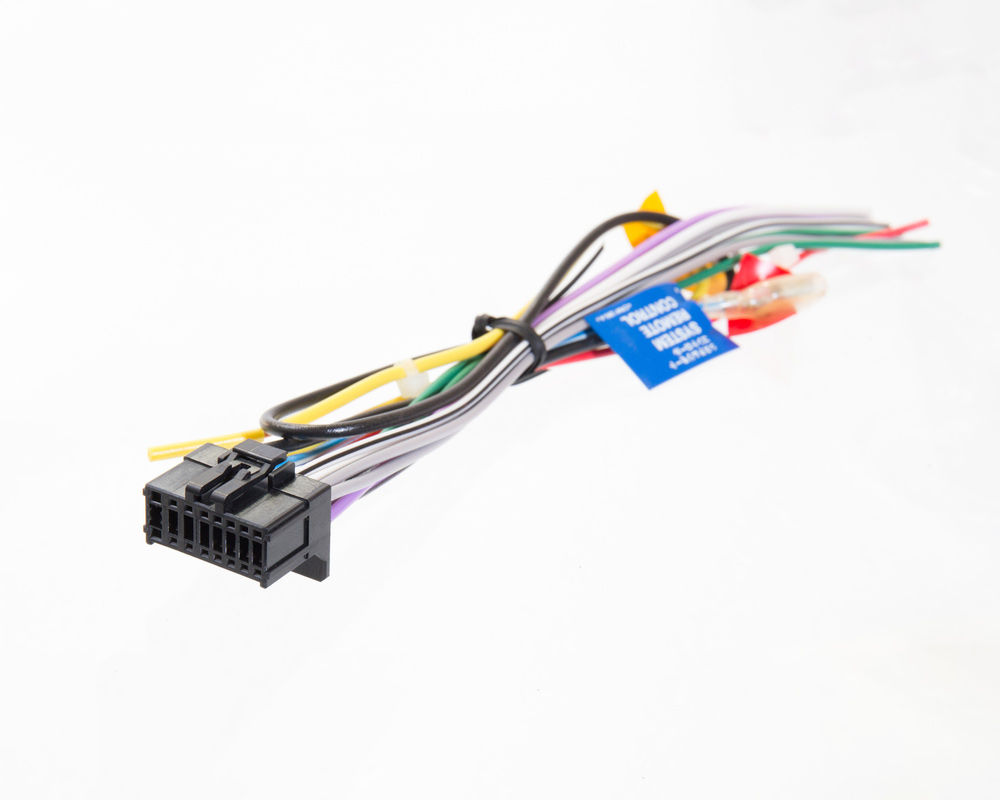
Matching the correct wire gauge to each component prevents both power loss and overheating.
Wire Gauge Vs. Wire Quality: Material Matters
Gauge only tells you the thickness — not what the wire is made of. Wire quality is just as important.
The two most common conductor materials are:
- OFC (Oxygen-Free Copper): High conductivity, low resistance, corrosion-resistant. This is the best choice for car audio, especially for power-hungry components.
- CCA (Copper-Clad Aluminum): Cheaper, but aluminum has roughly 60% of copper's conductivity. CCA may look like copper on the outside but performs noticeably worse under load.
| Wire Type | Material | Cost | Performance | Best For |
|---|---|---|---|---|
| CCA | Aluminum core, copper coating | Low | Moderate | Budget installs, short low-power runs |
| OFC | 100% copper | High | Excellent | High-power amps, subwoofers, long runs |
A common mistake is buying "5 AWG" or "2 AWG" CCA wire as a budget alternative. Due to aluminum's higher resistance, a CCA wire needs to be roughly two gauge sizes thicker than OFC to carry the same current. If you buy CCA, keep your power demands modest and expect more voltage drop.
How Wire Gauge Affects Sound Quality
Wire gauge directly impacts what you hear:
- Bass response: Thin wire chokes low-frequency current demands, making bass sound weak and undefined.
- Volume headroom: Properly sized wire lets your system play louder without distortion at the top end.
- Signal clarity: Low-resistance wire preserves detail, especially in complex passages with lots of instruments.
Symptoms of undersized wire include:
- Muffled or flat-sounding bass
- Distortion at moderate volume levels
- Speakers that seem to "run out of steam" quickly
- Dimming headlights when bass hits — a sign the power system is struggling
Upgrading from undersized wire to the correct gauge is one of the most cost-effective sound improvements you can make, often with a more noticeable result than swapping speakers or amplifiers.
Common Wire Gauge Mistakes To Avoid
Even experienced installers make gauge errors. Here are the most frequent ones:
Using One Gauge For Everything
Some people run 18 AWG throughout the entire car, including for a high-power subwoofer. This is the single most common mistake. The sub's current demands are several times higher than a door speaker's, and thin wire will starve it.
Oversizing Every Wire
The opposite mistake: running 10 AWG to modest door speakers. This adds cost, makes routing through tight door boots miserable, and gains nothing. Bigger isn't automatically better — it's just harder to work with.
Ignoring the Ground Wire
People upgrade their power wire but leave the ground wire at the factory gauge. This creates a bottleneck that can introduce noise and limit current. Always match the ground wire to the power wire gauge.
Assuming Wire Printing Is Accurate
Not all cheap wire is genuinely the gauge printed on the jacket. Some budget CCA wire is thinner than stamped. If you're buying bargain cable, measure the conductor with a caliper to verify.

Visually comparing stranded conductors reveals how much thicker 12 AWG is compared to 16 AWG or 18 AWG.
Car Stereo Wire Gauge Chart: Quick Reference
Use this chart as a practical starting point for most installations:
| Power (RMS Watts) | Wire Length | Recommended Gauge |
|---|---|---|
| Up to 100W | Up to 25 ft | 18 AWG |
| 100–200W | Up to 20 ft | 16 AWG |
| 200–400W | Up to 15 ft | 14 AWG |
| 400–600W | Up to 10 ft | 8 AWG |
| 600–1000W | Up to 8 ft | 4 AWG |
| 1000W+ | Under 6 ft | 2 AWG or thicker |
These numbers assume OFC copper wire. If you're using CCA, step up one gauge size.
Factory vs. Aftermarket Stereo Wire
Factory wiring is designed for the modest power output of stock systems. Most OEM speaker wire is 20 AWG or thinner, which is adequate for a 15W factory head unit but inadequate for aftermarket components.
If you install an aftermarket stereo that puts out 50W RMS per channel, use the factory wires only if the runs are short and the speakers are low-power. For most aftermarket builds, replacing the speaker wire with 18 AWG or 16 AWG is a worthwhile upgrade.
Adding an amplifier changes everything. An amp's power and ground wires should be completely new, run directly from the battery — never reuse the factory power feed. The factory wiring simply isn't rated for the current a modern car amp draws.
Choosing Wire For Amplifiers And Subwoofers
Amplifiers and subwoofers are the most power-hungry components in a car audio system, so gauge becomes mission-critical.
Amplifier Power and Ground Wire
- Up to 500W RMS: 8 AWG
- 500–1000W RMS: 4 AWG
- 1000–2000W RMS: 2 AWG or 1/0 AWG
Install a fuse holder within 18 inches of the battery terminal on the power wire. This is a legal and safety requirement — if the main cable shorts against the chassis, the fuse blows rather than the wire catching fire.
Subwoofer Speaker Wire
- 200–400W RMS subs: 12 AWG
- 400W+ RMS subs: 10 AWG
- Long runs (15 feet+): Step up one gauge size
Remote Turn-On Wire
The remote wire tells your amplifier to power on with the head unit. This is a low-current signal — 18 AWG is all you need. Many installers use the same gauge as speaker wire by habit, which is unnecessary for this tiny load.
Environmental Factors That Affect Wire Choice
Cars present a harsh environment for electrical wiring. Three factors should influence your gauge and installation choices:
- Heat. Under-hood temperatures and summer cabin heat can exceed 150°F. Heat increases resistance, and thin wire can soften or degrade over time. Thicker wire handles heat better and stays within its ratings.
- Vibration. The constant motion of the vehicle can fatigue and crack thin, brittle wire. Choose flexible, high-strand-count wire and secure it with zip ties at regular intervals. Loose wire slapping against metal panels also causes intermittent shorts.
- Moisture and corrosion. Door wiring is exposed to water and humidity. Use wire with quality insulation, and consider corrosion-resistant OFC if you live in a damp climate or drive off-road.
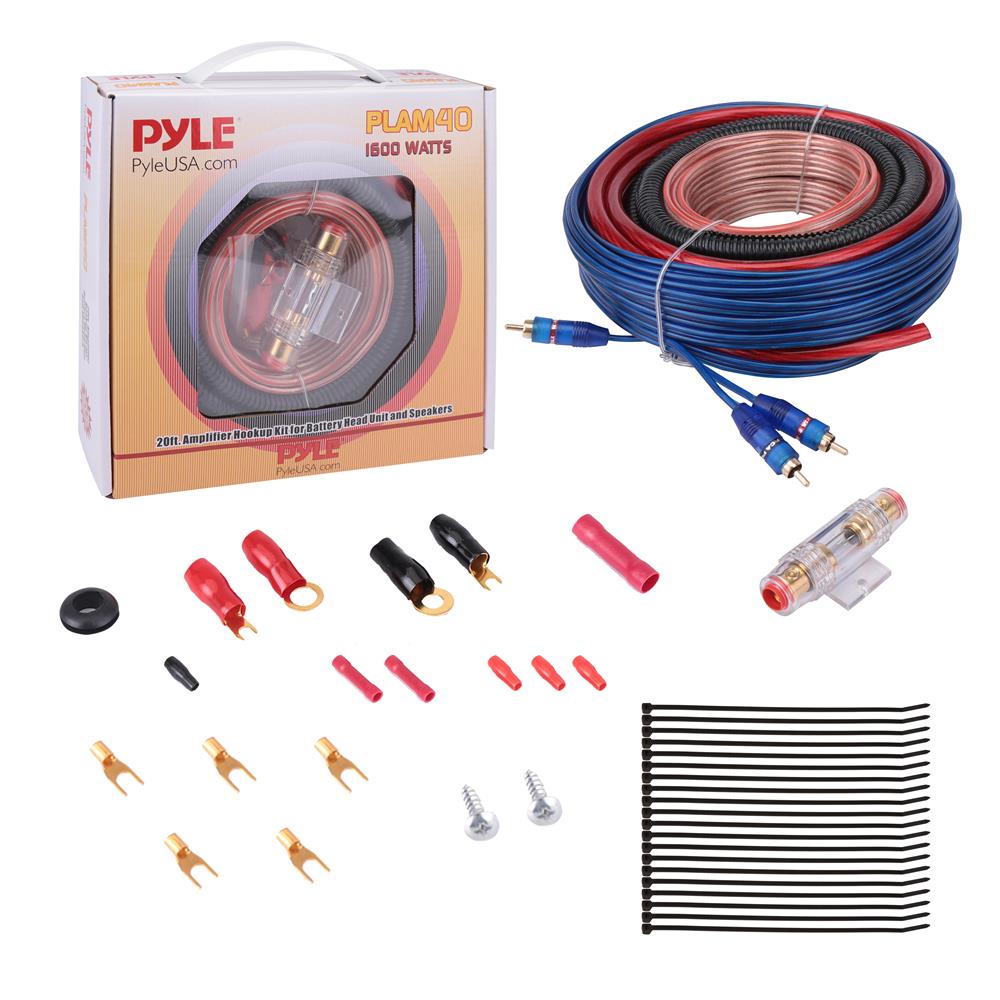
Amplifier installation kits include fuse holders to protect the main power wire from short circuits.
Safety Precautions When Working With Car Stereo Wire
Working with car electrical systems carries real risk if you skip the basics:
- Disconnect the battery negative terminal before starting any wiring work. Always.
- Use insulated tools to avoid accidental shorts.
- Never run power wires alongside signal cables (RCA or speaker) — this induces audible alternator whine.
- Fuse the power wire near the battery. This cannot be overstated.
- Don't run power wires near fuel lines or moving parts.
- Use grommets where wires pass through metal — sharp edges will cut insulation over time.
If you're not confident working with automotive electrical systems, a professional installation is a sensible investment. The cost of a mistake — a damaged head unit, a drained battery, or worse — far exceeds the labor saved. For guidance on selecting the right tools and approach, professional installers and reputable resources like Crutchfield provide thorough free guides.
Connectors: Match Them To Your Wire Gauge
Wire gauge doesn't exist in isolation — your connectors must match.
- 8 AWG power wire needs ring terminals sized for 8 AWG cable and a bolt of at least 5/16 inch.
- 16 AWG speaker wire works with standard spade connectors or bare wire into a speaker terminal.
- Butt splices and crimp connectors come in specific AWG ranges.
When a connector is too large for the wire, the connection is loose. This introduces resistance and heat at the joint. When it's too small, you'll struggle to get the wire in, and damaged strands reduce conductivity.
A poor connection at a terminal is a more common failure point than the wire itself. Crimp properly using a quality ratcheting crimper — not pliers — and give the wire a firm tug afterward to verify the connection holds.
Frequently Asked Questions
What is the best wire gauge for car speakers?
For most car speakers, 16 AWG is a good all-around choice. It handles up to about 200W RMS over moderate runs. Use 18 AWG for low-power factory replacements and 14 AWG for serious component speakers with long runs.
Can I use home audio wire in my car?
Yes, but with two caveats. Home speaker wire is often fine for short runs, but it may use PVC insulation that becomes stiff and brittle in extreme cold or heat. Choose wire rated for automotive use, or at minimum, flexible, high-quality copper with durable insulation. If the car's interior is prone to temperature swings, replace the home wire with automotive-grade cable.
How do I know if my wire is too thin?
Run the system at volume and feel the wire after 15–20 minutes. Warm or hot wire is a red flag. Other symptoms include flashing interior lights when bass hits, distorted sound at moderate volume, and the amplifier's protect light flickering.
Do I need to upgrade wiring if I add an amplifier?
Yes — always. An amplifier draws far more current than any head unit can supply through factory wiring. This is the one upgrade where proper gauge is non-negotiable. Use 8 AWG or thicker for amplifier power, and match the ground wire gauge exactly. When planning your new amplifier placement, factor in the physical space needed for thick cable routing — a tidy install that protects your car interior after installation will look better and last longer.
Is OFC really worth the extra cost?
For high-power systems, yes. OFC carries more current, resists corrosion, and is more flexible. The premium over CCA is modest when you consider that it can be the difference between a clean 500W delivery and a struggling 350W. For low-power, short-run applications, CCA is an acceptable budget compromise.
Where do I run the ground wire?
Keep it short — under 18 inches if possible. Bolt the ground directly to bare, paint-free chassis metal. The ground wire gauge must match the power wire gauge to avoid a bottleneck.
Important: Serious electrical work isn't the only preparation worth doing before you commit to rewiring. Take the time to learn proper installation techniques so you don't damage your vehicle's interior while routing cables. This includes knowing how to remove stubborn debris from tight spaces and choose the right cleaning vacuum for your car.
Conclusion
Choosing the right car stereo wire gauge comes down to three variables: the power your system demands, the length of the wire run, and the quality of the wire itself. For most cars, 18 AWG works for standard speakers, 12 AWG is right for subwoofers, and 8 AWG or thicker is required for amplifier power.
Match the ground wire to the power wire, fuse the main feed near the battery, and use OFC copper wherever you can afford it. Take the time to route wires cleanly, protect them from sharp edges, and secure them against vibration. After installation, check the wires for warmth and test the bass at higher volumes to confirm you got the gauge right.
The effort pays off immediately: cleaner sound, deeper bass, and confidence that your system is safe. Measure your runs, verify your power ratings, and wire your car properly from the start.

Leave a Reply