
You turn the key, the dashboard lights flicker, and then the engine is silent. A dead battery is one of the most common and frustrating car problems, but it is also one of the most fixable. The short answer is: yes, you can jump start a car with a dead battery — as long as the battery is simply drained and not physically damaged or completely worn out.
This guide walks through exactly when jump starting works, which tools you need, how to do it safely, and what to do when it doesn’t work. For more on this, see our guide on can you jump a car battery with a.
Why a Car Battery Dies in the First Place
A car battery does two jobs. It supplies the high burst of power needed to crank the engine, and it keeps the electronics alive when the engine is off. Once the engine runs, the alternator takes over and recharges the battery.
Batteries die for several common reasons:
- Headlights, interior lights, or trunk lights left on overnight
- Cold weather reducing the battery’s available power
- Age — most batteries last roughly 3 to 5 years
- A faulty alternator that never fully recharges the battery
- Short trips that drain more power than the alternator can replace
The key difference is between a battery that is discharged and a battery that is dead in the permanent sense. A drained battery still has healthy internal plates and can take a charge. A failed battery cannot. Jump starting only helps the first type. For more on this, see our guide on can you rent a car seat with a.
How Jump Starting Actually Works
Jump starting creates a temporary electrical bridge between a charged battery and a discharged one. The jumper cables connect both batteries in parallel, which lets the good battery supply enough voltage and current to crank the starter motor.
Once the dead car starts, its alternator begins producing electricity again. That electricity powers the car’s systems and gradually recharges the battery as you drive.
Jump starting does not instantly restore a battery to full condition. It gives the engine enough power to turn over. The real recovery happens over the next 20 to 30 minutes of driving.

Image source: www.reddit.com
Tools You Need to Jump Start a Car
You have two main options: traditional jumper cables or a portable jump starter.
Jumper Cables
Cables are cheap and do not need charging, but they require a second vehicle. Look for cables with thick insulation and sturdy clamps. A 4-gauge or 6-gauge cable is a good everyday choice. Thin, bargain cables heat up quickly and may not deliver enough power.
Portable Jump Starter
Portable jump starters are battery packs with heavy-duty clamps built in. They are compact, easy to store in a trunk, and do not require another car. Many also include USB ports for charging a phone.
They do lose charge over time. Check the pack’s battery level every few months and keep it stored at a moderate temperature. A completely drained jump starter is just another dead battery.
| Method | Needs Another Car | Ease of Use | Safety | Best For |
|---|---|---|---|---|
| Jumper Cables | Yes | Medium | Requires correct connection order | People with a second car nearby |
| Portable Jump Starter | No | Easy | Fewer sparks and no connection to a running engine | Emergency kits, winter months, solo drivers |
Both methods work. Portable jump starters are more convenient, but cables never run out of charge.
Step-by-Step Guide: How to Jump Start a Car Safely
A jump start is simple, but the connection order matters. One mistake can create sparks, damage electronics, or even crack a battery case.
Before starting, confirm both batteries are 12-volt models. Most cars, trucks, and SUVs are 12-volt. If you are not sure, check the owner’s manual.
Step 1: Park the Vehicles Close But Not Touching
Position the working car close enough that the cables reach the dead battery easily. The cars should not touch each other. Turn off both engines, set the parking brakes, and remove the keys.
Step 2: Put on Gloves and Eye Protection
Battery acid and hydrogen gas are real hazards. Gloves and safety glasses are cheap insurance.
Step 3: Inspect the Battery
Look for cracks, swelling, or leaking fluid. If the battery is physically damaged, do not jump start it. You will need a new battery and possibly professional help. If the terminals are covered in white or blue corrosion, clean them before connecting the clamps.
Step 4: Connect the Red Clamp to the Dead Battery
Attach one red clamp to the positive terminal on the dead battery. The positive terminal is usually marked with a “+” sign and often has a red plastic cover.
Step 5: Connect the Other Red Clamp to the Good Battery
Attach the second red clamp to the positive terminal of the working battery.
Step 6: Connect the Black Clamp to the Good Battery
Attach one black clamp to the negative terminal of the working battery. The negative terminal is marked with a “–” sign and is usually black.
Step 7: Connect the Last Black Clamp to Metal on the Dead Car
This is the most important safety step. Do not connect the final black clamp directly to the dead battery’s negative terminal. Instead, attach it to a clean, unpainted metal surface on the engine block or frame of the dead car, away from the battery.
This connection creates a ground and reduces the risk of sparks near the battery.
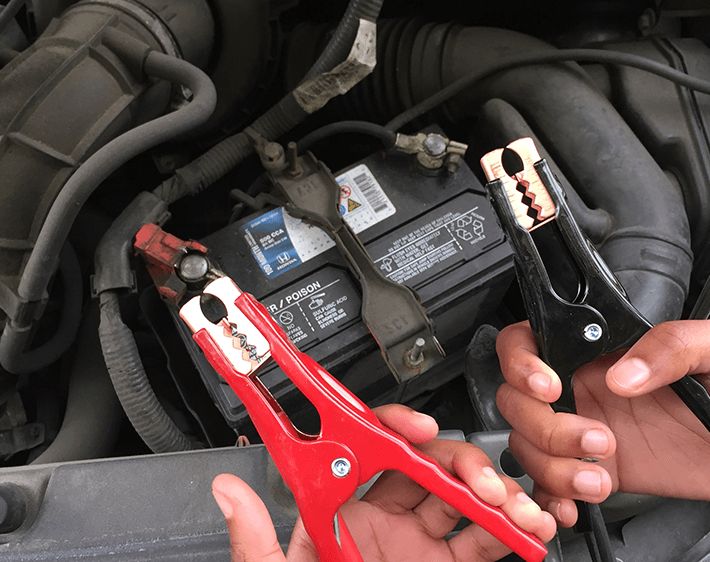
Image source: www.firestonecompleteautocare.com
Step 8: Start the Working Car
Start the donor car and let it run for a few minutes. This gives the alternator time to send some charge through the cables. Do not rev the engine hard while the cables are connected.
Step 9: Start the Dead Car
Try starting the dead car. If it cranks slowly or does not start, wait another minute or two before trying again.
Step 10: Remove the Cables in Reverse Order
Once the car starts, remove the cables carefully in the exact reverse order:
- Black clamp from the metal surface on the dead car
- Black clamp from the good battery
- Red clamp from the good battery
- Red clamp from the dead battery
Make sure the clamps do not touch each other while any part of the cable is still connected.
Can You Jump Start a Completely Dead Battery?
Yes, if the battery has simply been drained below the level needed to crank the engine. A battery that reads, for example, 11.9 volts can still often receive enough current from a working battery to start the car.
The phrase “completely dead” can be misleading. Most of the time, the battery still has some internal charge. It just does not have enough to power the starter.
But if the battery has sat discharged for months, internal damage may be permanent. Lead sulfate can build up on the plates, reducing capacity. In that case, a jump start may briefly work, but the battery will die again quickly.
If your battery shows obvious signs of failure — swelling, leaking, cracks, or a very old date code — stop and replace it instead of trying to jump start it.
When Jump Starting Won't Work
There are several situations where no amount of cable connection will help:
The Battery Is Too Old
Most car batteries last about 3 to 5 years. An old battery may accept a jump start but fail again as soon as you turn the engine off.
The Battery Is Damaged Inside
A physical short or broken internal plate can prevent the battery from holding any charge. You may hear clicking from the starter or see the lights dim even with the cables connected.
The Terminals Are Severely Corroded
Corrosion interrupts electrical flow. If the contact point is crusty, the cable clamp cannot make a clean connection. Clean the terminals with a wire brush and battery terminal cleaner.
The Problem Is Not the Battery
A dead battery is not always the root cause. A bad starter motor, a failed alternator, or a damaged ignition switch can all act like a dead battery. If the battery tests fine but the car still will not start, the issue is elsewhere.
The Cables Are Too Thin
Cheap, lightweight cables have high electrical resistance. They may not carry enough current to crank a larger engine. Use cables rated for your vehicle’s engine size.
Signs a Battery Is Beyond Jump Starting
Sometimes a battery simply needs to be replaced. Watch for these warning signs:
- The car starts after a jump but dies again when turned off
- The battery case is swollen, cracked, or leaking fluid
- The battery is more than 5 years old
- Headlights are very dim even after the engine runs
- Terminals are heavily corroded
- You have needed multiple jump starts in a short period
| Condition | Can Jump Start? | What To Do |
|---|---|---|
| Drained battery | Yes | Jump start and drive to charge it |
| Old battery, 5+ years | Possibly | Test it; plan to replace it soon |
| Swollen or leaking battery | No | Replace immediately |
| Corroded terminals | Maybe | Clean terminals first |
| Bad starter or alternator | No | Diagnose the real problem |
Safety Tips for Jump Starting
Jump starting is safe when done correctly, but battery explosions and electrical damage are possible if you rush.
- Never let the cable clamps touch each other while the other ends are connected
- Do not connect the final black clamp to the negative battery terminal
- Do not lean over the battery while connecting cables
- Wear eye protection and gloves
- Do not smoke near a battery
- Check your owner’s manual for brand-specific instructions
In practice, the most common mistake I see is people connecting both black clamps to the two negative battery terminals. That creates a spark near a battery that may be releasing hydrogen gas. Always use a metal ground point on the dead car instead.
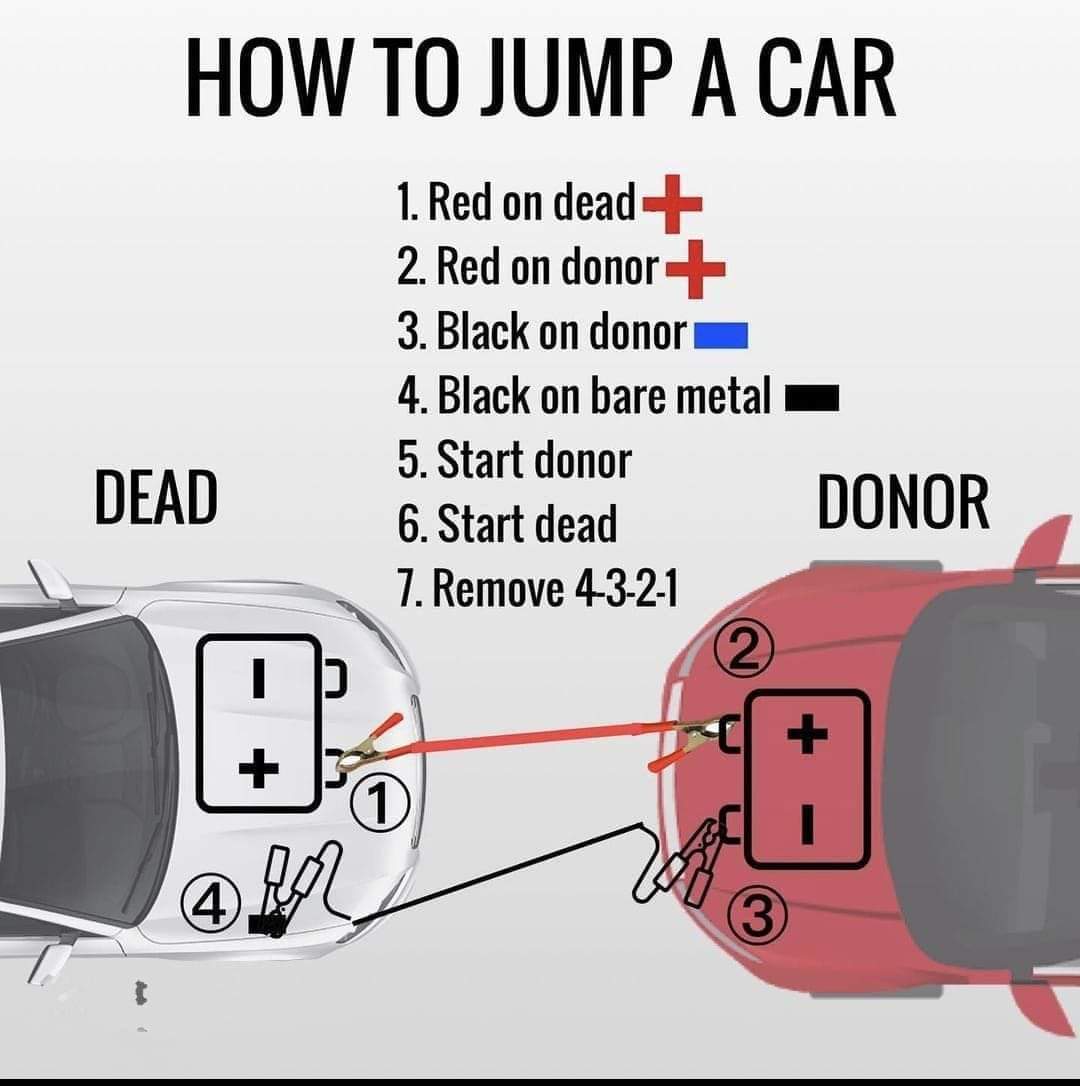
Image source: www.rmi.org.za
Common Jump Starting Mistakes to Avoid
Jump starting is not complicated, but it is easy to get wrong under stress.
Connecting to the Wrong Terminal
If you mix up positive and negative, you can fry the electrical system. Look for the “+” and “–” markings every time.
Revving the Donor Car
Excess throttle can send voltage spikes through the electrical system. Let the donor car idle.
Being Too Impatient
Some deeply discharged batteries need a few minutes of charge before they can crank the engine. Give the connection time to work.
Turning the Dead Car Off Too Soon
After a jump start, the battery is still far from full. If you shut the engine off after a two-minute drive, you may not be able to start it again. Drive for at least 20 minutes.
Using a Faulty Jump Starter
Portable jump starters need maintenance too. Store it charged, and test it before you actually need it.
What to Do After a Successful Jump Start
Once the engine is running, the alternator takes over. But a deeply discharged battery will not recover instantly.
Drive, Don’t Just Idle
Set a goal of at least 20 minutes of driving, preferably on a highway or steady road. Idling in a parking lot charges the battery much more slowly. If short trips are unavoidable, consider using a battery charger at home instead.
Turn Off Unnecessary Accessories
Keep the radio, seat heaters, rear defroster, and headlights off for a little while if you can. That lowers the electrical load and lets the alternator focus on charging the battery.
Test the Battery
If you want to be sure the battery is healthy, have it load-tested at a local auto parts store. This is usually a free service. It will tell you whether the battery can hold a charge or is on its last legs.
Expect Minor Electronics Resets
After a jump start, some car electronics may reset. You might need to set the clock, adjust the power windows, or spend a minute restoring your stereo preferences if the system defaults to another language.
How to Avoid a Dead Battery in the Future
An emergency plan is better than an emergency repair. A few habits can prevent most dead-battery mornings.
- Turn off all lights before leaving the car
- Avoid long periods with the engine off and electronics running
- Drive your car at least once a week, especially in cold weather
- Clean battery terminals every few months
- Test the battery before winter starts
- Check the battery’s age and replace it before it leaves you stranded
A simple roadside kit should also include jumper cables or a jump starter, a flashlight, and basic tools. If you drive a Wrangler or an off-roader, thinking about spare fuel storage options can be just as useful as carrying cables.
You can also stay one step ahead of unexpected breakdowns by following the Motor Rankings blog for practical maintenance and ownership advice.
Can You Jump Start a Hybrid or Electric Car?
Hybrid and electric vehicles have different electrical systems, and the rules are not the same.
Most hybrids still use a small 12-volt auxiliary battery for the computer systems, locks, and lights. That battery can die just like a gas car battery. Some hybrids have dedicated jump-start terminals under the hood. Check the owner’s manual before connecting anything.
Plug-in electric vehicles do not need a traditional jump start for the main battery. If the 12-volt accessory battery dies, the manufacturer often recommends a special charging procedure or roadside assistance. Never connect cables meant for a gas engine to a high-voltage EV battery.
When in doubt, call a professional.
Battery Maintenance and Recycling
Regular maintenance is the best way to avoid being stranded. Keep the terminals clean, make sure the battery is secured in its tray, and have the charging system tested if the engine cranks slowly.
When a battery does need replacement, do not throw it in the trash. Lead-acid car batteries are dangerous and toxic. Most auto parts stores and service shops take old batteries for recycling, and many give a small credit toward a new one.
The battery industry trade association promotes lead-acid battery recycling, and the EPA’s household hazardous waste guidance makes clear that vehicle batteries should be handled by certified recyclers. Returning your old battery to a store is the simplest and safest option.
Frequently Asked Questions
Can I Jump Start My Car If the Battery Is Completely Dead?
Yes, if the battery is simply discharged and there is no physical damage. A deeply drained battery can still accept enough current to start the engine. If the battery is swollen, cracked, leaking, or older than 5 years, jump starting probably will not help.
Is It Safe to Jump Start a Modern Car?
Modern cars can be jump started safely, but they have sensitive electronics. Use the correct order, use quality cables, and avoid revving the donor engine. Check the owner’s manual for specific instructions first.
Can I Use a Portable Jump Starter Instead of Another Car?
Yes. Portable jump starters are safe and convenient. Make sure the unit is charged and rated for your car’s engine size. Follow the same connection order you would use with jumper cables.
How Many Times Can I Jump Start a Battery Before Replacing It?
A healthy battery should only need an occasional jump start in unusual circumstances. If you are regularly jump starting the same car, something is wrong. The battery may be failing, or there may be a parasitic drain.
What Should I Do With My Old Car Battery?
Take it to an auto parts store, service shop, or battery recycler. Most locations accept old batteries. Car batteries should never go in regular trash.
Conclusion
Yes, you can jump start a car with a dead battery — as long as the battery is not physically damaged and the real problem is simply a loss of charge. Cables and a second car will work, and a portable jump starter is even easier. The critical part is following the correct connection order, keeping safety in mind, and giving the battery enough time to recharge afterward.
The best next step is to prepare before you need it. Read your owner’s manual, decide whether jumper cables or a jump starter belong in your trunk, and make sure you are comfortable with the process. That short preparation can turn a stressful morning into a 10-minute fix.

Leave a Reply