
Few things cause more confusion than tracking down the expiration date on a Graco car seat. You've probably flipped the seat over, peeled back the padding, and squinted at every sticker in sight without finding a clear answer. That's because Graco doesn't put the date in the same place on every model — and some seats hide it in two or even three spots.
Here's the short version: most Graco seats carry a 7- to 10-year lifespan measured from the date of manufacture, not the date you bought it. Current 4Ever models are built for a 10-year service window, while most SnugRide infant carriers and compact convertibles carry a 7-year window. Finding that manufacture or expiration date is the only way to know exactly where your seat stands — so let's walk through every hiding spot, model by model. You can also read our guide on how to install a car seat.
Quick Answer: Where the Date Hides
In practice, you'll find the date in one of three places on nearly every Graco seat:
- The white compliance sticker — almost always on the underside of the shell, sometimes on the side near the harness adjuster. This is your first stop.
- The belt path — the channel where the vehicle seat belt threads through the seat. Graco often stamps or prints the date here because it's protected from sun and friction.
- Embossed plastic lettering — raised text molded directly into the shell, usually on the bottom edge. If the sticker is gone, this permanent stamp is your backup.
On infant seats like the SnugRide, check both the carrier and the base, because each component carries its own date. If the sticker is unreadable or missing entirely, don't give up — the molded date stamp is on the plastic somewhere, and a flashlight held at a low angle will usually make it pop.
Why Graco Car Seats Expire in the First Place
Car seats aren't built to last forever, and that's a deliberate engineering choice rather than a sales tactic. The plastic shell degrades over years of exposure to heat, cold, and UV rays streaming through car windows. That slow breakdown weakens the material's structural integrity, which means the shell may not absorb and distribute crash forces the way it did when it was new. You can also read our guide on what is a convertible car seat.
The expiration timeline exists because manufacturers like Graco have tested their seats to know when that degradation becomes a real concern. Under FMVSS 213 — the federal safety standard governing car seats — every seat must meet strict crash performance criteria when it's new. There's no federal rule dictating how long a seat stays safe, so the manufacturer sets the service life based on its own testing.
The dates also account for wear on components beyond the shell: harness webbing that frays with repeated adjustment, buckles that stick after years of crumbs and juice, and padding that compresses. A six-year-old seat that looks spotless can still be past its safe window. You can also read our guide on when do kids stop using car seats.
Here's the point that matters most: a seat doesn't need to look damaged to be expired. The plastic can show zero visible cracks and still fail to perform in a crash because the material has lost molecular strength. That's why the date matters more than the visual condition.
First Stop: The White Compliance Sticker
The white compliance label is where nearly every search should begin. It carries the model name, model number, serial number, and the critical date information — all federally required to remain on the seat for its entire service life.
To find it:
- Flip the seat over and inspect the flat underside of the shell first.
- If nothing is there, check the sides of the seat, especially near the harness adjuster or recline mechanism.
- On infant seats, check both the carrier and the base — each has its own label.
The sticker contains either a "Manufactured On" date, a "Do Not Use After" date, or sometimes both. The manufacture date tells you when the seat rolled off the production line; the "Do Not Use After" date is the hard expiration.
Here's a trick worth using immediately: if you only find a manufacture date, add your model's lifespan to it and write the result on masking tape stuck to the shell. A seat manufactured in March 2021 with a 7-year lifespan expires in March 2028. Putting that date in writing — on the seat and in your phone's calendar — saves you from doing the math again every year.
"Do Not Use After" vs. Manufacture Date: Why the Difference Matters
These two dates answer different questions, and confusing them can leave a seat in service years past its safe window. The manufacture date is simply the day the seat was produced. The "Do Not Use After" date is the expiration, plain and simple.
Some Graco labels only show the manufacture date, expecting you to calculate the cutoff using the lifespan listed in the manual. Others print an explicit "Do Not Use After" date. If your label shows both, trust the explicit cutoff — it's the manufacturer's own bottom line.
If you only see a manufacture date, open your owner's manual to confirm the exact lifespan for that specific model. Graco manuals list this clearly, and they also identify the date label's location for your model, which saves you from hunting blind. If the manual is long gone, Graco hosts downloadable copies on the official Graco support site.
One more practical note: the sticker must stay intact and legible for the life of the seat. If yours is peeling or badly faded, contact Graco customer service — they can often trace the manufacture date using the serial number.

The white compliance label, usually found on the underside of the shell, holds the key dates.
Image source: Bing (Web (fair-use with source credit))
Where to Look on Graco Infant Seats (SnugRide Series)
The SnugRide line is Graco's most popular infant car seat family, and it's also the one with the trickiest date situation — because the system is really two products in one. The carrier clicks into a base, and each component carries its own expiration date.
Start with the carrier itself:
- Check the bottom of the seat shell first. You'll usually find the white sticker near the front edge or along one side.
- Some SnugRide generations also print the date on the side of the shell near the handle pivot point.
- Check the underside of the handle mechanism if the first two spots come up empty.
Then move to the base. The base has its own label, almost always on the underside, and it tells you whether the base itself is within its service life. This matters more than most parents realize: carriers and bases are often purchased separately, handed down, or swapped between families — which means a perfectly current carrier can be riding on an expired base.
That's a genuine safety problem. If either component is out of date, the whole system needs to be retired. And if you're wondering whether it's ever fine to skip the base entirely — for taxis, travel, or a second car — it's worth reading up on whether riding without the base is a safe practice before you decide.
A common mistake in practice: parents find the date on the carrier, assume the job is done, and never check the base. Make checking both a non-negotiable step.
Where to Look on Convertible and All-in-One Seats (Extend2Fit, SlimFit, 4Ever)
Convertible and all-in-one seats are bigger, heavier, and loaded with more adjustment points than infant carriers, so the date can hide in more places. The good news: once you know the pattern, it's easy to find.
Start with the underside. On most Graco convertibles, the white label sits on the flat bottom of the shell, typically near the rear-facing recline foot or the front edge where the recline legs meet the base.
Check the belt path next. Run your hand along the channel where the vehicle seat belt threads through the seat. Many Graco models stamp the date directly into this area — either as raised lettering molded into the plastic or as a printed label tucked inside the channel. This spot is shielded from sunlight and friction, which keeps it readable far longer than an exposed sticker.
For all-in-one seats like the 4Ever, also check the side of the shell near the harness adjuster. Some models place the label there where it's visible without flipping the seat at all. The 4Ever typically lists an explicit "Do Not Use After" date that's easy to spot once you know to look sideways.
The Extend2Fit is known for particularly creative placement. Check the underside near the extension panel and the bottom edge of the shell. Be thorough before concluding the label is missing — it's almost always there.
If you're weighing whether a convertible or all-in-one is the right next purchase, or you're unsure when your child is ready to move up a stage, it pays to understand seat stages before you buy. Choosing correctly the first time saves you from replacing a seat prematurely.
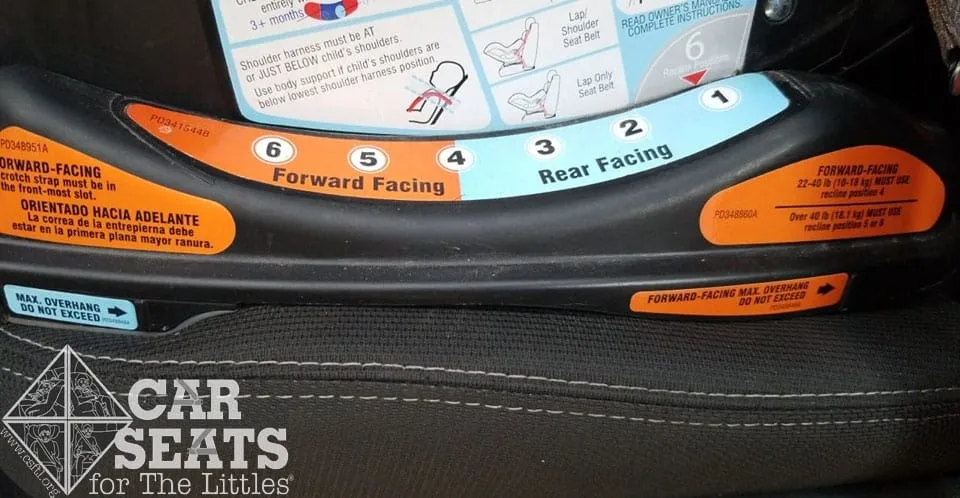
On convertibles, the molded date stamp often sits near the belt path on the shell's underside.
Image source: Web (Bing) / csftl.org (Web image (fair-use with source credit))
The Belt Path Trick: The Spot That Covers Most Models
If you check only one overlooked location, make it the belt path. This is the channel where the vehicle seat belt feeds through the car seat, and Graco frequently stamps or labels the date in this area. The trick works across most of the lineup, which makes it the single most reliable fallback.
Why does Graco favor this spot? The belt path is protected from direct sunlight and friction, so labels and stamps last longer there than anywhere else on the seat. It's also a structural area that gets inspected during every installation, so anything molded into it is easy to re-verify over the years. If a date marking is going to survive a full 7- or 10-year service life, this shielded channel is where it will do it.
To check it:
- Run your fingers along the interior channel where the belt passes through.
- Look for raised lettering molded into the plastic — you may need a flashlight.
- Angle the light low across the surface so the raised text casts a shadow.
The embossed text is often subtle and easy to miss in dim garage lighting. But raised plastic lettering is far harder to damage than a sticker, which makes it the most durable date marking on the seat. Faded labels vanish; embossed plastic stays legible for a decade. If your sticker is gone, this may be your only surviving clue to the seat's age.
This placement isn't unique to Graco, either — manufacturers across the industry have adopted it. A certified child passenger safety technician will typically check the belt path early in any inspection, because that's where the date usually survives.
When the Sticker Fades or Peels: Finding the Embossed Date
Stickers don't last forever. Years of sun, heat cycling, and constant handling can turn a crisp white label into an unreadable mess — and on seats that live through multiple kids, the label often gives out before the shell does. Fortunately, there's a backup system built directly into the plastic.
Graco stamps many of its seats with raised, embossed lettering molded into the shell itself. This date stamp is permanent: it can't peel, fade, or wash away. The tradeoff is that it's subtle — easy to sweep your hand over a dozen times without ever realizing it's there.
To find it:
- Run your fingertips slowly along the underside of the shell, feeling for raised characters in the plastic.
- Check the belt path, the bottom edge, and along the sides of the seat.
- Shine a flashlight at a sharp, low angle across the surface. The shadows cast by the raised text will make the date pop in a way that overhead lighting never will.
- If you find embossed numbers without explanatory text, cross-reference your manual — molded stamps sometimes use a compressed date format that isn't self-explanatory.
In practice, parents who find the embossed stamp this way often report a mix of relief and frustration: the date was right there the whole time, just invisible under normal lighting. The low-angle flashlight trick is the single most useful technique in this entire article.
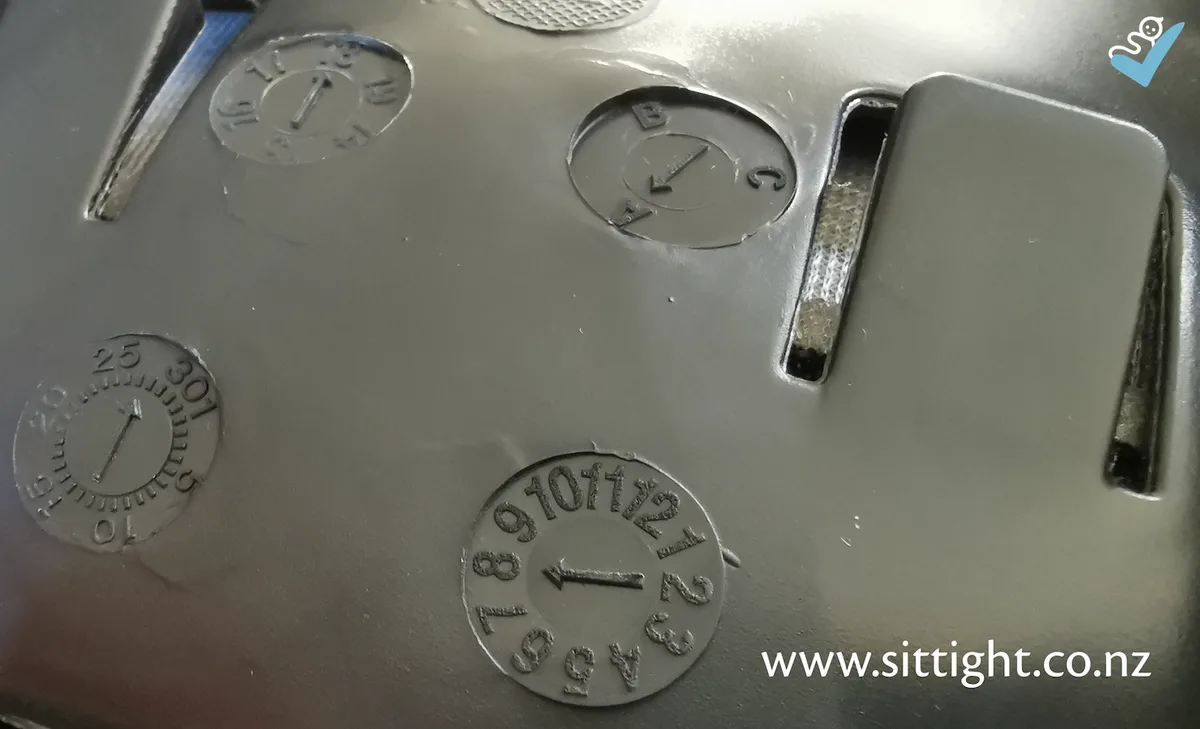
A flashlight held at a low angle makes embossed molded dates far easier to read.
Image source: Web (Bing) / sittight.co.nz (Web image (fair-use with source credit))
Safety Checklist: Is Your Graco Seat Still Road-Ready?
Finding the date is only step one. Several other factors determine whether that seat can safely carry your child. Work through these in order:
- Check the date first. If it has passed, stop here — the seat is done regardless of condition.
- Inspect the shell for cracks, especially at stress points: the belt path, harness slots, and base connection areas. Hairline cracks near these points disqualify the seat.
- Examine the harness webbing. Fraying, twisting that won't resolve, or stiffness means the straps can't restrain properly in a crash.
- Test the buckles. They must click firmly and release cleanly without sticking. A buckle that requires a fight is a buckle that may fail under stress.
- Verify correct buckle positioning for your child's size — a crotch buckle set in the wrong slot position undermines the whole harness system.
- Lift the cover and look for mold, mildew, or heavy staining underneath.
- Confirm all original parts are present. Missing foam inserts, a swapped crotch buckle, or a mismatched pad mean the seat isn't configured the way it was crash-tested.
- Check the recall status. Register the seat with Graco using the card or online form so you're notified directly — and check the NHTSA recall database periodically.
Here's the point certified technicians make over and over: many seats pass a visual once-over but fail on a missing part or an unreadable label. When in doubt — any doubt — book a free inspection with a certified child passenger safety technician near you. It takes about 20 minutes and costs nothing.
Graco Model Lifespans and Date Locations: Reference Table
The original quick-reference table was too thin to be genuinely useful, so here's a fuller version covering the lines families actually ask about:
| Model Line | Type | Typical Lifespan | Where to Find the Date |
|---|---|---|---|
| SnugRide (most versions) | Infant carrier | 7 years | Bottom of carrier shell + underside of base |
| Extend2Fit | Convertible | 7–10 years (varies by generation) | Bottom of shell; belt path; near extension panel |
| SlimFit | Slim convertible | 10 years | Bottom of shell; side near harness adjuster |
| 4Ever / 4Ever DLX | All-in-one | 10 years | Side near harness adjuster; belt path; underside |
| Graco TurboBooster | Booster | Check label (often shorter) | Underside of the booster shell |
| Contender / older convertibles | Convertible | 7 years | Bottom edge; belt path |
Two important caveats: lifespans can vary by specific model number and generation, so always confirm against your seat's own manual and label — and a booster seat counts as a car seat for expiration purposes, which parents frequently forget. If your seat's model isn't listed, the manual and the compliance label remain the authoritative answer every time.
Common Mistakes Parents Make When Hunting for the Date
Assuming every Graco seat puts the date in the same place
This is the biggest trap. The SnugRide hides its date differently than the Extend2Fit; the 4Ever uses different placement than the SlimFit. Even within the same product line, redesigns move the label between generations. Treat every seat as a fresh search.
Confusing the manufacture date with the expiration date
A seat made in 2021 isn't automatically fine to use today. A 2021 seat with a 7-year lifespan expires in 2028; a 2021 seat with a 10-year lifespan runs to 2031. That three-year gap matters enormously for a family planning around hand-me-downs.
Giving up when the sticker is unreadable
A faded sticker isn't the end of the road. The embossed stamp in the plastic shell is your backup — check the belt path, bottom edge, and sides with an angled flashlight. The date is almost always there somewhere, just in a more permanent format.
Forgetting to check the base on infant seats
Carriers and bases carry separate dates. The classic failure scenario: the carrier is current, but the base came from a different purchase or hand-me-down and expired quietly years ago. Both components must be within their lifespans for the system to protect in a crash.
What If You Can't Find the Date at All? 3 Steps to Take Right Now
The label is gone, the embossed stamp is too faint to read, and you have no idea how old the seat is. Don't panic — but do treat the seat as unverified until you can establish its age. Three real options exist:
1. Check the manual. If you still have it, the manual identifies exactly where the date label sits on that specific model and confirms the lifespan, which helps you interpret any partially legible numbers. Lost it? Graco offers downloadable PDF manuals on their official support pages.
2. Contact Graco customer service. Their team can often trace the manufacture date using the serial number. The serial number usually lives on the same label as the date but frequently remains partially legible even when the date section has worn away. Have the model number ready too — it speeds up the lookup.
3. If the age stays unknown, treat the seat as expired. This feels wasteful, and that reaction is understandable. But an unknown-age seat is an unquantifiable risk: you can't confirm it hasn't been in a crash, hasn't been recalled, or hasn't exceeded its tested service life. Federal safety guidance from NHTSA points parents toward replacement whenever a seat's history can't be verified. That's the honest verdict, even when it costs money.

A faded or missing sticker doesn't mean the seat is fine — verify before trusting it.
Image source: Web (Bing) / shunauto.com (Web image (fair-use with source credit))
Your Graco Seat Is Expired — Now What?
An expired seat can't be donated, resold, or passed to a friend. Once the date passes, the seat has no safe path forward in any vehicle — handing it to a thrift store simply transfers the hazard to another family.
Your options, in order of preference:
- Curbside or drop-off recycling. Many municipal programs accept car seats with bulk recycling; the plastic shells get ground down and repurposed. Call your local waste management office first, since policies vary widely.
- Dedicated seat recycling programs. Specialized programs exist that dismantle seats into metal, plastic, and fabric streams — learn how car seat recycling actually works before hauling yours anywhere, since some require the harness and padding removed first.
- Retailer trade-in events. Target and some other retailers run periodic trade-in events that accept expired seats and issue a discount toward a new one. Check current dates on the retailer's site before making the trip.
- Curbside disposal as a last resort. If recycling isn't available, cut the harness straps and break or mark the shell before setting it out. This guarantees nobody retrieves it and puts a compromised seat back into service.
If you need more ideas for a seat you're retiring, there are several responsible ways to deal with an old seat beyond just the trash bin.
Then comes the replacement itself. Most families don't budget for an unexpected car seat purchase, and that stings — but a new seat is dramatically cheaper than the alternative. Before buying, think ahead: if your child is approaching the limits of their current seat, getting clear on when to move to the next seat stage helps you pick a seat with enough longevity that you won't face this scramble again. Frequent travelers should also compare weights — some lightweight options make swaps between cars far less of a workout.
Buying or Borrowing a Used Graco Seat: The 60-Second Check
Taking a seat from a friend, a marketplace listing, or a yard sale? Run through this list before it ever touches your back seat:
- Find the white sticker or the embossed plastic stamp on the shell, base, or belt path.
- Confirm the "Do Not Use After" date is in the future — or calculate it from the manufacture date plus the model's lifespan.
- Get the full history: ask directly whether the seat has ever been in a crash, even a minor one.
- Check for cracks, frayed straps, missing foam inserts, and functioning buckles.
- Confirm the label and all parts are original and legible.
- If the history is unknown or the date can't be found, walk away. No bargain is worth it.
One crash-related note worth remembering: if a seat you already own has been through a collision, your insurer may owe you a replacement — many families don't realize that car seat replacement after an accident is often covered under their policy.
Trust It or Trash It: The Real-World Rule
Trust the seat when the label is readable, the expiration date is in the future, you know its complete history, and every component checks out on the list above.
Trash it when the date has passed, the label is missing and unverifiable, the seat has any crash history, or any part is cracked, frayed, or missing. The plastic can look absolutely pristine and still be unsafe — appearance proves nothing about molecular integrity or crash history.
When in doubt, the seat is out. It's the one rule in car seat safety with no exceptions worth making.
Final Verdict: Your Safest Move in 60 Seconds
Here's your action plan, distilled: flip the seat and check the underside, run your fingers along the belt path, and scan the sides for either the white label or the embossed stamp. Use the low-angle flashlight trick if the stamp doesn't appear immediately. If you find a future expiration date and the seat passes the physical checklist, you're good to go — and writing the date somewhere visible buys you years of peace of mind.
If you can't find the date or it has passed, retire the seat and replace it. No workaround, no "just until the new one arrives," no exceptions. Your child's safety rides on a seat you can actually verify — so spend the five minutes today to find that date, and set a calendar reminder for the day it expires.
Frequently Asked Questions
How do I know if my Graco car seat is expired?
Check the white sticker on the underside, side, or belt path for a "Do Not Use After" date. If you only see a manufacture date, add your model's lifespan — typically 7 years for infant and convertible seats, 10 years for most all-in-one seats. The manual confirms the exact figure for your model number.
Can I use a Graco car seat with no expiration date label?
No. Without a readable date, treat the seat as expired and unusable until its age is confirmed. Contact Graco customer service with the serial number if the label is damaged — they can often trace the manufacture date. If it can't be traced, replace the seat.
Where is the serial number on a Graco car seat?
Usually on the same white compliance sticker as the date, on the underside or side of the shell. If the sticker is gone, check for embossed lettering near the belt path or on the bottom edge. The serial number is what Graco uses for recall notifications and age verification.
Why do car seats expire after 7 to 10 years?
Heat, cold, and UV exposure gradually degrade the plastic shell and wear down the harness, buckles, and padding. Manufacturers set lifespans based on their own crash testing — after that window, the seat may not protect the way it did when new. There's no federal expiration rule; the manufacturer's date is the governing standard.
Does the Graco base expire separately from the carrier?
Yes — on infant seat systems, the carrier and base each carry their own date label, usually both on their undersides. If you bought or inherited them separately, they may not expire at the same time. Both must be current for the system to be safe.

Leave a Reply