
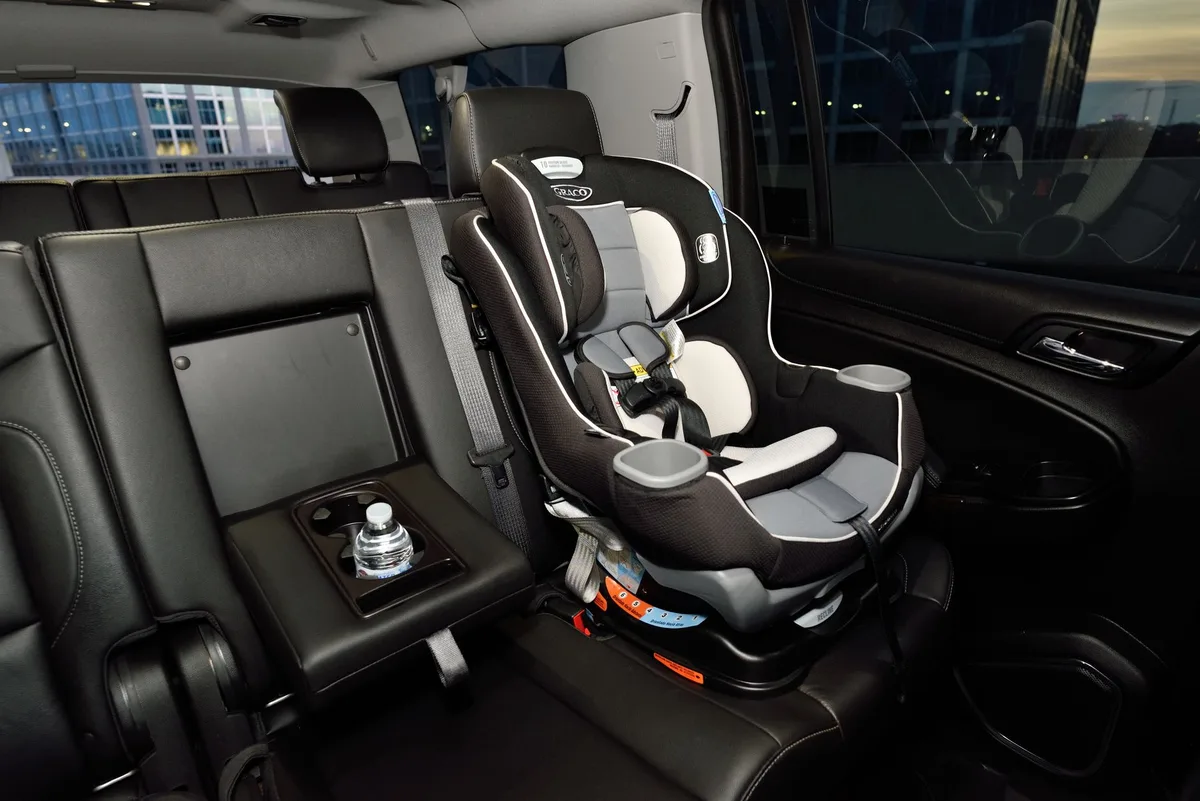
Image source: Pexels / Lee Salem (Pexels License)
Why the Right Timing Matters More Than the Birthday
The question of when kids stop using car seats is one of the most stressful milestones for parents. You want to celebrate your child’s growing independence, but you also know that car crashes are the leading cause of death for children in the United States. The stakes feel enormous because they absolutely are.
Here’s the truth that many parents miss: age is barely the point. A child’s height, weight, and the fit of the vehicle’s seat belt are the only reliable measurements that matter. Your neighbor’s seven-year-old might be ready to ditch the booster while your own seven-year-old needs it for another year. That’s completely normal. You can also read our guide on what gauge is car stereo wire.
This guide breaks down every stage of child restraint, explains the five-step test in plain language, and gives you the 2026 recommendations for knowing exactly when your child can safely use an adult seat belt. Part of being ready is also making sure your vehicle is prepared for your growing family — a quality car vacuum cleaner can help you keep the car clean when you’re constantly installing and removing seats.
The Quick Answer: What Age Do Kids Stop Using Car Seats?
Most children stop using a booster seat — the last stage of child passenger safety — between 8 and 12 years old. However, the correct answer depends entirely on whether they can pass the five-step test with the adult seat belt. You can also read our guide on what does obd2 scanner do.
Here’s the 2026 breakdown by restraint stage:
| Stage | Minimum Age | Weight Range | Criteria to Move On |
|---|---|---|---|
| Rear-facing infant seat | Birth | 5–40 lbs | Child exceeds seat’s height or weight limit |
| Rear-facing convertible | Birth | 5–50 lbs | Child exceeds rear-facing height or weight limit |
| Forward-facing harness | 2+ years | 20–65 lbs | Child exceeds harness limits |
| Booster seat | 4+ years | 40–120 lbs | Passes five-step seat belt test |
| Adult seat belt | 8–12 years | Varies | Passes five-step test consistently |
The American Academy of Pediatrics recommends keeping children in each stage until they outgrow the maximum height or weight limit established by the car seat manufacturer. Rear-facing should continue until at least age 2, and ideally longer.
The Four Stages of Car Seat Safety Explained
Child passenger safety operates on a graduated system. Each stage is engineered to protect a different developmental phase of the skeleton and muscular system. Here is exactly what you need to know at each stage. You can also read our guide on how to change clock on a pioneer car stereo.
Stage 1: Rear-Facing Infant Seats
Infant car seats are designed for newborns and babies typically up to 20–35 pounds, depending on the specific model. These seats feature a carrier handle, a base that stays installed in the car, and a 5-point harness.
The number one rule is that these seats are always rear-facing.
As of 2026, the American Academy of Pediatrics strongly recommends keeping children rear-facing until they hit the seat’s maximum height or weight limit. In practice, this means most children remain rear-facing until age 2, and many convertible seats allow rear-facing use until 40–50 pounds.
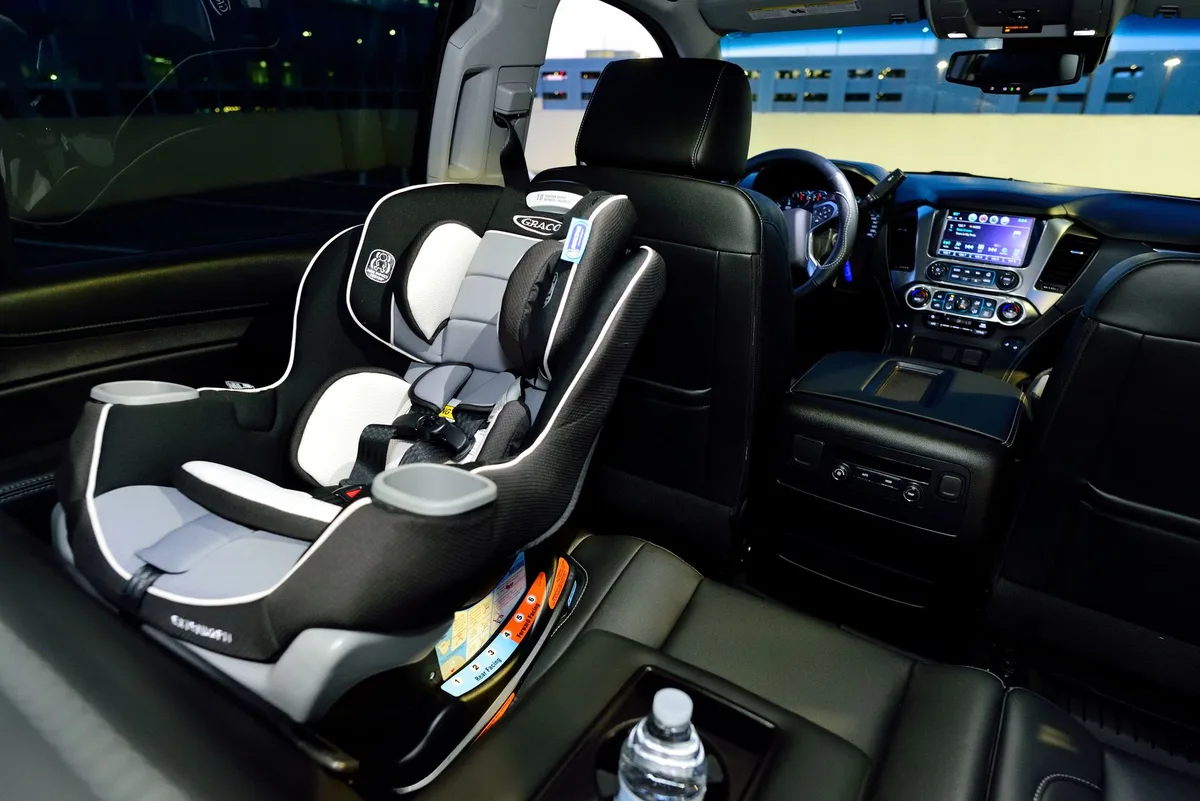
Rear-facing seats distribute crash forces across the entire shell, protecting a baby’s fragile spine.
Why is rear-facing so critical? A baby’s bones are still developing, and their head is disproportionately large compared to their body. Rear-facing seats cradle the head and neck, preventing the kind of whiplash forces that can cause severe spinal injuries in forward-facing crashes.
Stage 2: Convertible Seats and Extended Rear-Facing
Convertible seats are a significant upgrade because they serve double duty. They start as rear-facing seats for infants and toddlers, then convert to forward-facing once your child meets the minimum requirements.
Most convertible seats in 2026 offer:
- Rear-facing weight limits of 40–50 pounds
- Forward-facing harness limits of 65 pounds or more
- Extended rear-facing height limits of 49 inches or more
If you’re about to install one, it’s essential to get the angle and fit correct. Our detailed guide on proper car seat installation walks through tightness checks and common mistakes to avoid.
Stage 3: Forward-Facing Combination Seats
Once your child outgrows the rear-facing limits, they switch to forward-facing with the 5-point harness. Combination seats take this a step further by converting into boosters later.
Forward-facing seats should keep children in a 5-point harness until they reach the harness’s maximum weight limit, often 65 pounds. The harness disperses crash forces across the strongest parts of the body — the shoulders, chest, and pelvis.
Remember that children under age 13 should always ride in the back seat, regardless of which restraint stage they’ve reached.
Stage 4: High-Back and Backless Booster Seats
Booster seats exist for one simple reason: adult-sized seat belts do not fit child-sized bodies. Without a booster, the lap belt rides dangerously across the abdomen and the shoulder belt chafes the neck or face.
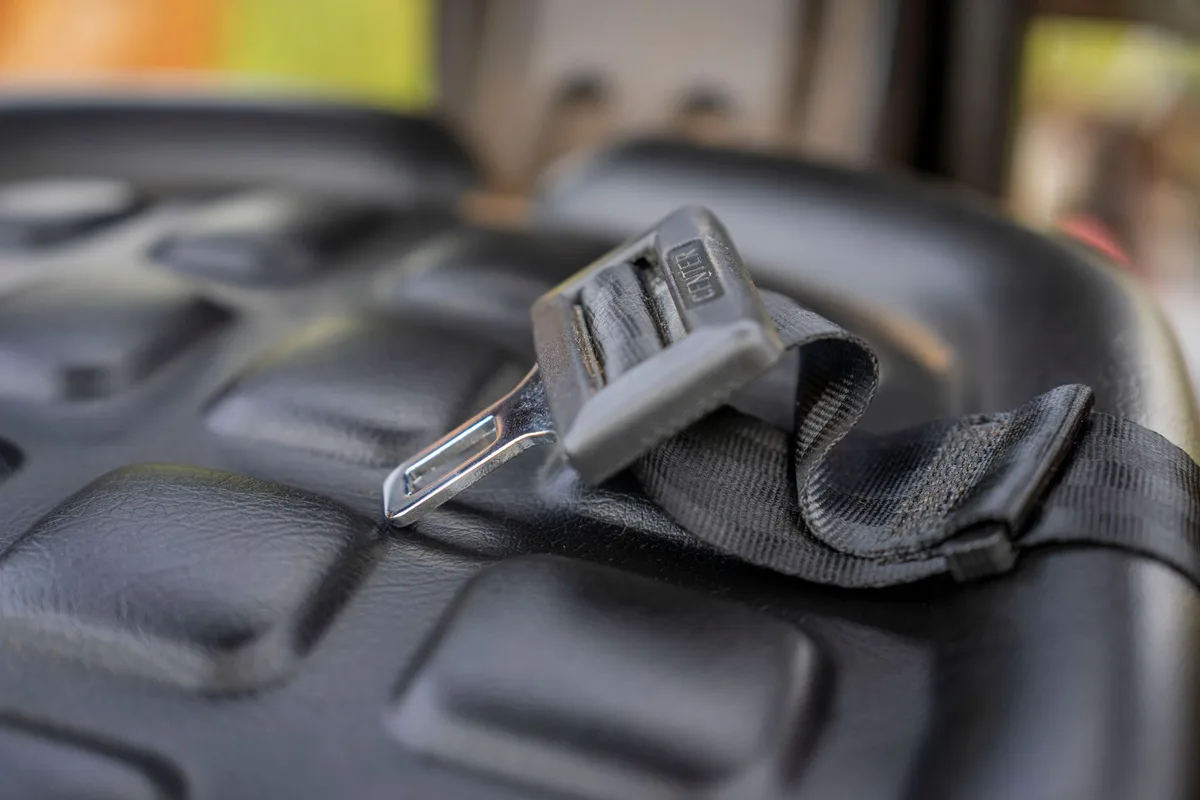
High-back boosters are recommended when the vehicle lacks a head restraint at the correct height.
A booster positions the adult seat belt so the lap portion sits flat across the upper thighs and the shoulder belt rests mid-shoulder. This positioning prevents serious internal injuries in a crash.
The differences between convertible and combination seats can be confusing, but understanding the distinction helps you budget for the right equipment the first time.
The Five-Step Test: The Ultimate Seat Belt Checklist
This is the gold standard for deciding when your child is ready to stop using a booster seat. The test comes from the National Highway Traffic Safety Administration and child passenger safety technicians.

Image source: Pexels / Atlantic Ambience (Pexels License)
Every step must be true — for the entire car ride, not just the first five minutes.
Step 1: Back Flat Against the Seat
Have your child sit with their back fully against the vehicle seat. Can their knees bend at the edge of the seat cushion? If their knees extend past the seat edge or they need to slouch to get comfortable, they haven’t outgrown the booster.
Step 2: Lap Belt Rests on the Upper Thighs
The lap belt should lie flat across the tops of the thighs, touching the pelvic bone. If the belt rides up over the stomach, it can cause severe abdominal and internal organ injuries during a crash.
Step 3: Shoulder Belt Crosses the Chest
The shoulder belt should sit centered on the collarbone and shoulder, never touching the neck or face. If your child pulls the belt behind their back or places it under their arm, they are not ready for the adult belt.
Step 4: Maintains Position for the Whole Trip
Children need to prove they can keep the belt correctly positioned for the full duration of the drive. Kids who slump, lean sideways, or fidget the belt into the wrong position still need a booster to guide the belt.
Step 5: Feet Flat on the Floor
Knees bend at the seat edge while the child’s feet rest flat on the floor. Flat feet allow the child to sit properly and stabilize themselves, which they can’t do if the seat is too high.
2026 Laws and Expert Recommendations: What’s Changed
State-Specific Car Seat Laws
Every state sets its own minimum standards, and these laws are exactly that — minimums. They are not safety recommendations. They are penalties for being less careful than the law requires.
In 2026, most states require:
- Rear-facing until age 2
- Booster seats until age 8 or until a minimum height (typically 4’9″)
- The age range reflects a minimum of 8 states, while many others stretch this requirement to 12 years old
One reliable way to confirm the rules is to check your state’s official Department of Motor Vehicles or Department of Transportation website. The National Highway Traffic Safety Administration also offers state-by-state summaries and a free car seat inspection locator.
Expert Recommendations Go Further
The American Academy of Pediatrics publishes guidance that goes well beyond state laws. Their positions include:
- Keep children rear-facing until the seat’s maximum height or weight limit
- Keep children in a 5-point harness until the harness is outgrown
- Keep children in a booster until the seat belt fits properly, usually between 8–12 years old
- Keep all children under 13 in the back seat
These guidelines are based on decades of crash data showing that booster seats reduce the risk of serious injury by 45% compared to seat belts alone for children aged 4–8.
Common Mistakes That Compromise Safety
Even experienced parents make errors. Here are the most frequent car seat mistakes observed at inspection stations nationwide.
Rushing the Rear-Facing to Forward-Facing Transition
State laws legally permit forward-facing at age 2 for most children. Yet crash data consistently shows extended rear-facing provides up to five times better protection for children under 2. The visual difference between facing forward or rearward matters less than the physics of a crash.
Skipping the Booster Entirely
A common misconception is that a child who outgrew the harness can go straight to the adult seat belt. This is dangerous. Most children are not physically large enough for proper belt fit until age 10–12. A booster is not optional — it’s a critical safety device.
Using Expired or Damaged Seats
Car seats expire anywhere between 6 to 10 years after manufacture date. This is because plastics, webbing, and harness components degrade from temperature changes in the vehicle. Check for an expiration label on the seat’s shell. If the label is missing or the seat has been in a moderate-to-severe crash, replace the seat.
Ignoring the FFA Approval Label
Some parents don’t realize that seats must meet Federal Motor Vehicle Safety Standard 213. The manufacturer’s label stating “This child restraint system conforms to all applicable Federal Motor Vehicle Safety Standards” is your proof. Our guide explains what the FFA approval label means so you can verify compliance before buying.
Are there any instances where you should keep your child in a booster longer?
Yes. Consider these situations where extending booster use is the right call:
- The vehicle seat is deeper than the average passenger seat
- The child frequently rides in vehicles with different seat belt geometries
- The child is significantly below the fifth percentile for height at their age
- The child falls asleep often during car rides, making it hard to maintain belt position
In practice, the safest approach is to keep using the booster for as long as your child will tolerate it and the five-step test continues to fail. There’s no prize for early graduation.
Real-World Installation and Maintenance Tips
Proper installation is 80% of safety. A correctly installed seat in the wrong stage is safer than a loosely installed seat in the right stage.
Installing LATCH vs. Seat Belt: Most vehicles in 2026 include LATCH anchors for both outboard rear seats. However, LATCH has a lower weight limit (often 65 pounds combined seat and child weight) than the seat belt installation method. Once your child exceeds that combined weight, you must switch to seat belt installation.
Checking for Tightness: A properly installed seat should not move more than 1 inch side to side or front to back when tested at the belt path. Position your knee in the seat while tightening the belts to compress the foam cushions for the most secure fit.
Keeping it clean: Life with kids is messy. Between snack spills and milk explosions, your vehicle will suffer. Using a reliable car vacuum once a week helps prevent debris from interfering with the LATCH belts and keeps your child’s environment sanitary. You need enough power to pull compacted crumbs from deep within seat crevices, so suction strength matters when you’re choosing your equipment.
Frequently Asked Questions
Can my child skip the booster seat if they pass the five-step test?
No, not yet. If they pass all five steps on every trip, they are ready. But skipping the booster straight from a harness without testing leaves your child at unnecessary risk. Always try the booster first and compare whether their belt fit looks correct in both setups.
What is the legal minimum age to stop using a car seat in 2026?
Most states require booster seats until age 8, but the age varies by state. Some states allow transition at age 6 if the child meets height requirements, while states like Tennessee require boosters until age 12. Check your state’s specific regulations for the legal floor.
Is it safe to use a backless booster instead of a high-back booster?
High-back boosters are safer when your vehicle has no head restraint at the correct height, or when your child’s head would sit above the vehicle’s head restraint. Backless boosters are lighter and easier to travel with, but provide no side impact protection for the head.
How do I know if the car seat has expired?
All car seats manufactured after 2010 must include an expiration date on the seat’s label. Common expiration timelines are 6 years for infant seats and 10 years for convertible and booster seats. If you cannot find a label, contact the manufacturer with the model number. Never buy a used seat if you can’t verify the history.
Can I rent a car seat when traveling instead of bringing my own?
Rental car companies offer seat rentals, but condition and history are not always guaranteed. If you’re flying, renting a seat from a specialty car seat rental service is sometimes better than checking your seat at the gate where it might be dropped or mishandled. Learn how to get a safe seat when you rent a vehicle so you arrive prepared either way.
Conclusion
Knowing when kids stop using car seats isn’t a single date on the calendar. It’s a series of informed decisions you make based on your child’s physical development and behavior in the vehicle.
Students are safest when parents:
- Keep children rear-facing until the seat’s maximum limits
- Use forward-facing harnesses until the harness is outgrown
- Transition to boosters and keep them until the five-step test is passed
- Keep all children under 13 riding in the back seat
Passing the five-step test once isn’t enough. Your child must maintain correct seat belt position independently for the entire trip, on every single journey. If you have doubt, the answer is already clear: keep the booster.
Your next step today is to grab your car seat manual and check the printed height and weight limits on your child’s current seat. Compare those numbers against your child’s measurements right now. The five-minute check will tell you exactly which stage comes next, and it might save you from making a decision that is months ahead of schedule.

Leave a Reply