
You're standing in the aisle with an infant seat box in your cart, and one question is holding up checkout: do you need a car seat base?
The short answer is no — most infant carriers are engineered to install safely with nothing but the vehicle's seat belt. But the honest answer is more useful: for some families, a base is the best money you'll spend. For others, it's $150 of plastic that never leaves the garage. You can also read our guide on how to install a car seat.
Under FMV SS 213, the U.S. federal standard for child restraints, every infant carrier must pass crash testing in two configurations: snapped into its base and installed belt-only. Both are safe when done correctly. The base question isn't about safety margins — it's about matching gear to your actual life.
That's what this guide unpacks: how base-less installation works, what a base genuinely buys you, what it doesn't, and how to decide in about five minutes. You can also read our guide on when to remove newborn insert from car seat.
Why This Isn't a Simple Yes-or-No Question
Ask any Child Passenger Safety Technician (CPST) and you'll get the same two-word reply: "It depends." Your seat type matters. Your vehicle matters. How often you swap cars matters even more.
Here's how the decision breaks down in practice:
| Your situation | Do you need a base? |
|---|---|
| One car, daily commute, one baby | Optional, but very convenient |
| Two or more regular drivers (daycare, grandparents) | One base per car, or skip bases |
| Frequent taxis and rideshares | Skip the base, learn the belt path |
| Regular air travel | Skip the base, use the belt path |
| Newborn with reflux or prematurity | Base helps hold a consistent recline |
One checkpoint before anything else: look at what you actually own. Convertible seats and all-in-one seats never use a separate base — they install directly with the seat belt or LATCH and stay put for years. The base question applies only to infant carriers, the bucket-style seats that click in and out. You can also read our guide on how do you put car seat in shopping cart.
If you're buying a new infant system, make this choice before checkout, not after. If you've already bought, flip to the carrier's manual and confirm it lists a belt-only installation method — nearly all U.S. carriers do.
Quick Answer
- Safety: No base required. A correctly installed carrier meets the same federal crash standard either way.
- Convenience: A base wins. Click-and-go beats re-threading a seat belt on every trip.
- Consistency: A base holds the recline angle; belt-only installs need a manual check each time.
- Taxis, travel, multi-car families: Belt-only usually wins on cost and logistics.
If you drive one car every day and budget isn't tight, buy the base. If you split weeks between cars, fly often, or lean on rideshare, skip it and master the belt path instead.
How Infant Car Seats Work Without a Base
Here's the part that surprises most new parents: your carrier isn't "half a car seat" without its base. It's a complete restraint system on its own.
The shell has belt paths molded right into it. Thread the vehicle seat belt through the route shown in your manual, buckle it, press down, and pull the slack out. Done correctly, that's a fully certified installation.
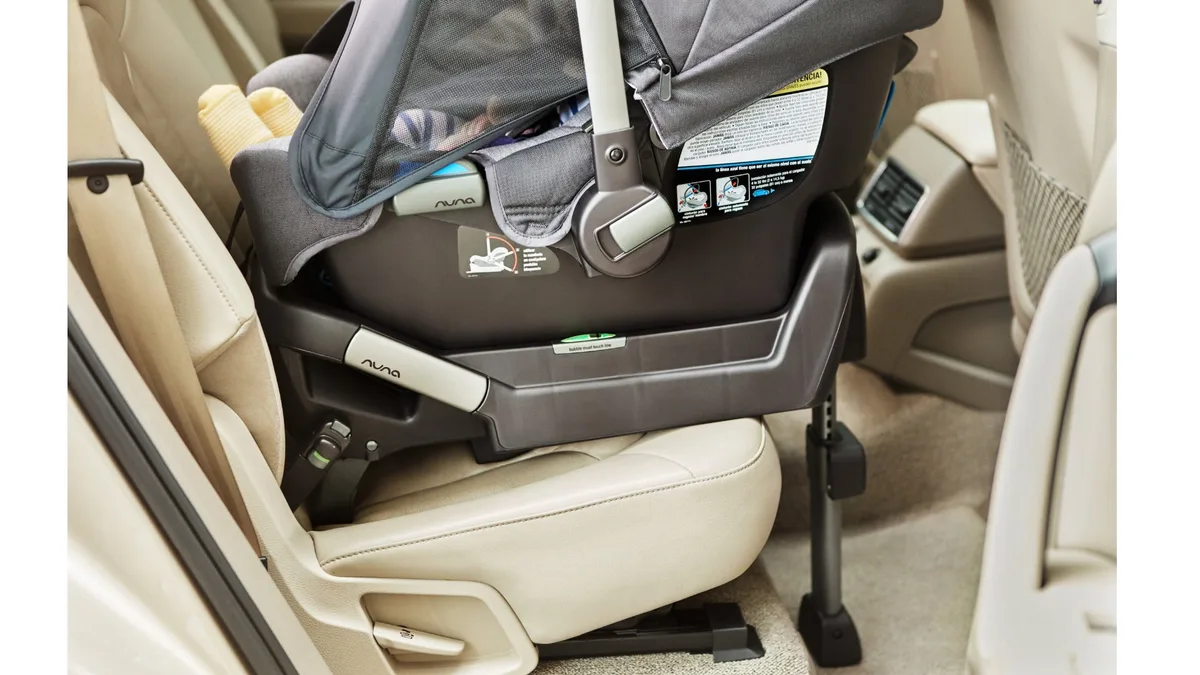
A carrier installed belt-only — a fully certified setup with no base involved.
Image source: Web (Bing) / automotiveplanner.com (Web image (fair-use with source credit))
This style is often called the "European belt path," because European regulations leaned on belt-based installation long before dedicated bases became the norm there. The name sticks even on U.S. seats.
The crash physics are straightforward. Belt-only, the carrier's shell absorbs the forces directly and transfers them into the vehicle's structure. With a base, the carrier passes energy into the base first, and the base routes it into the vehicle's anchors. Different paths, same test to pass. If the stickers on the side of your carrier look like alphabet soup, decoding certification labels is easier than it looks.
One real limitation: LATCH doesn't work base-less. Lower anchors connect to a base or to connectors built into a seat — a bare carrier has none. Belt-only installation always means the vehicle seat belt.
A common mistake is treating the first attempt as the real one. Practice once at home, in your driveway, with no schedule pressure. After two or three runs, the process takes about three minutes — a skill worth having before you're improvising in a rental car aisle.
For every step in detail, our step-by-step install walkthrough covers belt and LATCH methods for every seat type.
The Case for Using a Base: What You're Really Paying For
Let's be honest about why bases exist. They're not a safety upgrade. They're a convenience upgrade with a consistency side benefit — and that consistency has real value.
A good base does three things exceptionally well.
1. It locks in the recline. Newborns need a fairly reclined position to keep their airway open — most infant seats specify a range of roughly 30 to 45 degrees, marked by a level line or bubble indicator. Set it once with the base's adjustable foot and it stays set. Belt-only, you're re-checking that angle on every install, which is exactly the check that gets skipped at 6 a.m. Pediatric guidance is blunt about rear-facing recline and airway position, so treat the level indicator as non-negotiable.
2. It gives you audible confirmation. The click tells you the carrier is locked to the base. Belt-only, your confirmation is a firm tug at the belt path — a skill, not a sound.
3. It's faster and repeatable. The real-world math:
| Task | With base | Without base |
|---|---|---|
| Secure the carrier | ~5 seconds | 2–5 minutes |
| Recline check | Built-in indicator | Manual, every time |
| Error risk | Lower | Higher |
| Cost | $80–$250 per base | $0 |
The base also solves the "sleeping baby" problem. When your infant falls asleep in the carrier, you click the whole seat into the base without waking them. Without one, you're either carrying a sleeping baby into the store or re-installing by belt — which absolutely means waking them.
Most bases connect with LATCH, clicking into your vehicle's lower anchors, so daily use is push down, tighten, go. A stable base also helps when you're adjusting the harness or deciding on the newborn-padding timeline if you're unsure when extra padding comes out.
Speaking of errands: a carrier invites itself onto strollers and cart frames, and getting the carrier through errands safely is its own skill worth planning for.
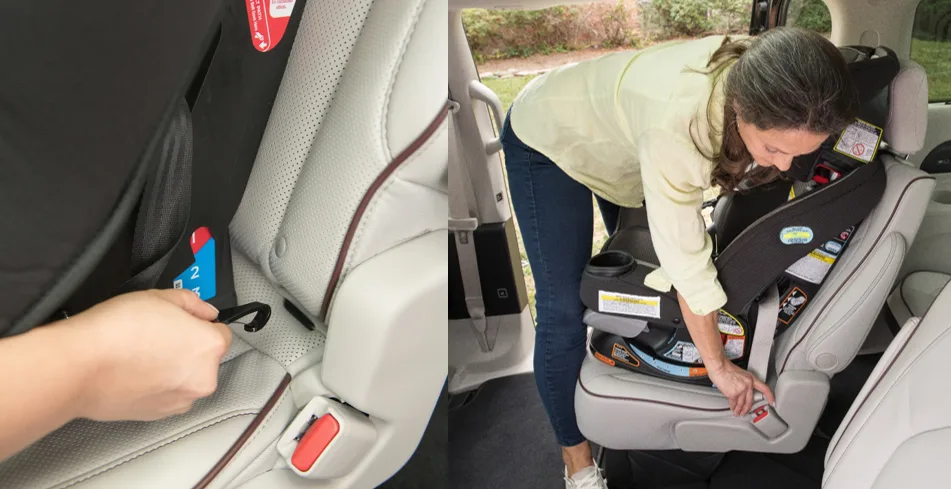
Lower LATCH anchors — the connection points most bases clip into.
Image source: Bing (Web (fair-use with source credit))
The Honest Drawbacks of Owning a Base
Cost adds up fast. A dedicated base typically runs $80 to $250 depending on brand and features. Outfitting two cars can mean $500 for bases alone. Compare that to a belt-path install, which costs exactly zero dollars beyond the seat you already bought.
LATCH has weight limits. LATCH hardware carries a combined weight limit — your child plus the seat itself, commonly 65 pounds in the U.S. In practice, most babies outgrow an infant carrier by height or its own weight rating before hitting that ceiling, but don't assume: federal rules require the limits to be published, so check the labels on your seat and base or the National Highway Traffic Safety Administration's guidance on LATCH weight limits.
Expiration dates matter. Like carriers, bases expire — typically six to ten years from the manufacture date, stamped on the shell. Plastic degrades and standards move on. A daily-use base earns its keep; a second base in a rarely-driven car can silently age out. Never use a hand-me-down base without checking its date and history.
Bases add bulk. They eat rear-seat real estate. In a compact car, a base plus carrier can crowd out an adult or a second car seat — a bigger problem than most people expect until they try to fit three across.
Your vehicle takes some wear. A tightly installed base presses into upholstery, and life with a newborn means spills. If the back seat takes the hit, cleaning fabric upholstery is far easier sooner than later.
There's a false-security trap. Bases get installed loose too. Run the one-inch test — the base shouldn't move more than an inch at the belt path — and recheck monthly, because vehicle seats settle and hardware loosens over time.
Types of Car Seat Bases (and How to Choose)
Not all bases are the same animal. Knowing the categories keeps you from overpaying or buying twice:
- Standard LATCH bases — the most common type. Flexible strap connectors plus a belt-tensioning mechanism. Reliable, widely compatible within a brand, mid-range price.
- Rigid-LATCH bases — rigid connectors that click directly onto the vehicle's anchors. Fastest install, often paired with a load leg or anti-rebound bar for better crash-energy management. Pricier and heavier.
- Seat belt-only bases — less common, but useful in vehicles or seating positions without lower anchors. Cheaper, slightly slower to install.
- Rotating bases — premium bases that swivel toward the door for loading. Convenient for daily lifting, heavy and expensive.
The critical rule: bases are model-specific. A base must match your exact carrier model — and sometimes a specific manufacture date range — from the same manufacturer. Ignore "universal" claims. Buying secondhand only makes sense if you can verify model match, expiration date, and crash history.
How to Install an Infant Seat Without a Base, Step by Step
- Open the manual to the belt-only page. Every carrier's routing differs slightly; only use routes your manual shows.
- Set the recline first. Check the level line or bubble indicator and add a rolled towel or pool noodle only if the manual permits it.
- Thread the belt through the belt path. Route it exactly as diagrammed — no shortcuts.
- Buckle, press, tighten. Push down with body weight while pulling slack from the belt, then lock it (switchable retractor or locking latchplate).
- Tug test. Grab the carrier at the belt path. Less than one inch of movement in any direction passes.
- Recheck the recline with baby in. A child's weight changes the angle slightly.
Once practiced, the whole sequence runs three to five minutes. In a taxi, do the identical routine every ride — consistency is what makes it safe.
When Skipping the Base Makes Sense
Skip the base entirely if any of these describe you:
- You fly regularly. The Federal Aviation Administration urges parents to secure young children in an approved restraint during flights, and infant carriers install belt-only on the plane — the base stays home.
- You use taxis or rideshare weekly. One practiced skill beats hauling hardware.
- Multiple cars share pickup duty. Teaching two drivers a belt install is cheaper than buying two bases.
- Budget is tight. Money not spent on a base can go toward a better daily carrier or vehicle maintenance.
For broader trip prep and vehicle upkeep, our car care hub collects the practical guides that pair well with this one.
Frequently Asked Questions
Is it safe to use an infant car seat without the base?
Yes — when installed correctly using the manual's belt path and the proper recline. Federal crash testing covers both configurations, so neither is inherently safer. The trade-off is skill: belt-only installs depend on you checking tension and recline every single time, so practice before you need it under pressure.
Do I need a base in every car?
No. Your options are one base in the primary car plus belt-only installs elsewhere, a second matching base for a second driver, or no bases at all. If another adult drives weekly, a practiced belt install costs nothing; if they drive daily, a second base saves time and reduces errors.
Will any base fit any infant seat?
No — bases are model-specific. Even within one brand, a base may only fit certain carrier versions or manufacture date ranges. Match the base to the exact model named in your manual and buy it from the same manufacturer. An incompatible base is not a safe installation, period.
Do car seat bases expire?
Yes. Like carriers, bases carry an expiration date — typically six to ten years from manufacture, stamped or molded into the shell. Plastic fatigues and safety standards evolve. Check the date before using any hand-me-down base, and retire it once expired rather than selling or passing it along.
Is LATCH safer than a seat belt installation?
Used correctly, neither is safer — both anchor the seat to the vehicle. LATCH is easier to tighten consistently; seat belts work everywhere, including positions without anchors and when weight limits apply. Choose one method per install — never both — and use whichever you can make tight every time.
Can I take an infant carrier in a taxi without the base?
Yes, and it's the standard approach for city travel. Bring the carrier, install it rear-facing with the vehicle seat belt along the manual's belt path, and lock the belt. Keep the routine well-practiced so a ten-minute ride doesn't turn into a stressful roadside relearning session.
Conclusion
A car seat base doesn't make a crash safer — it makes correct installation easier to repeat, day after day. Belt-only installs are fully certified and indispensable for taxis, flights, and multi-car families; bases pay you back daily in speed, recline consistency, and one less decision before coffee. Choose based on your routine, not on fear.
One clear next step: this weekend, practice a belt-only install of your carrier in your own back seat — manual open, level line checked, one-inch tug test done. Ten minutes now buys confidence for every trip that follows.

Leave a Reply