
You're staring at an infant car seat box, and your first question is: do you need a car seat base? Short answer: no, you don't. Most infant seats are engineered for safe installation without one.
But that short answer hides a lot of nuance.
Here's what actually matters. Per FMVSS 213, the U.S. federal standard for child restraints, every infant carrier must pass crash testing in both base and base-less configurations. So both methods are safe when installed correctly.
The real question is which one fits your daily routine, your vehicle, and your travel habits. That's what we'll unpack step by step.
Why This Isn't a Simple Yes or No Question
Ask any Child Passenger Safety Technician (CPST) and you'll get the same reply: "It depends." Your car seat type matters. Your vehicle matters. How often you switch cars matters even more.
Here's how the decision logic breaks down in practice:
| Your situation | Do you need a base? |
|---|---|
| Single car, daily commuter, one baby | Optional, but highly convenient |
| Multiple cars (daycare pickup, grandparents) | One base per car, or skip them |
| Frequent rideshare or taxi use | Skip the base entirely |
| Regular air travel | Skip the base, use the belt path |
| Newborn with reflux or prematurity | Base helps set consistent recline |
If you own a convertible car seat, stop right here. Convertible seats don't use a separate base at all. They're installed directly into the vehicle with the seat belt or LATCH.
The base question only applies to infant carrier systems, the bucket-style seats that click in and out of a car.
The same logic applies if you've bought an all-in-one seat. These seats also skip the base entirely. Only the infant carrier, with its removable base, gives you this choice in the first place.
So before you spend money, check what you actually own.
Quick Answer
You need a car seat base for daily convenience, not for safety. Infant seats install safely without one using the vehicle seat belt. The base adds clicks and consistency.
It also keeps the recline angle correct every time. If you travel often, skip the base and learn the belt path. If you drive the same car daily, the base is worth it.
How Infant Car Seats Actually Work Without a Base
Here's the part that surprises most new parents. Your infant carrier isn't a car seat without its base. It's a complete restraint system.
The carrier shell has belt paths molded into its structure, usually at the head end and the foot end. Thread the seat belt through those paths, buckle it, tighten it, and you've got a secure installation.
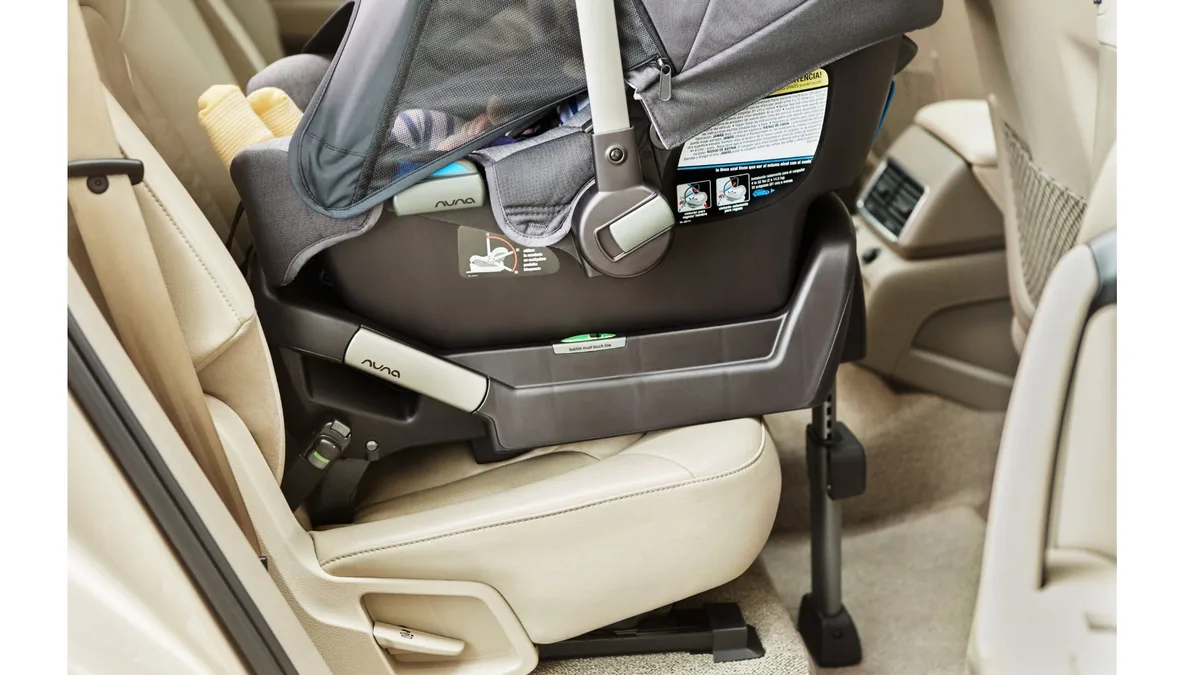
Image source: Web (Bing) / automotiveplanner.com (Web image (fair-use with source credit))
This is called the "European belt path" method. It's the dominant installation style in Europe, where dedicated bases are less common. The name comes from the fact that European regulations have long prioritized belt-based installation for infant carriers.
The crash physics are worth understanding. When you install without a base, the seat belt holds the carrier directly. The carrier's shell absorbs the crash forces through its own structure.
When you use a base, the carrier clicks into the base, and the base takes the brunt of the energy. Both approaches distribute crash forces to the vehicle's anchor points, just through different paths.
One note on LATCH: most bases use LATCH, but you can't use LATCH on a base-less carrier. The belt path method absolutely requires the vehicle seat belt. If you've never installed a car seat without a base, it's worth practicing once before you're stranded at an airport or in a rental car.
The process takes about three minutes after you've done it a couple of times.
For a full walkthrough of both installation styles, make sure you check out our detailed car seat installation guide before your first trip.
The Case for Using a Base: What You're Really Paying For
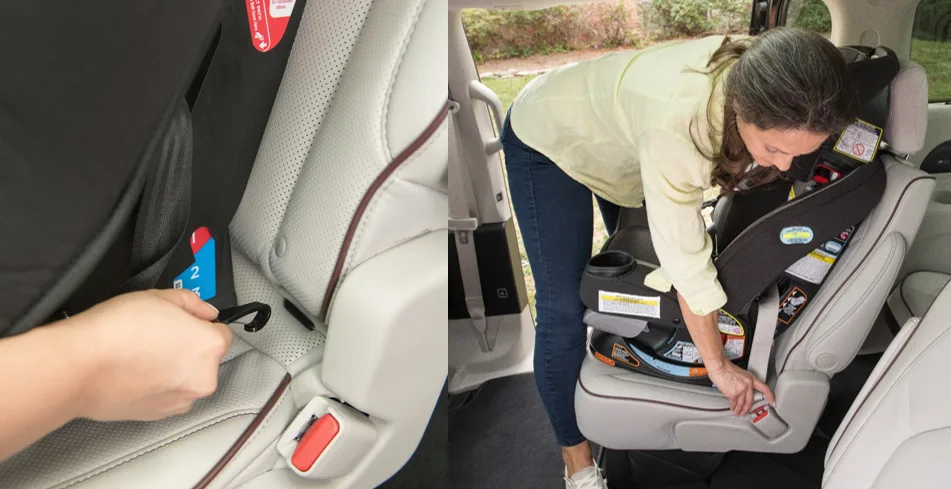
Image source: Bing (Web (fair-use with source credit))
Let's be honest about why bases exist. They're not a safety upgrade. They're a convenience upgrade with a safety side benefit.
The base does three things exceptionally well.
First, it standardizes the recline angle. Newborns need a specific recline, usually around 45 degrees from the vehicle seat, to keep their airways open. A base has a built-in level indicator and adjustable foot.
You set the angle once, lock it in, and never think about it again. The European belt path method requires you to check the recline every single time you install, which is easy to get wrong when you're tired.
Second, it gives you an audible click. Every base worth its salt has a click mechanism that locks the carrier in place. That click tells you the carrier is secure.
Without a base, you're relying on the seat belt tension and your own judgment that everything feels right.
Third, it's faster. Here's the real-world math:
| Task | With base | Without base |
|---|---|---|
| Click carrier into car | 5 seconds | N/A |
| Install seat from scratch | 2-3 minutes | 3-5 minutes |
| Check recline angle | Built-in indicator | Manual measurement |
| Error risk | Lower | Higher |
The base also solves the "sleeping baby" problem. When your infant falls asleep in the carrier, you can click the whole seat into the base without waking them. Without a base, you're either carrying a sleeping baby into the store or re-installing the carrier by belt, which absolutely means waking them.
The LATCH connection makes daily use even easier. Most bases use rigid or flexible LATCH anchors that click directly into your vehicle's lower anchors. That's a more consistent connection than threading a seat belt each time.
You just push down, tighten, and go. If you're dealing with a newborn insert removal question, you'll appreciate having a stable base while you adjust the harness. We've covered when to remove the newborn insert if you need guidance on that timeline.
The Honest Drawbacks of Owning a Base
Bases aren't perfect, and pretending otherwise does you a disservice. Here's what nobody tells you about owning a car seat base.
Cost adds up fast. A dedicated base typically runs $80 to $250 depending on the brand. If you're outfitting two cars, that's potentially $500 just for bases.
Compare that to a travel-friendly belt-path installation, which costs exactly zero dollars beyond the car seat you already bought.
LATCH weight limits are a hidden trap. The U.S. standard limits LATCH to 65 pounds combined child and seat weight. Most infant seats weigh 8 to 12 pounds, and the carrier adds another 8 to 10.
Once your baby hits around 30 pounds, you're bumping against the limit. That means the base, which relies on LATCH, may need to switch to a seat belt installation anyway. The belt path method doesn't have this limitation.
Expiration dates are another issue. Car seat bases expire, usually six years from the manufacture date. The plastic degrades, the webbing weakens, and the metal stress points fatigue.
A base is a lifetime purchase in the same way a car seat is: it's not. You're buying a ticking clock. If you use the base daily, that's fine.
If you buy an extra base for grandma's car that she uses twice a month, you may not remember to check the date before it silently ages out.
Bases also add bulk. They take up more seat space. In a compact car, a base plus an infant carrier eats up precious rear-seat real estate.
That's a bigger problem than you'd think when you're trying to fit another adult or a second car seat. If you're also wondering about how to manage seats in tight spaces, our guide on using a car seat on a shopping cart covers practical carrier handling away from the car.
Finally, there's the false security problem. A base can be installed incorrectly too. Loose bases, forgotten tightening, and skipped tugs happen all the time.
The base reduces error, but it doesn't eliminate it. You still need to check that installation regularly and retighten it as the vehicle moves and settles.

Leave a Reply