
You’re staring at a wall of batteries at AutoZone, and every single one claims to be the best. Optima says “spiral cell technology.” Odyssey brags about “extreme power.” DieHard has been the king of the name game for decades. So what is the best battery brand for car owners who just want their engine to start every morning without fail?
Here’s the honest answer: there isn’t one single “best” brand. The right battery depends on your vehicle’s group size, your local climate, your driving habits, and your budget. That’s not a cop-out.
It’s the reality of how lead-acid and AGM batteries work. As of 2026, the market has consolidated around a handful of manufacturers, but they all build batteries with different strengths. Manufacturers rate them per the Society of Automotive Engineers J537 testing standard, and those numbers tell you more than any logo on the case.
Image source: Web (Bing) / kensnottingham.co.uk (Web image (fair-use with source credit))
Quick Answer
The best car battery brand is Optima for extreme performance and vibration resistance. Odyssey is the best for maximum lifespan and deep cycling capability. Interstate offers the best all-around value with a nationwide warranty.
For budget buyers, EverStart from Walmart delivers surprising reliability. Ultimately, the right brand is the one that matches your vehicle’s CCA requirements, group size, and climate conditions.
Why This Comparison Actually Matters
A car battery is a wear item. It’s not a lifetime component. Typical lifespan runs three to five years, and it dies fastest in extreme heat.
The average driver will replace their battery at least three times during a typical ownership period. That’s why getting the choice right matters.
Spend $80 on a no-name battery and you might get 24 months of reliable service. Spend $180 on a quality AGM unit and you could get seven years. Do the math and the expensive battery is often cheaper per year of use.
That’s the real cost equation most buyers skip.
But price isn’t the only factor. A battery that’s the wrong group size can short out against your hood or vibrate itself apart. A battery with too few cold cranking amps will leave you stranded on a freezing January morning.
And a battery that doesn’t fit your vehicle’s mounting tray is a safety hazard waiting to happen.
Getting this right also protects your alternator and your car’s electrical system. A weak battery forces your alternator to work overtime. That leads to premature failure and bigger repair bills down the road.
The right battery protects your whole vehicle, not just your ability to start it.
What Actually Matters When Buying a Car Battery (More Than Brand)
Let’s get one thing straight. Brand loyalty is nice, but specs matter more. The most expensive battery in the wrong group size is useless.
The cheapest battery with the right specs will outperform a premium unit with the wrong fitment.
Cold Cranking Amps: The Number That Starts Your Engine
Cold cranking amps measure how much current a battery can deliver at 0°F for 30 seconds while maintaining a voltage of at least 7.2 volts. Higher numbers mean stronger starting power in frigid conditions. Your owner’s manual specifies a minimum CCA for your vehicle.
Match it or exceed it, but don’t fall short.
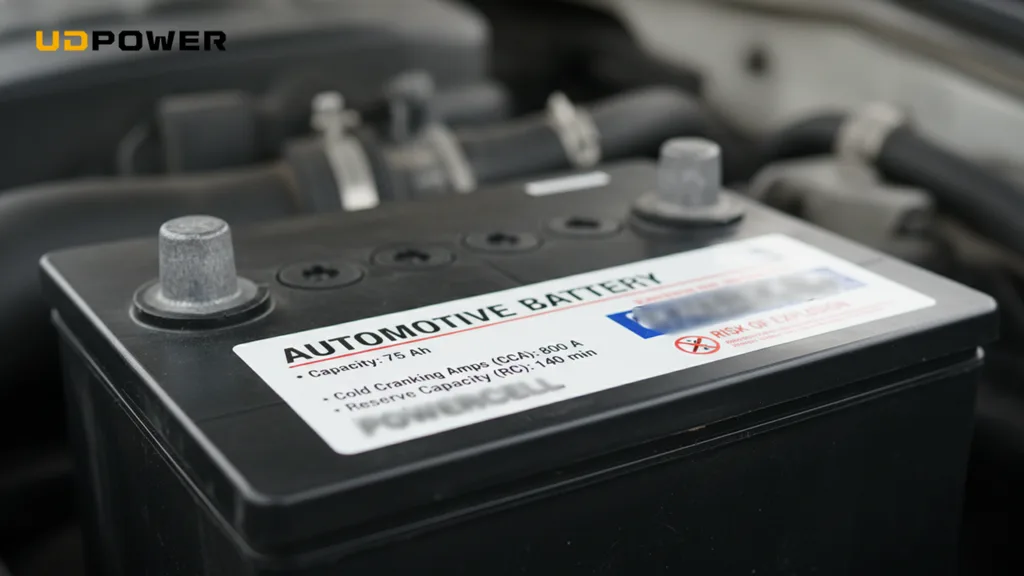
Image source: Web (Bing) / udpwr.com (Web image (fair-use with source credit))
A car in Phoenix doesn’t need 800 CCA. A truck in Minneapolis absolutely does. Check your manual, find the minimum rating, and buy accordingly.
Exceeding it by 100 to 200 CCA is fine and gives you margin as the battery ages.
Group Size: Why Fitment Beats Brand
Group size refers to the physical dimensions of the battery, terminal placement, and terminal type. The Battery Council International assigns each size a number like 24F, 35, 65, or 94R. Your vehicle was designed to accept a specific group size.
Cramming a different size into the tray is a recipe for vibration damage, loose connections, and potential short circuits.
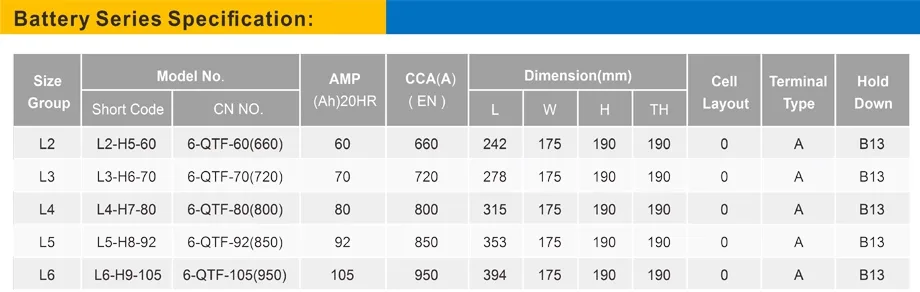
Image source: Bing (Web (fair-use with source credit))
Open your owner’s manual or check the BCI guide online. Write down the exact group size for your make and model. Then narrow your brand search to batteries that fit that spec.
You’ll eliminate 70 percent of the options immediately.
AGM vs. Standard Flooded: Which Technology Do You Need?
Absorbent glass mat batteries are sealed, spill-proof, and handle deep discharges better than standard flooded batteries. They also cost 40 to 80 percent more. Modern vehicles with start-stop technology often require AGM because the electrical load is heavier.
Older vehicles with simple electrical systems run fine on a flooded battery.
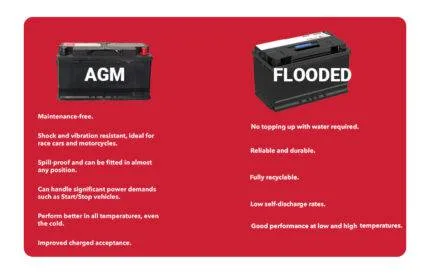
Image source: Web (Bing) / redwaypower.com (Web image (fair-use with source credit))
Here’s the critical question: does your car require AGM? If the vehicle came from the factory with an AGM battery, replace it with AGM. The charging system is calibrated for that technology.
If your car uses a flooded battery, you can upgrade to AGM, but you need to verify the charging voltage is compatible. AGM batteries charge at a slightly different rate, and your alternator might overcharge or undercharge them.
Reserve Capacity: The Hidden Safety Buffer
Reserve capacity measures how long a battery can run accessories if the alternator fails. It’s expressed in minutes. A battery with 120 minutes of reserve capacity can power your headlights and radio for two hours with a dead alternator.
That’s a huge safety margin if you’re stranded on a dark highway.
For most daily drivers, 90 to 120 minutes is plenty. For vehicles with heavy accessory loads, winches, or emergency equipment, go higher. Aggregate reviews consistently show that buyers who prioritize reserve capacity report fewer roadside emergencies.
Breakdown of the Major Brands: The Good, the Bad, and the Honest Truth
Different manufacturers excel at different things. Here’s an honest breakdown of the major brands you’ll actually find in stores.
Optima
Optima is famous for its spiral-cell design and six-pack look. The RedTop is engineered for maximum starting power and vibration resistance. The YellowTop is a dual-purpose battery that handles both starting and deep cycling.
The BlueTop is built for marine applications.
The downsides are real. Optima batteries cost more per amp than almost anything else. They’re overkill for a stock commuter sedan.
And some buyers report that the RedTop’s CCA ratings don’t match the performance of cheaper competitors in extreme cold.
Who it’s for: off-road enthusiasts, audiophiles with serious sound systems, and anyone who wants maximum vibration resistance.
Odyssey
Odyssey makes pure lead AGM batteries with thin plate technology. The design delivers massive cranking power and exceptional deep cycling ability. Their Extreme Series batteries are often rated for 10 years of service life, which puts every other brand to shame.
The catch is price. Odyssey batteries are among the most expensive on the market. They also require a compatible charging system.
If your vehicle’s alternator voltage is wrong, you’ll kill an Odyssey faster than a cheap flooded battery.
Who it’s for: serious overlanding vehicles, diesel trucks with high cranking demands, and owners who plan to keep their vehicle for a decade.
Interstate
Interstate is a classic American brand with a massive distribution network. Their AGM and flooded batteries consistently earn strong marks in aggregate owner reviews. Their warranty is solid across all 50 states, and their mounting hardware is among the best in the industry.
Interstate’s middle-tier batteries are the sweet spot for most drivers. They deliver dependable performance without the premium price tag of Odyssey or Optima. Their hot-climate batteries in particular hold up well against the heat that kills competitors.
Who it’s for: daily commuters, families with minivans, and anyone who wants a dependable battery without paying a premium.
DieHard
DieHard has been a household name since the 1960s. Advance Auto Parts currently owns the brand, and they’ve modernized the lineup with AGM options and higher C Cold cranking amps for modern vehicles. The Gold series has become their flagship, and the Platinum AGM line competes directly with Odyssey at a slightly lower price point.
The brand’s biggest weakness is availability. DieHard is primarily sold through Advance Auto Parts locations. If you’re stranded in a small town without one nearby, you’re out of luck.
Their warranty fulfillment also requires visiting an Advance store, which can be inconvenient.
Who it’s for: drivers who have an Advance Auto Parts nearby and want a well-known brand with strong modern options.
Duralast
Duralast is AutoZone’s house brand. It’s sold in thousands of locations across the country, and the warranty replacement process is famously painless. Walk in, show the receipt, walk out with a new battery.
Their standard Duralast batteries are budget-friendly and dependable. The Duralast Gold line adds longer warranty coverage and better cold cranking performance. The Duralast Platinum is an AGM that competes well with premium brands.
The catch is that AutoZone’s warranty registration requires the original receipt and often a driver’s license scan. It’s a minor hassle, but it’s a barrier some buyers find annoying.
Who it’s for: budget-conscious drivers, roadside emergency buyers, and anyone who wants a nationwide network for warranty support.
EverStart
EverStart is Walmart’s house brand, and it’s one of the most popular batteries in America. The value proposition is hard to beat. You get a reliable flooded battery at a price that undercuts nearly every competitor.
Walmart sells these in massive volumes. Store turnover is high, which means you’re more likely to get a fresh battery with a recent date code. That matters because a battery that sits on a shelf for six months loses capacity before it’s even installed.
The downsides are modest. EverStart doesn’t offer AGM options at every location. Their premium Maxx line is flooded only, and the warranty is shorter than premium brands.
But for the price, it’s tough to argue.
Who it’s for: budget buyers, first-time car owners, and anyone who needs a dependable battery right now at the lowest cost.
AC Delco
AC Delco is the original equipment manufacturer for General Motors vehicles. Their batteries are designed to match the specific charging algorithms of GM cars and trucks. If you drive a Chevrolet, GMC, Buick, or Cadillac, this is the safest choice.
Their AGM batteries are especially well-regarded for late-model GM vehicles with start-stop technology. The fitment is exact. The terminal design matches perfectly.
The warranty is respectable.
The downside is that AC Delco batteries aren’t optimized for other manufacturers’ vehicles. A Ford or Toyota owner gets better performance from a brand that matches their charging system.
Who it’s for: GM vehicle owners who want a factory-spec replacement without the dealer markup.
Bosch
Bosch is a premium European brand with a strong reputation for quality. Their batteries are manufactured in partnership with some of the world’s largest battery makers. The premium silver-calcium technology offers excellent resistance to heat and vibration.
European car owners particularly favor Bosch because the group sizes and terminal types match German and Japanese vehicles precisely. The warranty support is solid in most regions.
The downsides are availability and price. Bosch batteries aren’t stocked at every chain store. You’ll often need to order one, which adds time and shipping costs.
Who it’s for: European car owners, premium vehicle owners, and drivers who prioritize German engineering.
Side-by-Side Comparison: Brands at a Glance
Here’s a quick reference table to help you compare the major brands at a glance.
| Brand | Best For | Price Range | Warranty | Lifespan Expectancy |
|---|---|---|---|---|
| Optima | Vibration resistance, off-road | $220-$350 | 3 years | 5-7 years |
| Odyssey | Max lifespan, deep cycling | $250-$400 | 3 years | 7-10 years |
| Interstate | All-around value, hot climates | $150-$250 | 3 years | 4-6 years |
| DieHard | Advance Auto customers, modern tech | $140-$280 | 2-3 years | 4-6 years |
| Duralast | Budget value, AutoZone network | $120-$240 | 2-3 years | 3-5 years |
| EverStart | Lowest cost, immediate replacement | $80-$160 | 1-2 years | 3-4 years |
| AC Delco | GM vehicles, factory spec | $150-$280 | 3 years | 5-7 years |
| Bosch | European vehicles, premium quality | $180-$320 | 2-3 years | 5-7 years |
Best Battery Brand for Your Specific Situation
You want a clear recommendation. Here it is based on your circumstances.
Best for Cold Climates
For northern winters, CCA is king. Odyssey leads the pack with the highest cold cranking amps per pound of any battery on the market. Their pure lead AGM design delivers exceptional starting power at sub-zero temperatures.
Best for Hot Climates
Heat is the number one killer of car batteries. Interstate’s hot-climate batteries are engineered with thicker plates that resist sulfation and corrosion. Their AGM options also handle heat better than flooded batteries because they’re sealed and less prone to water loss.
Best for Trucks and SUVs
Trucks need high cranking amps and vibration resistance. Optima RedTop is the clear winner here. The spiral cell design locks the plates in place, preventing the damage that comes from rough terrain and heavy engine vibration.
Best for Start-Stop Vehicles
Modern start-stop systems demand AGM technology. Odyssey and AC Delco both offer excellent AGM options for these vehicles. If you drive a GM vehicle, stick with AC Delco.
If you drive anything else, Odyssey is the premium choice.
Best for Budget Buyers
EverStart from Walmart delivers the best performance per dollar. Aggregate buyer feedback shows that most EverStart batteries last three to four years, which is remarkable for the price point. Just check the date code to make sure you’re getting a fresh unit.
Best for Long-Term Ownership
If you plan to keep your vehicle for five years or more, buy Odyssey. Their 10-year service life claims are aggressive, but many owners report seven years of reliable service. The upfront cost is higher, but the cost per year is lower than any competitor.
Common Mistakes People Make When Buying a Car Battery
Even experienced owners make these errors. Avoid them and you’ll save money and frustration.
Buying the Wrong Group Size Because It “Fits”
A battery that fits in the tray isn’t the same as a battery that fits correctly. Wrong terminal placement can cause the cables to stretch or touch the hood. Wrong height can crush against the hood latch.
Always verify the BCI group size before buying.
Ignoring the Date Code and Getting Old Stock
Every battery has a manufacturing date code. It’s a letter and number stamped on the case. A battery that sits in a warehouse for six months loses capacity.
Check the code and ask for a battery less than three months old.
Chasing CCA Numbers You Don’t Need
More cold cranking amps isn’t always better. A battery with excessive CCA can stress the starter motor and charging system. Match your vehicle’s requirement plus a 10 percent margin.
That’s the sweet spot.
Skipping the Load Test on the Alternator
A new battery can’t fix a faulty alternator. If you install a fresh battery and it dies within a week, the problem is elsewhere. Test your alternator output before you blame the battery brand.
You can check your normal battery voltage when the car is running to verify the charging system is healthy.
What a Car Battery Actually Costs (And What You Should Pay)
Pricing varies significantly by type, brand, and region. Here’s what you should realistically expect to pay as of 2026.
| Battery Type | Typical Price Range | Average Lifespan |
|---|---|---|
| Standard Flooded | $80-$160 | 3-4 years |
| Enhanced Flooded (EFB) | $140-$220 | 4-5 years |
| AGM | $200-$400 | 5-7 years |
| Premium AGM (Odyssey, Optima) | $250-$450 | 7-10 years |
The real cost metric is cost per year. A $100 flooded battery that lasts three years costs $33 per year. A $300 AGM battery that lasts six years costs $50 per year.
The cheaper battery is actually more cost-effective, provided it meets your vehicle’s requirements.
Maintenance Tips to Extend Battery Life (No Matter the Brand)
You can’t control the weather, but you can control how you maintain your battery.
Clean Terminals Regularly
Corrosion builds up on terminals and robs your battery of cranking power. Clean them every six months with a wire brush and a baking soda and water solution. Apply a thin layer of dielectric grease afterward to prevent future corrosion.
Secure the Hold-Down Bracket
A loose battery vibrates constantly during driving. That vibration damages the internal plates and shortens lifespan. Make sure the hold-down bracket is snug and secure.
Use a Smart Charger for Seasonal Vehicles
If you drive a classic car or store a vehicle for months, connect a smart charger. These devices maintain the battery at the correct state of charge without overcharging. This is essential for hybrid batteries too.
If you’re curious about extending the life of a hybrid battery, proper charging is the biggest factor.
Test the Battery Twice a Year
A basic multimeter costs $10 and gives you a clear picture of battery health. Check the resting voltage monthly. A healthy battery sits around 12.6 volts.
Anything below 12.4 volts needs charging. Learn how to test your battery with a multimeter to catch problems early.
Frequently Asked Questions
How long should a car battery last?
Most car batteries last three to five years. Hot climates reduce lifespan to around three years. Cold climates often extend it to five or six years.
Test your battery annually after the three-year mark to catch degradation early.
Is AGM worth the extra money?
AGM batteries cost more but last longer and handle deep discharges better. They’re essential for vehicles with start-stop technology. For older vehicles with simple electrical systems, a quality flooded battery is more cost-effective.
Does brand matter if the specs match?
Brand matters less than the match between specs and your vehicle. If two batteries have the same group size, CCA, and reserve capacity, the cheaper one is usually the better value. Warranty support and store network are the main differentiators.
What does the date code mean?
The date code tells you when the battery was manufactured. It’s typically a letter for the month and a number for the year. For example, A7 means January 2017.
Always buy a battery less than six months old.
Can I replace a flooded battery with an AGM?
Yes, but verify your charging system voltage first. AGM batteries charge at a different rate than flooded batteries. If your alternator doesn’t support AGM charging, you’ll shorten the battery’s lifespan significantly.
The Bottom Line: What Should You Buy?
Here’s a clear decision path for most drivers.
If you want maximum reliability and a long lifespan, buy Odyssey. If you want the best value with nationwide warranty support, buy Interstate. If you’re on a tight budget, buy EverStart.
If you drive a GM vehicle, buy AC Delco. If you drive off-road or have heavy electrical loads, buy Optima.
Check your owner’s manual for the exact group size and CCA requirement. Verify the date code on the battery you buy. Install it correctly using a proper car battery installation guide.
And remember that no battery survives forever. Regular maintenance, proper charging habits, and annual voltage checks will stretch any brand’s lifespan to its maximum. The best battery brand is the one that matches your vehicle, your climate, and your budget.

Leave a Reply