
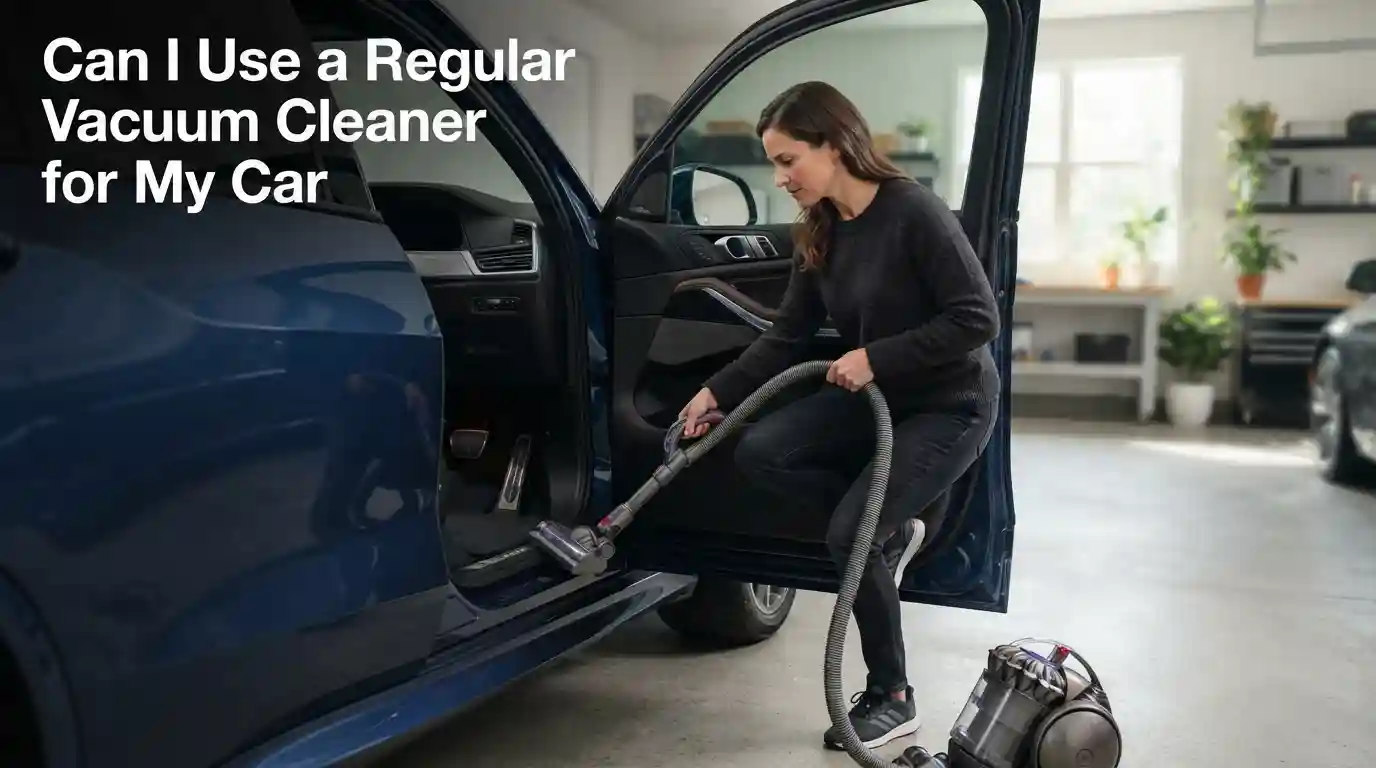
So your car is collecting dust, crumbs, and maybe some pet hair, and the only vacuum you own is the one in the house. The obvious question is: can I use that regular vacuum cleaner in my car?
The short answer is yes, but with clear limits. A household vacuum works fine for light, surface-level messes. It is not the right tool for deep carpets, dense pet hair, or hard-to-reach gaps. This guide walks you through the actual trade-offs, the safe technique, and when you should buy something more car-specific. If you’re wondering how much suction power you actually need, see our guide on how much suction power is good for a car vacuum cleaner.
The Short Answer: Yes, But Only For Light Messes
You can use a regular vacuum cleaner for your car if you are cleaning loose dust, crumbs, and everyday dirt. Many 2026 cordless vacuums are even light enough to carry out to the driveway without much hassle.
However, a normal home vacuum has three problems when used in a car:
- Its shape is awkward. The body, hose, and wand are designed for full-size floors, not tight seats and door sills.
- The attachments are limited. You might have one brush and one crevice tool, but a car needs narrow, flexible, and soft-tipped tools.
- The motor can overheat. Car interiors create blocked airflow, especially in cramped spaces, and aggravate the motor.
So think of a regular vacuum as a backup tool, not a full interior solution. If all you need is a quick once-over, it works. If you need to deep clean the cabin, you should plan for something better. If you want to know what to look for in a better option, see our guide to what features a good car vacuum cleaner should have.
What a Household Vacuum Does Well
It is not all bad news. A normal vacuum cleaner — especially a canister or a strong cordless stick model — can handle the simplest type of car cleaning.
Everyday Dust and Crumbs
The daily mess from shoes, kids, and car snacks sits on the surface. A household vacuum with a clean filter can remove most of it without a problem. Use slow, overlapping strokes over the seats and floor mats so the airflow can pick up the dirt.
A common mistake is to rush. Hold the nozzle steady for a moment over a spot rather than waving it at full speed. Moving slowly lets the suction actually lift the dust instead of just pushing it along.
The Attachments Make the Difference
Most home vacuums include accessories that are useful for cars. The narrow crevice tool gets into the gaps between seats and edges. A soft brush attachment is useful for seat fabric and air vents. An extension wand helps you reach the far side of the trunk. For more on reaching tight spaces, see our guide on how to vacuum under car seats effectively.
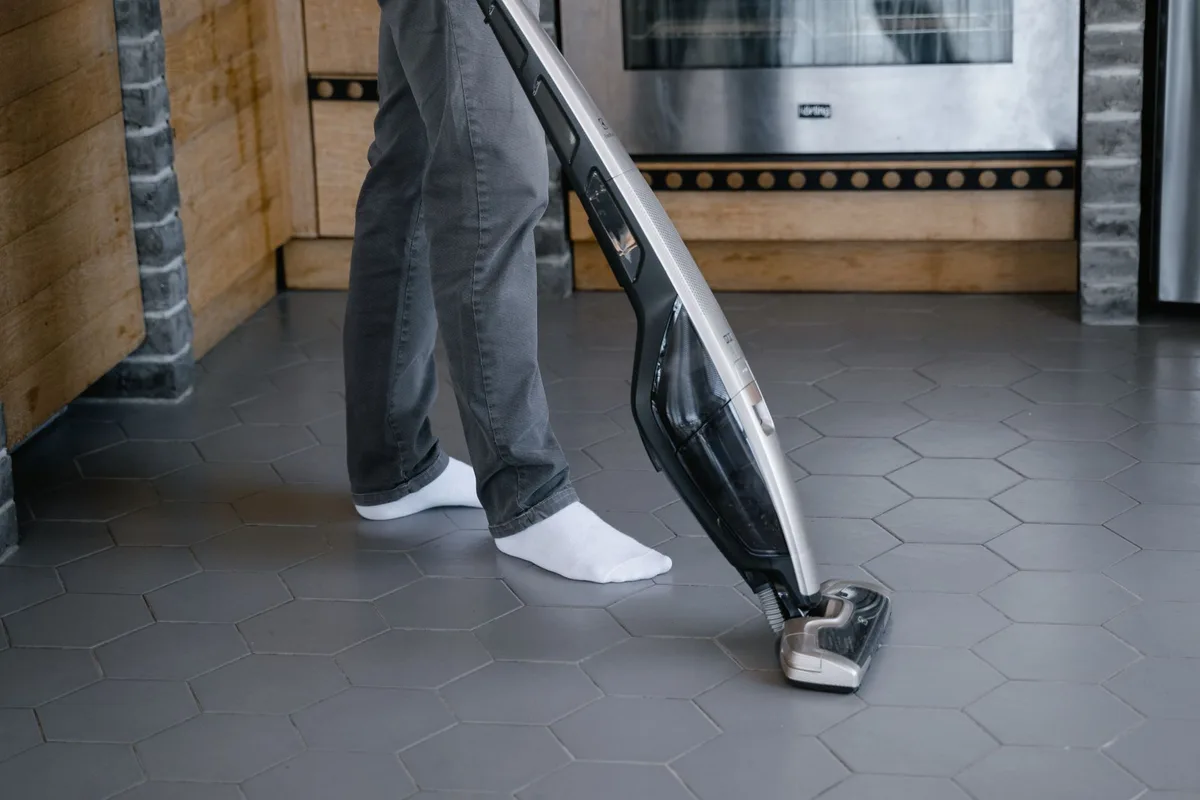
Image source: Pexels / MART PRODUCTION (Pexels License)
Where a Household Vacuum Falls Short
Once the dirt is embedded, home vacuums struggle. Car upholstery and carpet are denser than most household rugs, so the suction cannot pull out fine sand and pet hair as easily.
Suction Power Is Not Just Wattage
A vacuum with high wattage can still have low suction if it is not well-sealed or if its filter is clogged. Many home vacuums have motors with plenty of power for carpeted rooms. But when you use them in a car, it can be harder to maintain efficient airflow in tight spaces.
If you are dealing with dense pet hair, a regular vacuum may also struggle to lift it from the seats. For more on this, see our guide on how to remove pet hair from car seats.
If you have sand, gravel, or sticky debris, your household vacuum may push the dirt around before it pulls it up. If you are dealing with stubborn debris, use a brush to loosen the dirt first, then vacuum.
The Shape Problem
Cars are not small rooms. The seat rails, under-dash panels, center console, and floor vents create narrow cavities that a normal vacuum handle cannot fix. Even with a crevice tool, a bulky canister or upright body gets in the way and your range of motion is limited.
For effective access under seats, you need a smaller tool and more flexible control. A regular vacuum will usually clean the edges, but it won’t get in far enough for a true deep detail. Cleaning all the way under the seats is one of the hardest places for a standard vacuum. If you need a proven method, our separate guide walks through the process step by step, but the same principle applies: you need a slim flat nozzle and the right rowing motion.
Do Not Try To Clean Wet Messes
A regular household vacuum is not a wet/dry machine. If your car has spilled coffee, winter slush, or some tire damp mud, sucking up liquid can destroy the motor. Even a slightly damp cloth attached to the floor head can cause future odor and damage.
For wet messes, there are only two safe options: use the wet/dry vacuum or first dry the liquid with a towel, let it dry and then vacuum without.
The Real Risks of Using a Home Vacuum in Your Car
Many people damage their car interior or their vacuum without realizing. The main risks are scratches, overheating, and transferred dirt.
Scratches and Scuff Marks
Hard plastic nozzles, heavy attachments, and stiff bristles can scratch glossy plastic, trim, infotainment screens, and some leather seats. Use the thin can often accidentally hits around the door panel, and the hairline scratches may be permanent.
The solution is to avoid applying any suction tip directly to a delicate surface. Use a soft brush, a microfiber cloth attachment, or keep the crevice tool a few millimeters away from the surface.
Overheating the Motor
A house vacuum is designed to be moved across a wide open floor. When you use it in a car seat, you often hold it in place with the air blocked by fabric or a narrow gap. This restricts airflow and makes the motor run harder.
If you feel the vacuum casing new up, if the suction suddenly drops, or you smell burning, stop immediately. Let it cool down and clean the filter. Do not use a cordless week in your car until the battery has run low.
One notable 2026 development: cordless stick vacuums are lighter and more portable, but their motors are less durable in confined, low airflow spaces than the engine in an old premium.
How To Use Your Regular Vacuum Safely In Your Car
If you decide to start with what you own, follow this step-by-step to minimize risk and improve results.
Step 1: Empty and Clean the Vacuum first
Before you start, empty the dustbin or replace the bag. If the filter is covered with fine dust, your vacuum will not be able to create enough airflow, and any suction it tries will be applied. A clean filter is more important than any other detail.
Step 2: Prepare the Interior
Remove floor mats, trash, and loose items such as coins, toys, and phone cords. Go out the mats with a floor head and brush them thoroughly. Shake them out before you pick up the vacuum.
Step 3: Work From The Top Down
Start at the ceiling, then clean the dashboard, seats, floor materials, and finally the floor. That way, falling dust doesn’t reposition onto what you already cleaned.
Step 4: Use Fewer Attachments
- Carpets and floor mats: floor brush or power button.
- Fabric seats: brush attachment with medium suction.
- Leather sea: soft brush or no airflow, just tap.
- Gaps between seats: crevice tool.
- Vents and buttons: a clean, dry detail brush or a paintbrush with slightly bristles.
Use your crevice tool lightly, especially near screens and trims. The goal is to lift dust, not press the plastic firmly.
Step 5: Vacuum Slowly
Move in lines and cover each section twice at a different angle. Overlap by about one-third. You will pick up more trapped sand and fine dust with slow strokes, not fast passes.
Step 6: Clean Up Afterward
Empty the dustbin outside and wipe the attachments. If you have a corded vacuum, coil the cord carefully so it does not become stiff. Check the filter again, and the vacuum is ready for futurework.
Alternatives to a Household Vacuum
If your household vacuum consistently cannot reach or clean the car the way you want, then these alternatives are worth your money.
Dedicated Car Vacuums
A dedicated car vacuum is small, usually cordless, and tooled for the tight spaces of a car. These are now more common and better than ever in 2026, with longer battery life, smaller bodies, and stronger motors. They are ideal for scheduled interior maintenance.
- Pros: compact, easy in the car, has crevice-tool in different lengths, no bulky hose.
- Cons: dust capacity is small, battery only lasts for a limited time, and a small fan cannot work harder.
If the car is only dusty and you plan to clean it every few weeks, dedicated is convenient. A good one should be almost as powerful as you need, but a heavy duty restraint may require more. Many dedicated car vacuums still struggle with heavy that you find in a house. The same goes for hand-held models: they are great for quick hospitality, but they need to be handled with less stress.
Before you final, you can compare it with shop vacuums. The following will help.
Shop Vac / Wet/Dry Vacuum
A shop vacuum is a heavier, more robust machine. Most shops provide wet/dry models, so they can handle everything from dry sand to average wet spills.
- Pros: much higher suction, large capacity, you can clean very dirtied mats and carpets.
- Cons: heavy, bulky, extremely heavy, and requires a powerful extension cord. It is not a cordless car tool that you can carry in the trunk.
A shop vac is worth it if you already own one or if you frequently clean a tall car or dog hair-heavy. Otherwise, the body will be bigger than you need for basic use.
Mini and Handheld Vacuums
If you have a small car or just want a quick touch-up, a handheld vacuum is a middle ground. It has a short hose, crevice tool, and enough power for shape and crumbs. But the battery life is short, and the suction is lower than a full-size car vacuum. They are excellent for quick emergency cleaning, not for deep cleaning.
Who Needs a Separate Car Vacuum in 2026?
A decision comes down to three simple questions.
- How dirty is the car? If you clean it weekly, your home vacuum is fine. If you drive through winter, mud, or carry pets, you need more dedicated.
- Do you often vacuum with pets in the car? Pet hair gets trapped in weave of the seat and may resist a regular vacuum. Use a dedicated brush to lift it.
- Do you have access to electricity? If your car is parked far from an outlet and you do not want to drag an extension, a battery-powered handheld is the only choice.
If you decide to buy a new car vacuum, the main features—suction strength, battery, attachments, and dust storage—make the real difference. A compact car vacuum or a cordless model will be a good match for most of the new drivers. But remember the price of a domestic vacuum is not directly. It does not guarantee the reaches or attachments that make life easy.
Coastal Safety
If you use an extension cord, check its gauge and length. A thin cord can cause voltage to drop. The vacuum then doesn’t get power and works harder. Good quality is enough; the longer the cord, the thicker it needs to be. For common extensions, choose the minimum 14-gauge wire. There is no need to be in the same route once the cord is in the car, be careful. Also be careful around water.
Conclusion
The best choice depends on your situation. For light dust, crumbs, and surface dirt, a regular vacuum cleaner is enough and saves money. For deep pet hair, heavy sand, or remote carpet in the car, it is not the right tool.
Before buying anything, use your current vacuum and follow the slow-step technique. It may be perfect for you. If it just isn’t enough, then look for a dedicated car vacuum or a shop vacuum that matches your car’s needs.
Use this rule of thumb: “If the vacuum is built to move across the floor, it is a backup. If it is built to reach into a car, it is the right tool.”
Frequently Asked Questions
Can I use a regular vacuum for Home in My Car?
Yes, for light dust and crumbs. Use clean filter, the correct crevice tool, and work slowly. Avoid direct contact with glossy plastic or leather. For deep pet and wet spills, you need a wet/dry car vacuum or shop vac.
Does using a household vacuum damage the car interior?
It can, if you don’t use appropriate attachments. Hard plastic nozzles can scratch screens and trim. Stiff brush bristles can leave marks on leather. Use soft brushing and or run with low suction on delicate surfaces.
What is the difference between a car vacuum and a regular vacuum?
A car vacuum is compact, lightweight, and shaped for allowing under seats and around the console. A regular vacuum cleaner is more powerful but wider, heavier, and hard to manipulate in a vehicle. You can use both, but each is better for different tasks.
Is it safe to vacuum the car with a wet/dry vacuum?
Yes, as long as the vacuum is marked wet/dry and you do not stick the hose into electronics. To clean up spills, remove large water first with a towel, then source the remaining dampness with the car vac.
How often should I vacuum my car interior?
Most people need it once a week or every other week. If you often have kids, pets, or dust, do it more often. It avoids dirt from settling into and extends the life of carpet and fashion.
Can I use a single household vacuum attachment alone to clean the car?
Yes, use the crevice tool for the gaps. The single attachment is a trench under the seat and between. Use with a soft brush or better fit. It is a bare minimum for quick cleaning, not a full replacement.

Leave a Reply