
Charging a car battery rarely takes a fixed amount of time. With a 10A charger, a typical 60Ah battery can be ready in about six to seven hours. With a 2A trickle charger, the same battery can take more than a day. The exact answer depends on battery size, how empty it is, the charger’s output, temperature, and the battery’s age.
This guide explains all of it in plain language, with realistic charging times, step-by-step instructions, and the mistakes that cost people time and money. Need more hands-on car care advice? Our latest maintenance guides cover common jobs in plain language.
What Determines How Long a Charge Takes
Battery Capacity
Car battery capacity is measured in amp-hours (Ah). Most standard car batteries fall between 40Ah and 70Ah. A higher-capacity battery stores more energy, so it takes longer to refill from empty.
Charger Output
Chargers are rated in amps (A). Higher amperage delivers more current, which means faster charging. But faster is not always safer.
- Trickle chargers: 1–2A, designed for maintenance
- Standard chargers: 4–10A, good for regular charging
- Smart chargers: 2–15A, adjust output automatically
- Fast chargers: 15A and up, for emergencies only
Depth of Discharge
A completely dead battery takes much longer to charge than one that is only half discharged. Charging from 0% requires roughly twice the time of charging from 50%, assuming the same charger.
Battery Age and Health
Older batteries have higher internal resistance, which slows the chemical reaction during charging. A battery older than four years may take noticeably longer to accept a charge, even if it still holds some power.
Temperature
Chemical reactions inside a battery slow down in cold weather. Charging works best between 50°F and 86°F (10°C–30°C). In freezing conditions, charging time can increase by 30–50%.
Battery Type
Most cars use flooded lead-acid batteries. AGM (Absorbent Glass Mat) batteries charge faster but need careful voltage control. Lithium-ion batteries charge fastest, but they are mostly found in electric vehicles, not under the hood of a conventional car.
Realistic Charging Times at a Glance
The table below assumes a healthy lead-acid battery at room temperature. Real-world times are usually 10–20% longer because chargers slow down near the end to protect the battery.
| Battery Capacity | Charger Output | Starting State | Approximate Time |
|---|---|---|---|
| 40Ah | 2A | Dead | 18–22 hours |
| 60Ah | 4A | 50% charged | 6–8 hours |
| 60Ah | 10A | Dead | 6–7 hours |
| 70Ah | 10A | Dead | 7–8 hours |
| 40Ah | 10A | 50% charged | 2–3 hours |
In practice, the final 10–15% of a charge is the slowest part. A charger may reach 85% quickly, then spend another hour or more topping off the battery safely.
Types of Car Battery Chargers
| Charger Type | Typical Output | Best Use | Speed | Safety |
|---|---|---|---|---|
| Trickle Charger | 1–2A | Long-term storage | Very slow | Automatic shutoff or float mode |
| Standard Charger | 4–10A | Regular charging | Moderate | Basic voltage control |
| Smart Charger | 2–15A | Most home use | Fast, adjusts output | Temperature sensing, auto shutoff, desulfation mode |
| Fast Charger | 15A+ | Emergency situations | Very fast | Manual monitoring required |
For most drivers, a smart charger is the best choice. It charges quickly when the battery can handle it, then switches to a low-maintenance mode when full. That reduces the risk of overcharging and extends battery life.
Step-by-Step: How to Charge a Car Battery Safely
- Turn the car completely off and remove the keys.
- Put on gloves and eye protection.
- Clean the battery terminals if they are corroded. A wire brush works well. A compact car vacuum helps remove loose debris around the battery tray before you connect the clamps.
- Connect the positive (red) clamp to the positive terminal.
- Connect the negative (black) clamp to the negative terminal, or to an unpainted metal ground if your charger instructions say so.
- Set the charger to the correct amperage for your battery.
- Plug in the charger and turn it on.
- Monitor the charge. Smart chargers show progress automatically; manual chargers need checking every hour.
- When the charger indicates full, turn it off and unplug it.
- Disconnect the negative clamp first, then the positive clamp.
 A smart charger connected to a car battery with clean clamps.
Image source: www.batterytender.com
A smart charger connected to a car battery with clean clamps.
Image source: www.batterytender.com
A common mistake is connecting the clamps in the wrong order. Always connect positive first and disconnect negative first. This reduces the risk of sparks near the battery.
Fast Charging vs. Slow Charging: Which Should You Use?
Fast charging saves time but creates heat. Heat is hard on lead-acid batteries and can shorten their lifespan if used regularly.
Slow charging is gentler. It gives the battery time to accept the charge fully and reduces the risk of overcharging. For routine maintenance, slow charging is almost always the better choice.
Fast charging makes sense when you need the car within the hour. But if you use it often, expect the battery to wear out sooner. A smart charger gives you a middle ground: it charges quickly during the bulk phase, then slows down automatically.
How to Estimate Charging Time Yourself
Use this simple formula:
Charging time = (Battery capacity × depth of discharge) ÷ Charger output
Example: a 60Ah battery at 50% discharge with a 10A charger:
- 60 × 0.5 = 30Ah needed
- 30 ÷ 10 = 3 hours
- Add 10–20% for the absorption stage
- Realistic time: about 3.3–3.6 hours
The same battery completely dead would need roughly 6–7 hours with a 10A charger, not exactly 6. The charger slows down near the end to prevent overcharging.
Battery Age, Health, and Charging Time
An older battery charges more slowly because its internal resistance increases over time. If your battery is more than four years old, expect longer charging times and less predictable performance.
Signs that a battery is aging:
- The engine cranks slowly
- The battery loses charge quickly after a full charge
- Terminals show heavy corrosion
- The case looks swollen or cracked
If a battery is weak, charging it will not fix the underlying problem. A voltage test can help. A fully charged battery should read about 12.6–12.8 volts after resting. If it drops below 12.4 volts quickly, the battery may be failing.
Charging in Cold Weather
Cold temperatures slow the chemical reaction inside a battery. That means longer charging times and a higher risk of the battery never reaching full charge.
In freezing conditions, charging time can increase by 30–50%. Some chargers also struggle to work below 32°F (0°C). If possible, move the car into a garage or charge the battery indoors at room temperature.
Never charge a frozen battery. Charging can cause gas to build up and the battery may burst. Let the battery warm up first.
 Frost on a battery slows the chemical reaction and extends charging time.
Image source: www.daze.eu
Frost on a battery slows the chemical reaction and extends charging time.
Image source: www.daze.eu
Smart chargers with temperature compensation adjust the voltage for cold conditions. They are safer for winter charging, but they still take longer than they would in warm weather.
Trickle Charging and Long-Term Storage
Trickle chargers are not designed to rescue a dead battery. They are designed to keep a healthy battery topped up over weeks or months.
A 1–2A trickle charger can take days to bring a battery from empty to full. But if the battery is already charged, it simply replaces the small amount of energy lost while the car sits.
This is ideal for classic cars, RVs, motorcycles, or any vehicle in winter storage. Trickle chargers with float mode automatically stop charging when the battery is full and resume when needed. That prevents overcharging and helps avoid sulfation, a common cause of battery failure.
Common Mistakes That Ruin Batteries
- Using too high an amperage. Fast charging is convenient, but frequent fast charging overheats the battery and shortens its life.
- Charging a frozen battery. This can cause the battery to crack or explode.
- Using the wrong charger for the battery type. AGM and lithium batteries need specific charging profiles.
- Leaving a manual charger connected overnight. Without automatic shutoff, overcharging can cause swelling, leaks, or fire.
- Connecting clamps in the wrong order. Always positive first, negative last. Reverse the order when disconnecting.
- Ignoring corrosion. Dirty terminals block current flow and make charging slower.
If the battery is heavily corroded, clean the terminals with a mixture of baking soda and water before charging. Dry them completely before reconnecting.
How to Tell When the Battery Is Fully Charged
The easiest way is to check the charger. Smart chargers show a full indicator or switch to float mode.
You can also use a multimeter. A fully charged car battery should read 12.6–12.8 volts after it has rested for a few hours. If it reads 12.4 volts, it is only about 75% charged. Below 12.0 volts, it is deeply discharged.
 A multimeter reading around 12.6V means the battery is fully charged.
Image source: www.youtube.com
A multimeter reading around 12.6V means the battery is fully charged.
Image source: www.youtube.com
For flooded lead-acid batteries, a hydrometer can measure the specific gravity of the electrolyte. This is more accurate than voltage alone, but it is not necessary for most drivers.
If the battery hisses or bubbles heavily while charging, it is overcharging. Stop the charger immediately and let the battery cool down.
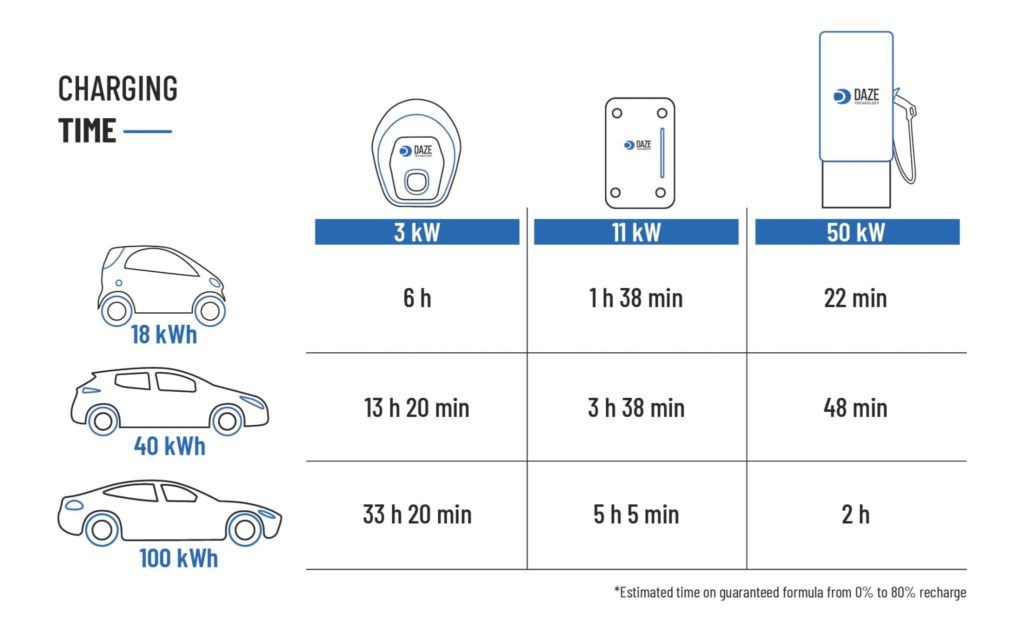
How EV Charging Differs
Electric vehicles use lithium-ion batteries, not lead-acid. They also use completely different charging equipment.
| EV Battery Size | Charger Type | Approximate Time |
|---|---|---|
| 40kWh | Level 1 (120V) | 20+ hours |
| 40kWh | Level 2 (240V) | 5–6 hours |
| 60kWh | DC Fast Charger | 40–60 minutes |
The same principle applies: higher power means faster charging. But EV chargers communicate with the vehicle’s battery management system to control voltage and temperature. You cannot use a standard car battery charger on an EV, and you cannot use an EV charger on a conventional car battery.
Practical Tips for Faster, Safer Charging
- Use a smart charger whenever possible.
- Charge at room temperature, not outside in extreme heat or cold.
- Clean the terminals before connecting.
- Confirm the charger matches your battery type.
- Avoid fast charging unless you really need it.
- Check the charger periodically if it is not automatic.
- Read the charger manual before your first use.
Charging takes hours, so use the time to tidy the cabin or handle other small jobs you have been putting off.
How Often Should You Charge a Car Battery?
If you drive your car regularly, the alternator keeps the battery charged. You do not need to plug it in.
If the car sits unused for more than two weeks, the battery slowly loses charge. Parasitic drains from clocks, alarms, and electronics can make it worse. Charge the battery every 2–4 weeks, or connect a trickle charger for long-term storage.
Signs that the battery needs a charge:
- The engine cranks slowly
- Headlights look dim
- The battery warning light comes on
- The car has not been driven in several weeks
Before a long road trip, charge the battery fully the night before. While you’re at it, make sure child seats are fitted correctly. If you’re renting a car, review rental car seat policies before you arrive.
When to Replace Instead of Charge
Charging cannot fix a battery that is physically worn out. Replace the battery if:
- It will not hold a charge after repeated charging
- Voltage stays below 12.4 volts after a full charge
- The case is swollen, cracked, or leaking
- The battery is more than five years old
- It fails a load test
A load test is the most reliable way to check battery health. Many auto parts stores offer this service for free. If the battery fails, replacement is safer than trying to squeeze out a few more weeks.
Environmental Impact and Battery Disposal
Charging efficiently uses less electricity and extends battery life, which means fewer batteries end up in landfills. Smart chargers reduce wasted energy by stopping automatically when the battery is full.
Lead-acid batteries are highly recyclable, but they should never go in household trash. For official guidance on recycling used lead-acid batteries, see EPA’s battery recycling guidance. Most auto shops and battery retailers accept old batteries for recycling.
Frequently Asked Questions
How long does it take to charge a car battery with a 2A charger?
A 2A charger is slow by design. It can take 20 hours or more to fully charge a dead 40–60Ah battery. If the battery is only half discharged, expect 8–12 hours. Use a 2A charger for maintenance, not for emergencies.
Can I drive immediately after charging my battery?
Yes, once the charger indicates full and the battery reads 12.6–12.8 volts, it is ready. Disconnect the charger, remove the negative clamp first, then start the car. If it cranks slowly, the battery may need replacement.
Is it safe to charge a car battery overnight?
It is safe with a smart charger or a trickle charger because they switch to float mode when full. It is not safe with a manual charger, which can overcharge the battery and cause damage or a fire risk.
Can I charge a car battery without removing it from the car?
In most cases, yes. Turn the car off and connect the charger correctly. Some modern vehicles have sensitive electronics, so check the owner’s manual. If you are unsure, disconnect the negative terminal before charging.
How do I know if my battery needs charging or replacement?
Charge it fully, let it rest, and test the voltage. Above 12.6 volts is good. If it drops below 12.4 volts within a day, the battery is weak. If it will not reach 12.6 volts at all, replacement is the safer option.
Does idling the car charge the battery?
Yes, but slowly. The alternator produces 13.5–14.5 volts while the engine runs, but at idle it may not fully recover a deeply discharged battery. A proper charger is faster and more reliable.
Conclusion
Charging a car battery is not complicated, but the time it takes is not a single number. A healthy battery charged with a smart charger at room temperature will usually be ready in four to twelve hours, depending on capacity and how discharged it is.
Slow charging is easier on the battery. Fast charging is for emergencies. A battery that will not hold a charge is probably ready for replacement.
Start by checking your battery’s voltage today and set up a simple charging routine before you are stranded. A few minutes of prevention is much cheaper than a tow truck.

Leave a Reply