
You’re staring at a compact, cordless car vacuum online, wondering if it’s actually worth the money or just another gadget that will end up in a drawer. It’s a fair question. These tiny cleaners promise to keep your car tidy, but can they really deliver the suction you need?
The short answer: a mini car vacuum is powerful enough for the messes that happen daily, but not for the deep-cleaning jobs you’d expect from a full-size machine. In 2026, many cordless models deliver 10–15 Air Watts (AW) or 4–6 kPa of suction, which is plenty for crumbs, dust, and light debris on hard surfaces. The real trick is knowing what to expect from them before you buy. This guide breaks down exactly what these vacuums can handle, where they fall short, and how to choose one that fits your needs.
What “Powerful Enough” Actually Means
When people ask if a mini car vacuum is powerful enough, they’re usually really asking one of three questions:
- Can it clean up everyday messes? Yes, if you’re dealing with crumbs, dust, and dry debris on hard surfaces.
- Can it deep-clean my carpets? No, not effectively. Embedded dirt and ground-in grime need serious suction.
- Can it replace a full-size vacuum? No, but it’s not meant to. It’s a maintenance tool, not a deep-cleaning tool.
The key is matching the tool to the task. A mini vacuum handles the small, frequent messes that keep your car feeling fresh between major cleanings. Think of it as the difference between sweeping a kitchen floor and doing a full mopping session—both are necessary, but they serve different purposes.
What Mini Car Vacuums Do Really Well
Everyday Crumb and Dust Control
Let’s talk about what actually happens in your car on a regular basis. You eat a granola bar on the way to work, and crumbs scatter across the seat. Your kids track in dry dirt from the playground. Dust settles on the dashboard and door panels. These are the everyday messes that make a car look neglected.
Mini car vacuums excel at handling these surface-level issues. Their compact size makes them easy to grab and use in tight spaces, and they’re designed to pick up the fine dust and small particles that accumulate quickly. In practice, a quick pass with a mini vacuum takes about two minutes and keeps your car looking respectable throughout the week.
For a deeper clean of hard-to-reach areas, pair your vacuum with the right approach—check out our advice on keeping crevices tidy for techniques that work in tight spots.
Reaching Tight Spots Traditional Vacuums Can’t
This is where mini car vacuums genuinely shine. The narrow gaps between seats and the center console, the cracks in your dashboard, the tight corners of your trunk—these are exactly the spaces a mini vacuum was designed to reach. With a crevice tool attached, you can direct concentrated suction into spaces that a full-size vacuum head simply can’t fit into.
The lightweight, maneuverable design means you can hold the unit in one hand while using a brush attachment to agitate dust with the other. For anyone who’s ever wrestled a full-size vacuum hose through a car door, this convenience feels like a revelation.
Types of messes mini vacuums handle best:
- Dried food crumbs on seats and floors
- Dust on dashboards and vents
- Dry dirt and sand in footwells
- Loose pet hair on surface-level upholstery
- Debris in cup holders and door pockets
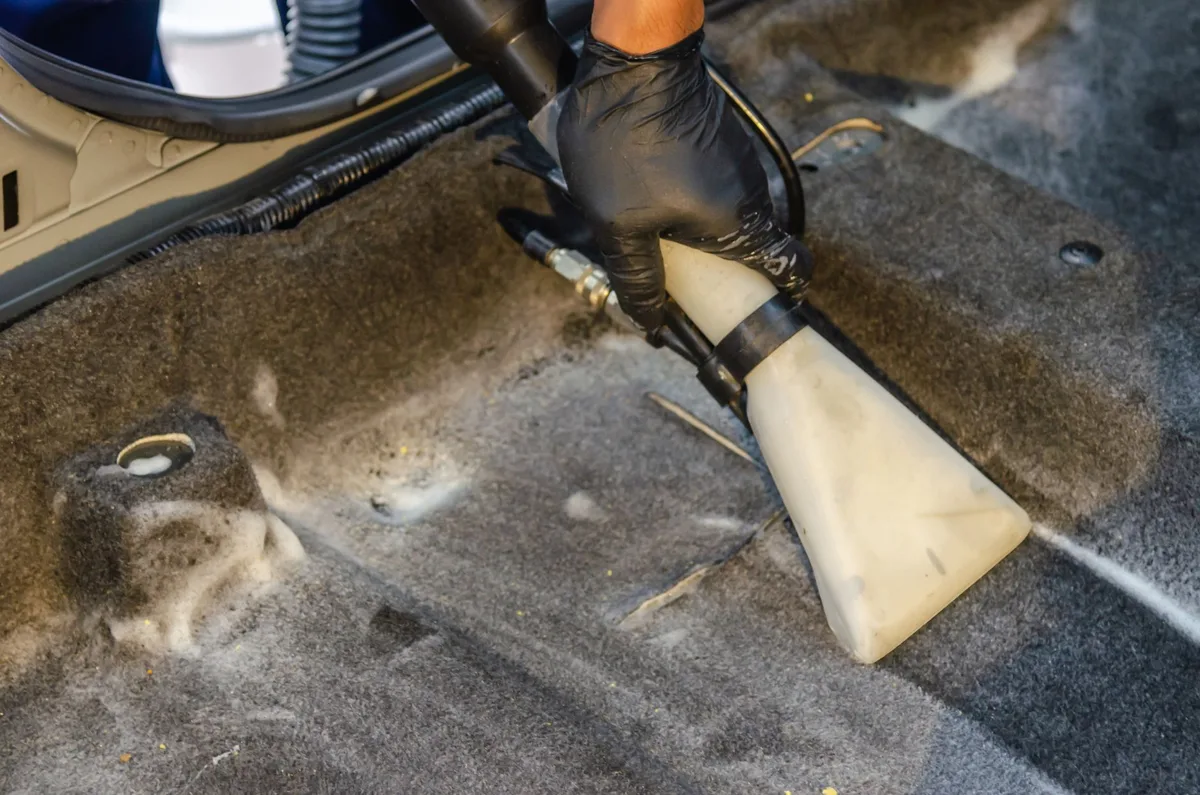
A compact car vacuum tackling the daily mess of loose crumbs and dust on fabric seats.
Where Mini Vacuums Hit Their Limits
Deep Carpet and Upholstery Cleaning
Here’s the honest truth: mini car vacuums struggle with deeply embedded dirt. If your car’s carpets have ground-in mud from a rainy day, or your upholstery has years of accumulated dust and grit, a mini vacuum won’t pull it out.
The physics matter here. Lifting embedded particles requires high airflow and sustained suction, which compact cordless motors simply don’t generate compared to full-size machines. In testing, mini vacuums tend to leave behind a visible layer of dirt in carpets if you press down and expect deep penetration. Proper technique helps, but there’s a limit to what the tool can do. You’ll need a more powerful machine or a professional detailing service for that level of restoration.
Similarly, if you’re dealing with stubborn debris, understanding how much suction actually helps can set realistic expectations.
Pet Hair: A Mixed Result
Pet hair is where mini vacuums get tricky. On sleek leather or vinyl seats, loose pet hair comes up easily—those surfaces don’t trap fibers, so the suction has an easy job. But on cloth upholstery, pet hair tends to weave itself into the fabric. Mini vacuums often fail to pull it out without significant effort and repeated passes.
A brush attachment helps by agitating the fabric and loosening the hair, but this is the slow, frustrating part of mini vacuum ownership. If you have a dog that sheds heavily, you’ll likely need a dedicated approach. See our guide on removing embedded pet hair for strategies that work.
Large Debris and Capacity Issues
Drop a handful of potato chips on the floor, and a mini vacuum can handle it—in a few passes. The problem is capacity. Most mini vacuums have small dustbins that fill up quickly. You’ll find yourself emptying the container several times during a single cleaning session.
Heavier or larger debris, like gravel from shoes or large food particles, can also clog the narrow intake tubes. You’ll need to clear the clog manually, which interrupts your cleaning flow. For anything beyond light debris, a vacuum with a wider hose and larger capacity is the better choice.
Wet Spills: Usually a No-Go
This is the most important limitation to understand. Most mini car vacuums are designed for dry debris only. Using one to suck up a spilled drink can permanently damage the motor, short-circuit the electronics, and void your warranty.
Always check the specifications before attempting any wet cleanup. If the product doesn’t explicitly state it’s a wet/dry vacuum, assume it’s dry-only. This single mistake ruins more mini vacuums than anything else, so read the manual before you get ambitious.
Cordless vs. Corded: The Trade-Off
Most mini car vacuums are cordless, and that’s a major part of their appeal. You can move freely around the car, reach the trunk without stretching a cord across the garage, and keep one in your vehicle for on-the-go cleanups. The convenience factor is real and significant.
The trade-off is battery life and power consistency. As the battery drains, many models lose suction noticeably. A battery that starts at 12 AW might drop to 8 AW by the time it’s half empty. Higher-end models use battery management systems to maintain consistent output, but these are typically more expensive.
Corded mini vacuums exist and offer consistent power, but they require an outlet nearby, which often means long extension cords and limited mobility. For most daily cleaning in a car, the cordless freedom outweighs the power advantage of corded models.
Mini Vacuum vs. Other Car Cleaning Options
So how does a mini vacuum compare to the alternatives? Understanding the full picture helps you make an informed choice.
Handheld Corded Vacuums
Pros: Consistent, higher suction power; no battery anxiety; often more affordable than premium cordless models.
Cons: Tethered to an outlet; awkward to maneuver around a car; requires extension cords for most driveways.
These are a solid choice if you clean your car at home and have easy access to power. They offer more muscle than mini cordless models, but lose the portability that makes mini vacuums so convenient.
Full-Size Vacuums and Shop Vacs
Pros: Maximum suction; large capacity; can include wet/dry functionality; best for deep cleaning.
Cons: Bulky and heavy; impractical for quick cleanups; difficult to store in a vehicle; overkill for daily spot maintenance.
If you have access to a full-size vacuum or shop vac, use it for major cleanings. The power difference is substantial. But for keeping your car tidy on a daily basis, hauling out a full-size vacuum is often more trouble than it’s worth.
Portable Vacuum Options
For an overview of how different form factors compare, browsing portable vacuum recommendations can help you see what’s on the market.
Mini Vacuum vs. Car Seat Use and Interior Care
While we think of mini vacuums primarily for cleaning, they also play a role in maintaining your car’s interior equipment—including car seats.
If you have young children, spilled snacks and crumbs seem to multiply inside the car. Mini vacuums help keep the area around car seats clean, which matters for hygiene. When installing or adjusting car seats, a clean surface ensures proper installation. Check our installation guidance to make sure your seat setup is secure, and remember that a clean interior makes the whole process easier.
Parents dealing with seat fabric care routine will find that vacuums work alongside protective measures—understanding whether covers protect your seats is part of choosing the right setup for your family.
Is a Mini Car Vacuum Powerful Enough? What to Check Before Buying
Reading specifications can feel like deciphering a foreign language. Here’s what actually matters when evaluating a mini car vacuum.
Suction Power Numbers
Two units appear most often on product specs:
- Air Watts (AW): The best measure of real cleaning performance because it combines airflow and suction. For mini vacuums, 10–15 AW is adequate for light-duty cleaning.
- Kilopascals (kPa): A measure of suction pressure alone. For mini vacuums, 4–6 kPa is a reasonable range for everyday messes.
Don’t get seduced by the highest numbers alone. A vacuum with high kPa but low airflow can still perform poorly because it can’t move enough air to pick up debris. Look for a balance of both.
What to look for in specifications:
- Air Watts (AW): Aim for at least 10 AW for reliable daily cleaning
- Kilopascals (kPa): 4+ kPa indicates workable suction pressure
- Battery life: 20–30 minutes of runtime covers most cleaning sessions
- Filter type: HEPA or multi-stage filtration keeps fine particles contained
Attachments Matter More Than You Think
The right attachments can transform a mediocre vacuum into a useful one. A quality crevice tool channels suction into narrow gaps, while brush attachments agitate fabric to release embedded dust. Some models include flexible hoses that allow you to reach awkward angles.
In practice, a vacuum with mediocre specs but excellent attachments often outperforms a high-spec vacuum with only a basic nozzle. The attachments effectively multiply the power by directing it where you need it. Pay close attention to what’s included in the box.
Build Quality and Filter Maintenance
Cheap mini vacuums often have poorly sealed filters that leak dust back into the air or clog quickly, reducing suction. Look for models with cyclonic separation that keeps the filter cleaner for longer, or washable filters that don’t require regular replacement.
The filter is the workhorse of your vacuum. If it’s constantly clogged, your suction drops dramatically. Sealed filtration systems also protect you from airborne particles, which matters for allergy sufferers. Check our guide on selecting a suitable vacuum for your specific needs to understand how maintenance impacts long-term performance.
Our Verdict: Are Mini Car Vacuums Worth Buying in 2026?
For the right person, yes. A mini car vacuum is a worthwhile investment for anyone who wants to maintain a clean car without significant effort. They’re especially useful for:
- Parents who deal with daily snack crumbs and small messes
- Pet owners who need quick fur cleanups on smooth surfaces
- Commuters who eat in their cars and want immediate cleanup
- Anyone who likes keeping their car presentable between full cleanings
A good mini vacuum costs between $30 and $80, making it an affordable addition to your car care routine. If you expect it to be a convenient tool for everyday maintenance, you won’t be disappointed. If you expect it to match the power of a shop vac, you’ll be frustrated.
Compare models to find what fits your usage—our comparison of vacuum options can help you weigh the trade-offs.
Why Not Use a Regular Household Vacuum?
If you already own a full-size vacuum or a shop vac, you might wonder why you need a mini vacuum at all.
Using a regular vacuum in a car is possible but inconvenient. Full-size vacuums with standard attachments can’t fit between seats or reach under pedals. Their bulk makes maneuvering in tight spaces awkward. And if your home vacuum doesn’t have a hose with narrow attachments, you’re stuck.
That said, for a thorough scheduled deep clean, a full-size unit still outperforms mini vacuums. The truth about regular vacuums for car cleaning is that they’re great for deep cleaning sessions but impractical for quick tidy-ups. Most owners end up with both.
How to Get the Most From Your Mini Car Vacuum
Using a mini vacuum effectively requires adjusting your technique compared to full-size machines.
Proper Technique
- Pre-clean with a brush: Loosen debris from carpets and fabric before vacuuming
- Use short, overlapping passes: This ensures thorough pickup
- Empty the dustbin frequently: A fuller bin means weaker suction
- Clean the filter regularly: A clogged filter reduces performance dramatically
Maintenance Schedule
- Empty after each use
- Wash or replace filters monthly
- Clear brush and intake of hair and debris weekly
- Store on the charger for cordless models to keep battery healthy
These habits keep your mini vacuum performing at its best and extend its lifespan significantly.
Frequently Asked Questions
How many Air Watts do I need in a mini car vacuum?
For reliable daily cleaning of crumbs and dust, look for at least 10 Air Watts. Anything below that works only for the very lightest dusting. Higher Air Watt ratings indicate stronger pickup ability and better performance on fabric surfaces.
Can a mini car vacuum pick up pet hair?
On smooth surfaces like leather or vinyl, yes—loose pet hair comes up easily. On fabric upholstery, results vary. A brush attachment helps agitate the fabric and release embedded hair, but persistent, embedded fur may require a more powerful vacuum.
Are cordless mini vacuums as good as corded ones?
For convenience, cordless models are superior. For raw power, corded models win because they maintain consistent suction without battery drain. Choose cordless for everyday portability or corded for maximum power during home-based cleaning sessions.
Can I use a mini car vacuum for wet spills?
Only if the product is explicitly labeled as a wet/dry vacuum. Most mini car vacuums are dry-only, and using them on wet messes can damage the motor and void your warranty. Always check specifications before attempting any liquid cleanup.
How long does the battery last on a mini car vacuum?
Typical runtimes range from 15 to 40 minutes depending on the model and power setting. A 20-minute runtime is usually enough for a full interior spot-cleaning session. Check real-world reviews, as advertised runtimes often exceed actual performance.
When should I use a mini vacuum instead of a full-size one?
Use a mini vacuum for quick, routine cleanups—crumb spills, dust on dashboards, debris between seats. Use a full-size vacuum for monthly deep cleans or after major incidents like muddy trips or pet shedding episodes. Both tools complement each other.
Conclusion
A mini car vacuum is powerful enough for the jobs it’s designed to do. It handles daily crumbs, dashboard dust, and tight spots without hassle. It won’t replace a full-size vacuum for deep cleaning, and it can’t handle wet messes, but it doesn’t need to.
The deciding factor is your expectation. If you want a convenient tool that keeps your car looking tidy between full cleanings, a mini car vacuum is a solid, budget-friendly addition to your car care kit. Choose one with sufficient suction power, quality attachments, and a good filter system, and you’ll appreciate the convenience every time you grab it for a quick cleanup.
Next step: Evaluate the messes you deal with most often in your car, and pick a mini vacuum that matches those specific needs. For versatile cleaning across different situations, consider how a portable handheld vacuum fits into your overall toolkit. Start there, and you’ll know exactly what to look for.

Leave a Reply