
A car vacuum cleaner needs to do more than just “suck.” It needs to lift sand out of carpet fibers, slide between seats, remove pet hair, survive drops on pavement, and be convenient enough that you will actually use it. That’s a different job from a floor vacuum, and it changes the features that matter.
In 2026, the market is full of compact pickups that look the same but perform very differently. The best car vacuum is not always the one with the biggest advertised number. It is the one that has the right suction, battery, filter, attachments, and ergonomics for how you use your car. Here is the exact feature list you should work through before buying.
What Actually Matters in a Car Vacuum Cleaner in 2026
| Feature | What It Does | Why It Matters |
|---|---|---|
| Suction power | Lifts dust, sand, and debris from surfaces | Low suction just pushes dirt around |
| Corded vs cordless power | Determines where and how long you can clean | Wrong choice makes the tool annoying |
| Battery life | Keeps a cordless model running through a full interior | A dying battery is the most common complaint |
| Dustbin capacity | Holds the mess until you finish | Small bins need emptying mid-clean |
| Filtration | Traps allergens and fine dust | A leaky filter dumps dust back into the car |
| Attachments | Reach seats, gaps, and tight corners | The right nozzle makes or breaks the job |
| Weight and ergonomics | Sweeps structure while you bend and reach | A heavy vacuum is soon abandoned |
Suction Power: The First Number to check
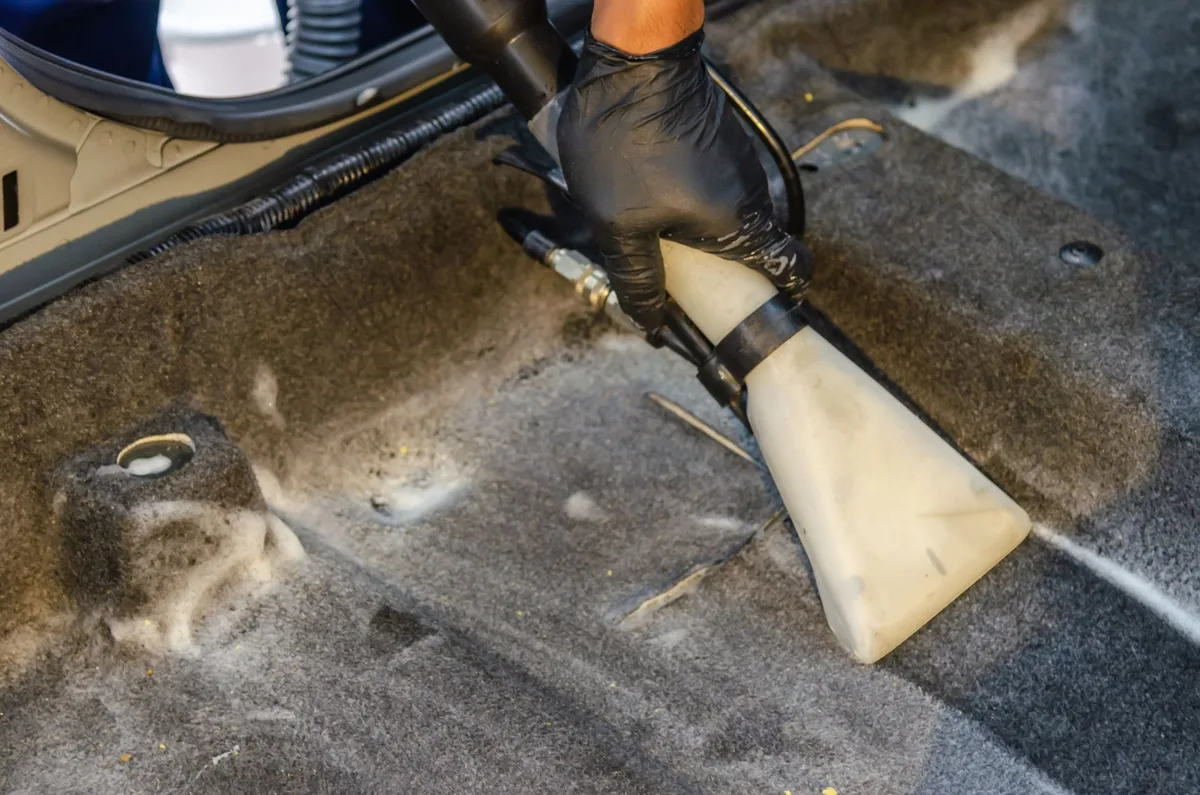
Image source: Pexels / Khunkorn Laowisit (Pexels License)
- The exact number on the box is not always useful because, but almost every car vacuum in 2026 is measured in either Air Watts (AW) or kilopascals (kPa).*
For normal car cleaning, 15 AW is a reasonable minimum. For daily crumbs, coffee cup, and light sand, that will do. For pet hair, shampoo, weekends at the beach, or an SUV-carpet, 20 to 30 AW is the much safer zone.
The important detail is that the number only measures the point at the exact place. A motor that produces 50 AW but has no charged space in the nozzle will still miss large pieces. Manufacturers sometimes quote “maximum” with no tool attached, so check a technical review where the vacuum has been measured with a regular nozzle: minimum airflow at the opening is what matters.
Manufacturers also advertise CFM or high pressure, but those figures only tell part of the story. A vacuum can show a high sealed suction number and still struggle to move a thick layer of crushed sand because the airflow is too weak. If you want to compare models honestly, use Air Watts when possible. If you are already confused by the measurement, this guide to what suction level your car really needs will help you set a realistic baseline based on your car type and daily dirt.
A common mistake is choosing more power than the product can sustain. Motors that drain too fast and overheat on a deep clean are a sign you are better off with a quality motor with fewer advertised watts.
Corded vs Cordless: Which Is Right for Your Car?
| Cordless | Corded | |
|---|---|---|
| Convenience | Grab-and-go, no outlet | A long cable needed |
| Suction consistency | High at full battery, drops as battery drains | Constant, reliable |
| Runtime | 10 to 40 minutes depending on mode | Unlimited |
| Best for | Quick clean-ups, driveway, parking lots | Monthly deep cleaning |
| Weak point | Battery age | Cord management |
Cordless models dominate the market because they are already where you need them. A 450-watt tyre or a glove compartment is no longer a chore when the vacuum can be reached in seconds. Cordless vacuum survivors are “normal”; but your open battery pack is not always the same. One useful trick is to buy a model whose battery is a standard, removable battery, or at least a motor name that you can replace later.
Corded models still make sense in 2026 if you want power for each penny. They are usually stronger at the same price, so they can handle wet sand, grass clippings, and old pet hair in fewer passes. The disadvantage is reaching the trunk with a short cord and finding a socket outside. A car vacuum service with at least 5 meters of cable is far more usable than one with a short 3 meters.
Hands-on experience, the decision is rarely one-dimensional. Many people keep a small cordless unit for daily crumbs and rely on a corded one for a thorough monthly child group. If you are wondering whether one device can also cover work that home, the honest answer is: a little. A regular household vacuum can handle a cab, but the filters can be too poor and the reach too large; it needs to be a good fit – not a perfect one.
Battery life and runtime: looks good at the charger

Image source: Pexels / Helena Lopes (Pexels License)
- Marketers write runtime in basic mode; the real number is in max mode.*
It always got weird when you say “up to 45 minutes.” When you run the same vacuum at full power, it may be only 10 to 20 minutes. To handle a typical sedan or small SUV, you want a model that can do the whole interior without a mid-life recharge.
The useful runtime test is simpler than spec checking: turn it up to maximum and use a long crevice nozzle on carpet, push it into the seam, and count how long the suction stays strong. If the battery falls apart after two seats, it is not enough for your life.
A removable battery also prevents premature aging. The filtration vacuum may be perfect, but if the only internal battery expands after a few years and costs the whole unit, it will be a different story. In 2026, it is a genuinely valuable feature to be able to replace both batteries and accept the second one to complete the work without wait.
Dustbin Capacity: Think About the Last Car Vacuum You Bought
There is nothing worse than cleaning up the back seat and then stopping halfway to empty a dustbin that is full of fries and hair. For most cars, a bin between 0.5 and 0.7 liters is a good middle ground. It will hold most of a normal interior clean and never be too bulky.
Models under 0.3 liters fill up every two minutes. They are actually fine for just the cup holders and the dashboard, not for a whole car. On the other upper range, a one-liter bin is more convenient but heavier. Since the car vacuum in the hand, not on wheels, the same larger bin can make the whole unit tiring.
The more important detail is how the bin opens. You want a one-tap or latch release that does not require you to pick fine dust and skin with your fingers. Some filters use a cyclone separator: the cyclone keeps large debris in the bin, which helps the filter survive for months longer. This is a feature worth paying a little extra for.
Filtration: Is a Basic Filter Enough?
Filtration is not just a marketing checkbox. While you clean a car, the vacuum pushes air out of itself. If that air carries dust, you are only moving allergens and pollen into the interiors (and into your lungs). For people who have allergies/he asthma, this feature matters more than suction.
A basic nylon filter catches large dust. A washable foam filter is okay if you are prepared to clean it often. But if your car is dusty, avoid any model claiming HEPA but with no sealed air path. To be real HEPA, a filter must meet a strict particle-capture standard set by sources like the U.S. Department of Energy. HEPA filters remove nearly all fine particles. HEPA is the most common, and an allergy .
HEPA in car vacuums should be easy to remove clean, or replace. If the filter is hidden behind a clip or the price permits. And if you are cleaning the car for kids, pets, or allergy, get the cleanest seal. The health benefit of the unit comes from the fact that fine dust is not released.
Attachments: The actual tools that do the work
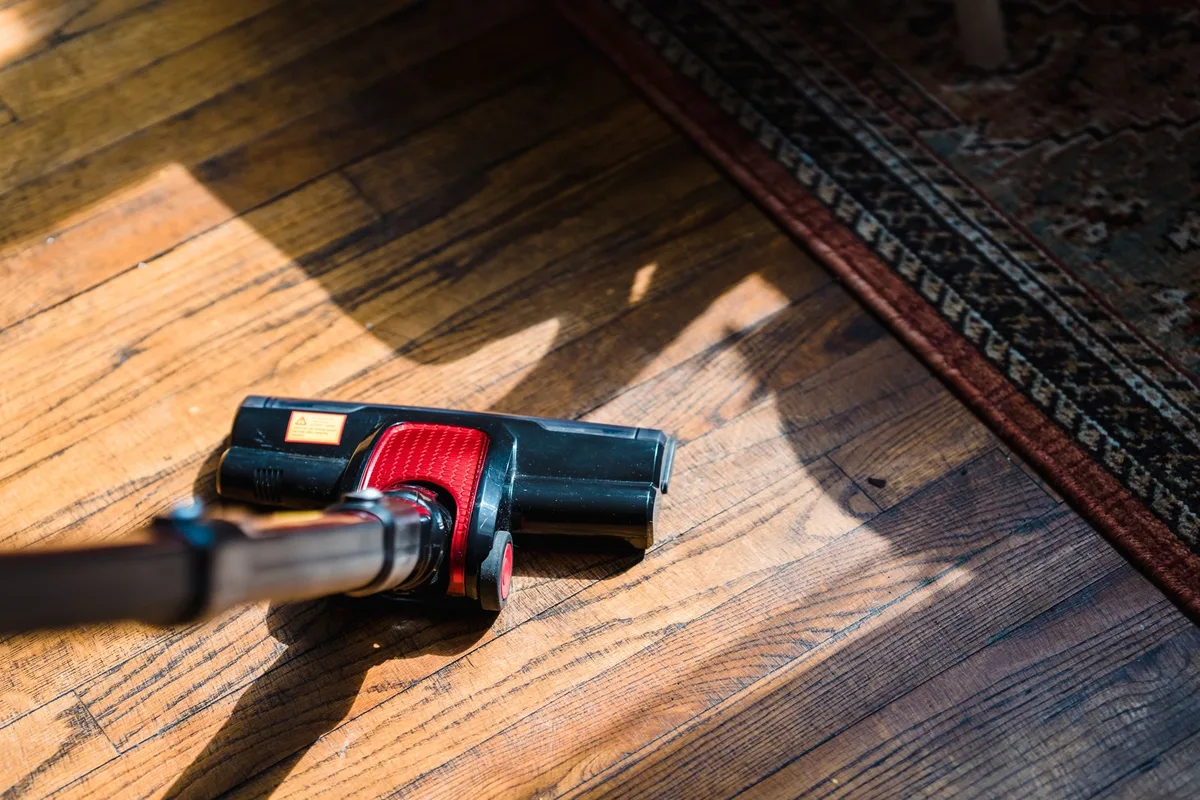
Image source: Pexels / Liliana Drew (Pexels License)
- The shape of the nozzle more than the motor determines whether a window is clean. *
Any car vacuum needs the right:
- flex / crevice tool — for rail and the spaces between seats, where are the seats and doorway. The long narrow nozzle. It is the attachment you will use most.
- Brush nozzle — for seats and woven dashboards. It loosens the hair and dust so the vacuum motor can pick it up.
- Upholstery tool — a wider, flat nozzle for seat cushions and fabric on the sides of the seat. For wiping an Area rather than an empty formula, it is comfortable and fast.
- Ribbon/extendable hose — you can see how much can you do if you have to navigate around a large bin and don’t want to carry the vacuum over your shoulder. An extension hose makes a car vacuum easy to maneuver.
- Rubber / pet tool — in 2026, the combination of small rubber ridges on the nozzle is the key to removing and dramatically improving A more complete pet hair removal led approach is from a separate dedicated guide if you need to get the mud with the same tool.
The full menu means nothing if released at the press of a button. You are standing between two positions that are not very comfortable to hold. Check that the tools do not fly when you unplug while holding the body with one hand.
The long crevice attachment is also what makes an easy cover the gaps under the seats. With a rear seat, you can’t even roll the seat back. But the gaps under the seats need determination: use the attachment, a good source, and a good source. Work at a pace with the seat rails and trunk, or else cleaning multiple times is long.
Ergonomic: A car vacuum must be worn by one hand
Car vacuums are not used like normal vacuums. You sit in the door, hold the body in one hand, and the nozzle in the other. Therefore weight and balance matter just as much as the airflow.
Vacuum cleaner under 1.2 kg is genuinely easy to do with the other. From 1.5 kg upward, the model should have a handle placed close to the balance point. The weight of your part of the bag extreme, a product that is very light but feels front-heavy becomes tiring.
When possible, do a “holding test” before you buy: pick it up, put a little pressure on the full, and move counter as if you are approaching the bin. If it is too heavy on the wrist, the motor will be annoying even if its specs are good.
Noise also seems to be underestimated. Car interiors are small cabins, and small spaces. If you clean the car in an apartment building, with a stereo open, in the morning or at the top-noise model will raise your family. On the same noise. Recommendations: Seek a model with a brushless motor; and when possible, look at noise in dB rating, not just not. The more so next door among good “70 dB” models.
Mini vacuums, handheld vacuums and what “car vacuum” really means
In 2026, the “car vacuum” category stretches from mini straws to battery handhelds. It is a large confusing shopping difference.
Pocket-sized designs are They are perfect for receiving a closed bag and not complete. They are the good handful. They die from low capacity and small battery, and a thick carpet in a footwell will see a big difference. Unless you only clean for a few minutes, do not buy it as a complete car cleaner.
For deeper but quick cleans, conventional handheld vacuum cleaners are the most likely to give you the best balance between portability and apparent noise. Look for a motor with better output, good attachment storage, and a battery form factor you can recharge in your home or car. Many 2026 models ship with a USB-C fast charge, which is genuinely useful if you forget to charge overnight. However, even the best handheld has limits. If you own a large SUV, a minivan, or regularly clean after muddy dogs, a handheld will push your patience.
In practice, a good compromise is to pair a compact handheld with a short extension nozzle. That handles the 90% of daily messes without pulling out a wheeled vacuum. For the other 10%—deep cleaning, pet hair buildup, or a post-road-trip sandstorm—consider using a household vacuum with the right attachments. A regular corded vacuum can often outperform a dedicated car model if you already own one, though it lacks the portability. The key is knowing which tool fits which moment.
Attachments: The Secret Weapons for Every Nook and Cranny
- A narrow crevice tool reaches where your fingers cannot. *
Even the strongest suction is useless if the nozzle cannot fit between the seat and the center console. Attachment variety is what separates a “car vacuum” from a “dustbuster that happens to fit in a glovebox.”
Must-Have Attachments
- Crevice tool – Long, narrow, angled. It is the single most-used attachment for car interiors, reaching under seats, between seat cushions, and along door sills.
- Brush nozzle – Soft bristles that agitate carpet and fabric without scratching plastic trim. It is essential for loosening baked-in dust before suction.
- Upholstery tool – A wider, flatter head that covers more surface area in one pass. It works well on seat cushions and headliners where crumbs sit on the surface.
- Rubberized pet tool – In 2026, almost every mid-range car vacuum offers a pet hair nozzle with rubber ridges. These grab embedded hair from fabric far better than plain bristles. If you have a shedding dog, consider this a non-negotiable.
- Extension hose – A flexible hose that lets you keep the main unit on the floor while you reach into the trunk or under the dashboard. It reduces wrist fatigue dramatically.
A common mistake is buying a vacuum with twenty attachments but no storage. Check whether the vacuum has a built-in dock or a carry bag for the tools. If the attachments scatter in the boot, you will rarely use them. Models with on-board snap-in storage are worth a small premium because they mean the right nozzle is always one reach away.
Cleaning Under Seats Without Losing Your Mind
The gaps beneath the seats are the hardest area to clean, and the crevice tool is your only real ally. Pull the seats forward if possible, angle the nozzle flat, and go slow. A flashlight helps, but a rotating brush tip makes it easier to dislodge dried debris. Pair this with the pet tool if you share the car with an animal—hair clings to carpet pile and requires agitation, not just suction.
Ergonomics: Weight, Balance, and Handling
Car vacuums are used one-handed while you lean into a doorway. That simple fact means weight and balance matter more than a few extra watts of suction. A 1.5 kg (3.3 lb) unit may not sound heavy, but when you hold it at arm’s length for five minutes, it becomes a workout.
Look for:
- Weight under 1.2 kg for comfortable extended use.
- A handle that sits above the center of gravity, not behind it, so the nozzle does not pull the unit out of your hand.
- A low-profile body that fits between seats and under the dash when you need to keep the motor close to the working area.
In 2026, several brands have begun publishing “balance weight” numbers, which measure how the vacuum feels when held horizontally. If that spec is absent, do a quick test: hold the unit with the nozzle pointing down and then up. If it twists your wrist, keep looking.
Noise is another ergonomic factor. Compact motors can produce high-pitched whines that are physically unpleasant in a small cabin. Check the decibel rating—anything above 80 dB is loud enough to damage hearing with prolonged use. Wear ear protection if you plan a deep clean, or choose a unit with a “whisper mode” even if it reduces suction slightly.
Mini vs. Handheld vs. Full-Size: Which Form Factor Fits You?
The market in 2026 has three distinct categories, and each serves a different purpose.
- Mini vacuums (pen-shaped or palm-sized): Ultra-portable, ideal for glovebox storage, but weak on suction and battery. They are fine for occasional crumbs, not for real cleaning.
- Handheld vacuums (the most popular type): Balance portability with performance. Battery life varies from 15 to 45 minutes, and suction ranges from 15 to 30 AW. Most households should start here.
- Stick vacuums with car kits: Larger, more powerful, and often convertible from floor use to car use. They are heavier and less maneuverable inside a cabin, but they double as a home vacuum. If you live in an apartment and value multi-purpose tools, this is a strong option.
If you are still unsure whether a small unit can handle your needs, the honest answer is that handheld vacuums are good for cars for most routine messes, but they have limits. A mini car vacuum is only powerful enough for touch-ups, not full interiors. Choose your form factor based on the dirt you encounter most often, not the one you see on a TikTok ad.
Filtration: The Hidden Health Feature
Filtration prevents dust and allergens from being blown back into the air you breathe. A basic sponge filter will capture large particles, but it will quickly saturate with fine dust and lose efficiency. For allergy sufferers, look for a HEPA filter that meets the U.S. Department of Energy standard of trapping 99.97% of particles as small as 0.3 microns.
Washable filters are eco-friendly, but they must be completely dry before reuse—moisture leads to mold and a musty car interior. A vacuum with a cyclonic separator keeps large debris out of the filter, extending its life significantly. Check whether replacement filters are readily available and reasonably priced; some models force you to buy a whole new filter assembly, which is a hidden cost.
Dustbin Size: Don’t Underestimate It
A dustbin between 0.5 and 1 liter is the sweet spot for a typical sedan. Anything smaller means you will be emptying it every few minutes during a thorough clean. A larger bin adds weight and bulk, but it saves time. The emptying mechanism matters too—a one-touch release that pops the lid without touching the dirt is a feature you will appreciate every time.
Cyclonic models keep the bin cleaner and the filter more effective, but they add a little height. If you plan to store the vacuum under a car seat, measure the available space first.
What to Avoid in 2026
- Vacuums with no replaceable battery – When the battery wears out, you are stuck with a paperweight.
- Brands that exaggerate suction ratings – Trust independent reviews over marketing numbers.
- Too many attachments with no storage – The perfect tool is useless if it is at home in a drawer.
- A single-tool design – If the vacuum only has a fixed nozzle, it will not handle the variety of surfaces in a modern car.
Frequently Asked Questions
How many air watts do I really need for car cleaning?
Most car vacuums fall between 15 and 30 AW. For light dust and crumbs, 15–20 AW is enough. For pet hair, sand, or heavy debris, aim for 25 AW or higher. Remember that the figure often drops by 30% at the nozzle, so look for reviews that measure real-world suction.
Is a corded car vacuum better than a cordless one?
Corded models deliver consistent suction and never run out of power, but they restrict movement. Cordless models offer convenience and portability, but battery life under max power is often short. If you clean your car weekly and have a garage outlet, corded is reliable. If you clean on the go, choose cordless with a replaceable battery.
What is the best way to clean pet hair from car seats?
Use a rubberized pet tool attachment and go slow. The rubber ridges create static that lifts hair from fabric. Do not brush vigorously, as that can push hair deeper into the weave. After vacuuming, wipe the seats with a damp microfiber cloth to catch any remaining strands.
Can I use a regular home vacuum cleaner for my car?
Yes, but with limitations. A household vacuum has strong suction and large capacity, but it is heavy and awkward in a car. You need a crevice tool and a long hose to reach properly. For a deep monthly clean, it works well. For quick touch-ups, a dedicated car vacuum is more practical.
How often should I clean my car’s interior with a vacuum?
Aim for once a week if you commute or have kids and pets. For low-use vehicles, every two weeks is sufficient. Regular vacuuming prevents dirt from grinding into carpets and upholstery, which extends the lifespan of your interior. It also keeps allergens from building up inside the cabin.
What is the ideal battery life for a cordless car vacuum?
Look for at least 20 minutes of runtime at highest power. That is enough for a full sedan interior in under 20 minutes. Anything less than 15 minutes will likely force you to split the cleaning into sessions. A removable battery lets you buy a spare and extend the machine’s useful life.
Conclusion
The best car vacuum in 2026 is not the one with the biggest number on the box. It is the one that fits your routine, your vehicle, and your patience level. Prioritize real-world suction (measured at the nozzle), a battery that survives a full clean, a dustbin you can empty without a mess, and attachments that you will actually use. Filtration matters if you have allergies, and ergonomics matter if you want to finish without a sore wrist.
Before you buy, write down the messiest things that happen in your car. If that list includes weekends at the beach, a golden retriever, or two kids with snacks, use that as your baseline. Then compare models that meet that bar—not the cheapest, not the flashiest, but the one that makes cleaning feel like a five-minute chore rather than a project. Once you own the right tool, keeping your ride spotless becomes satisfying rather than tedious. For more detailed guidance on matching a vacuum to your car, start with our step-by-step buying guide and then check the specific suction levels that suit your needs.

Leave a Reply