
A dead car battery is one of the most common—and most frustrating—automotive problems. It always seems to happen at the worst possible moment: early morning, pouring rain, or five minutes before an important meeting. The good news is that charging a car battery is a straightforward skill you can master in about fifteen minutes, even if you have never popped a hood before.
This guide walks you through everything you need to know: the tools required, the safety steps that actually matter, the differences between charging methods, and the exact step-by-step process to get your car running again. By the time you finish reading, you will know precisely how to charge a car battery safely—and how to avoid the mistakes that ruin batteries prematurely. For more on this, see our guide on can you jump start a car with a.
Why Car Batteries Lose Charge
Understanding why your battery died in the first place is just as important as knowing how to charge it. A battery that keeps draining is a symptom of a deeper problem, and guessing will only leave you stranded again.
Common Causes of Battery Drain
- Lights left on: Headlights or interior dome lights running overnight will drain a fully charged battery by morning.
- Short trips: A five-minute drive to the store does not give the alternator enough time to replace the energy used during startup. Over weeks of short trips, the battery slowly loses charge.
- Extreme temperatures: Heat accelerates internal corrosion, while cold thickens engine oil and makes the starter demand more current. Both are hard on batteries.
- Parasitic drains: Modern cars have dozens of electronic modules—alarms, clocks, infotainment systems—that draw small amounts of power even when the ignition is off. A faulty module or a trunk light that stays on can drain a battery in days.
- Age: Most conventional lead-acid batteries last between three and five years. As they age, their internal plates sulfate and their capacity drops noticeably.
If your battery dies more than once in a short period, do not just charge it again. Have the charging system tested by a professional. A failing alternator or a parasitic drain will kill a brand-new battery just as quickly as an old one. For more on this, see our guide on how long does it take to charge a.
Types of Car Batteries
Not all batteries are created equal, and the wrong charger can damage a perfectly good battery. Here is what you need to know before you connect anything.
| Battery Type | Key Features | Charging Requirements |
|---|---|---|
| Flooded Lead-Acid (FLA) | Most common; refillable; affordable | Standard charger; check water levels regularly |
| Absorbent Glass Mat (AGM) | Sealed; vibration-resistant; used in modern cars with stop-start systems | Smart charger with AGM mode strongly recommended |
| Gel Cell | Sealed; spill-proof; deep-cycle capable | Low amp, slow charge only; sensitive to overcharging |
| Lithium-Ion (Li-ion) | Lightweight; high output; found in EVs and some performance cars | Dedicated lithium charger only |
Most standard cars on the road use flooded lead-acid batteries. Newer vehicles with stop-start technology typically use AGM batteries, which handle frequent discharge cycles better. Check the label on top of the battery or consult your owner's manual to confirm which type you have. For more on this, see our guide on can you jump a car battery with a.
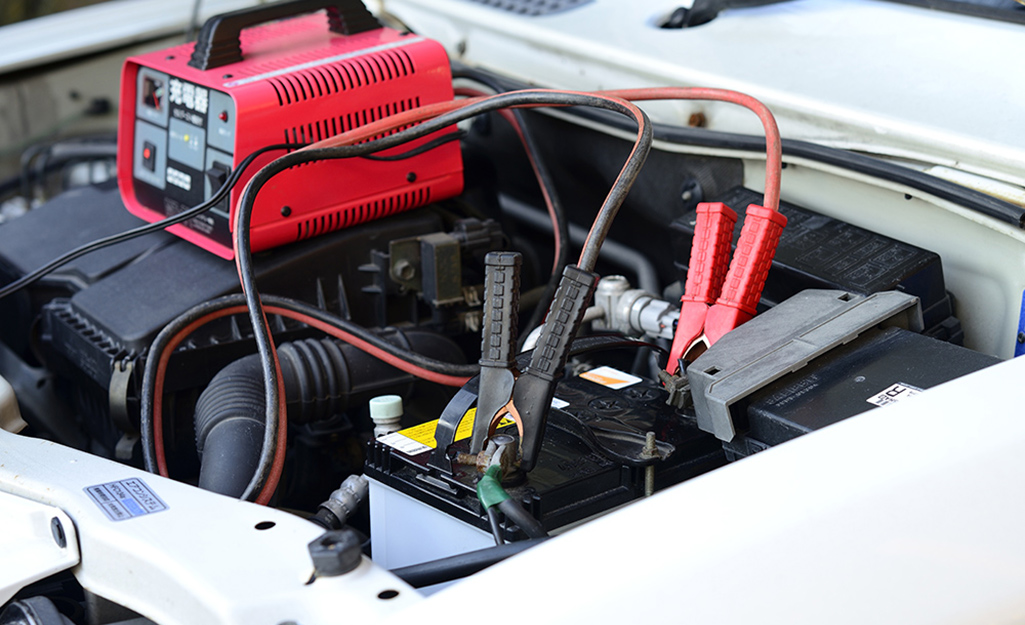
A typical flooded lead-acid battery connected to a smart charger, showing the positive and negative terminal clamps.
Credit: www.homedepot.com
Tools and Equipment Needed
You do not need a professional garage full of equipment. A basic setup is affordable and will serve you for years.
Essential Tools
- Battery charger: Choose one that matches your battery type. A smart charger with a 12-volt setting covers almost every modern car.
- Safety gloves and goggles: Battery acid is corrosive, and a spark can cause injury. Protect your hands and eyes.
- Wire brush: This removes the corrosion that blocks the flow of electricity at the terminals.
- Wrench or pliers: You may need these to disconnect the battery cables.
- Multimeter: A cheap digital multimeter lets you check voltage before and after charging.
Optional But Useful
- Distilled water: Needed only for flooded lead-acid batteries where the electrolyte level is low.
- Battery terminal cleaner spray: Makes the job faster and works better than a brush alone.
A common mistake is buying a manual charger to save money. Manual chargers require you to monitor the charging process and disconnect at the right time—if you forget, you can boil the electrolyte and destroy the battery. A smart charger with automatic shut-off costs a little more and is far safer.
Safety Precautions Before Charging
Car batteries can produce explosive hydrogen gas during charging. A single spark near the battery can ignite it. These precautions are not optional—they are the difference between a routine task and a trip to the emergency room. For more on this, see our guide on how do you put car seat in shopping.
The Rules That Matter
- Work in a well-ventilated area. Open the garage door or work outside.
- Remove metal jewelry. A metal bracelet or ring touching both terminals creates a short circuit that can burn you badly.
- Keep flames and sparks away. Do not smoke near the battery.
- Inspect the battery first. Cracks, leaks, swelling, or a strong rotten-egg smell mean the battery is damaged. Do not charge it—replace it.
- Unplug the charger before connecting or disconnecting clamps. This eliminates the biggest spark risk.
- Connect positive first, disconnect positive last. If your clamp slips, a tool touching ground is less dangerous before the battery circuit is complete.
Practical note: For decades, mechanics recommended disconnecting the battery before charging. On many modern vehicles—especially European models—disconnecting power can reset computers and trigger warning lights. Unless your owner's manual explicitly says otherwise, you can usually charge the battery while it is still connected, just make sure the ignition is completely off.
Charging Methods Explained
You have several options for charging a dead battery, and each has its place. The right choice depends on whether you need a full charge or a quick emergency start.
Using a Dedicated Battery Charger
This is the safest and most thorough method. It gives the battery a full, controlled charge that restores its capacity and lifespan.
Battery chargers come in three flavors:
- Manual chargers: You select the voltage and amperage, then monitor the process yourself. Cheap but requires attention.
- Smart (automatic) chargers: These detect the battery's state of charge and adjust the charging rate. They shut off automatically when the battery is full, preventing overcharging.
- Trickle chargers and maintainers: These deliver a very low current, ideal for vehicles parked for weeks or months. Maintainers cycle on and off to keep the battery at optimal voltage indefinitely.
Jump Starting with Another Car
Jump starting is an emergency measure. It gets your engine running, but it does not fully charge the battery. The alternator will top it up partially while you drive, but a battery that has been deeply discharged needs a proper charger to restore full capacity.
The correct cable order matters:
- Connect the red clamp to the dead battery's positive terminal.
- Connect the other red clamp to the good battery's positive terminal.
- Connect the black clamp to the good battery's negative terminal.
- Connect the final black clamp to an unpainted metal surface on the dead car's engine block—not to the dead battery's negative terminal.
Start the good car, let it run for a few minutes, then try to start the dead car. Once running, remove the cables in reverse order.
Portable Jump Starters
Portable jump starters are rechargeable lithium battery packs roughly the size of a paperback book. They are safer than jumper cables because they eliminate the risk of a second car rolling or electrical systems interacting. Connect the clamps to your battery, turn on the unit, and start your car.
These are excellent for emergencies, but like jump starting, they deliver only a partial charge. Follow up with a proper charger when you get home.
Step-by-Step: Charging a Car Battery Safely
Now let's put it all together. This is the complete process, start to finish, using a standard smart battery charger.
Step 1: Prepare Your Workspace
Park the car on a level surface, turn the engine off, and remove the keys. Open the hood and locate the battery. If you cannot find it—some cars hide it in the trunk or under the rear seat—check the owner's manual.
Step 2: Inspect the Battery
Look for visible damage: cracks, bulging sides, leaking fluid, or heavy corrosion. If the battery shows any of these signs, stop here. Do not charge a damaged battery.
Step 3: Clean the Terminals
Battery terminal corrosion looks like white, green, or blue powder. It is a poor conductor and will interfere with charging. Use your wire brush to clean both terminals. If the corrosion is heavy, remove the battery cables first, then brush the terminals and the inside of the cable clamps.
Step 4: Connect the Charger
The charger must be unplugged at this point.
- Clamp the red lead to the battery's positive (+) terminal.
- Clamp the black lead to the battery's negative (−) terminal.
If you are charging the battery while it is still in the car, most experts recommend connecting the black clamp to a clean, unpainted metal part of the engine block instead of the negative terminal itself. This moves any spark away from the battery where hydrogen gas may accumulate.
Step 5: Set the Charger and Plug In
Select the correct voltage (12V for almost all modern cars). Choose the charging mode if your charger offers options—AGM batteries need a different profile than flooded lead-acid. If your charger has multiple amperage settings, use the lowest setting that fits your time constraints. Slow charging is gentler on the battery.
Plug in the charger and turn it on.
Step 6: Monitor the Charge
A smart charger will display progress and shut off automatically when done. A manual charger requires you to check periodically. Use a multimeter to test the battery voltage: a fully charged 12-volt battery should read between 12.6 and 12.8 volts when resting.
Step 7: Disconnect in the Correct Order
When charging is complete:
- Turn off and unplug the charger.
- Remove the black clamp first.
- Remove the red clamp last.
If you disconnected the battery cables earlier, reconnect them now—negative last. Then start the car to confirm everything works.
How Long Does Charging Take?
Charging time varies wildly depending on the charger and the battery's condition. Here is a realistic breakdown:
| Charger Output | Approx. Time (From Dead to Full) | Best Use Case |
|---|---|---|
| 2–4 amps (trickle) | 12–24 hours | Overnight, battery health |
| 6–10 amps | 4–8 hours | Standard charging for most users |
| 15–20 amps (fast) | 1–3 hours | Emergency situations |
| Alternator while driving | 30–60 minutes (partial only) | Recovering after a jump start |
Fast charging is convenient, but it generates heat and strains the battery's internal chemistry. If you fast-charge often, you will shorten the battery's lifespan. When you have the time, a slow charge is always better.
Common Mistakes to Avoid
Even experienced DIYers make these errors. Here is what to watch out for:
- Mixing up the cables: Swapping positive and negative creates sparks, can fry the car's computer, and can crack the battery case.
- Overcharging: Leaving a manual charger connected too long boils the electrolyte dry and destroys the battery.
- Charging a frozen battery: A frozen battery can explode during charging. Thaw it indoors and inspect it for cracks before attempting a charge.
- Charging a damaged battery: Swollen, cracked, or leaking batteries are beyond help. Replace them.
- Using the wrong charger mode: Charging an AGM battery on a flooded lead-acid setting shortens its life. Use the correct profile.
- Letting the battery sit dead: A deeply discharged battery sulfates internally. If it sits dead for weeks, it may never hold a full charge again.
Signs Your Battery Needs Charging or Replacement
Sometimes a battery is past saving. These symptoms point to replacement, not another charge:
Symptoms of a Battery That Simply Needs a Charge
- Slow engine cranking, but the lights stay bright
- Dashboard lights dim when you try to start the engine
- The car starts fine after a jump start but struggles again the next day
Symptoms of a Battery That Must Be Replaced
- The battery is more than four years old and failing
- The case is swollen, cracked, or leaking
- The battery needs a jump start weekly even after a full charge
- A multimeter reading below 12.2 volts after a full charge indicates internal damage

A technician measuring battery voltage with a digital multimeter to determine whether the battery needs a charge or replacement.
Credit: www.caranddriver.com
Maintaining Battery Health
A little routine care goes a long way. Most batteries fail prematurely due to neglect, not age.
- Drive regularly: A 15–20 minute drive at least once a week keeps the alternator working and the battery topped up.
- Clean the terminals twice a year: Corrosion cuts current flow and drains the battery faster.
- Check fluid levels: For flooded lead-acid batteries, maintain the electrolyte level with distilled water. Never use tap water.
- Secure the battery firmly: Vibration from a loose battery damages its internal plates.
- Avoid deep discharges: Letting a battery go completely dead repeatedly drastically shortens its life.
If your car sits unused for more than two weeks, connect a battery maintainer. It keeps the battery at full charge without overcharging, and it can double the life of a battery in a seasonal car.
When to Seek Professional Help
Some problems are beyond a DIY fix. Take your car to a professional if:
- The battery keeps losing charge within days of a full charge
- You see persistent warning lights on the dashboard
- The battery smells like rotten eggs—a sign of leaking sulfuric acid
- You suspect an alternator problem rather than a battery problem
A mechanic can run a load test and a parasitic drain test to find the root cause. These tests take under an hour and can save you from buying a new battery you do not actually need.
Environmental Impact and Battery Disposal
Never throw a car battery in the trash. Lead-acid batteries contain sulfuric acid and lead—both hazardous to the environment and human health.
More than 95 percent of battery materials are recyclable. Nearly every auto parts store, recycling center, and many municipalities accept old batteries for free. Some retailers even offer a store credit for returns.
For detailed guidance on proper disposal, check the EPA automotive battery recycling page. It takes five minutes to recycle the right way, and it keeps toxic materials out of landfills and water supplies.
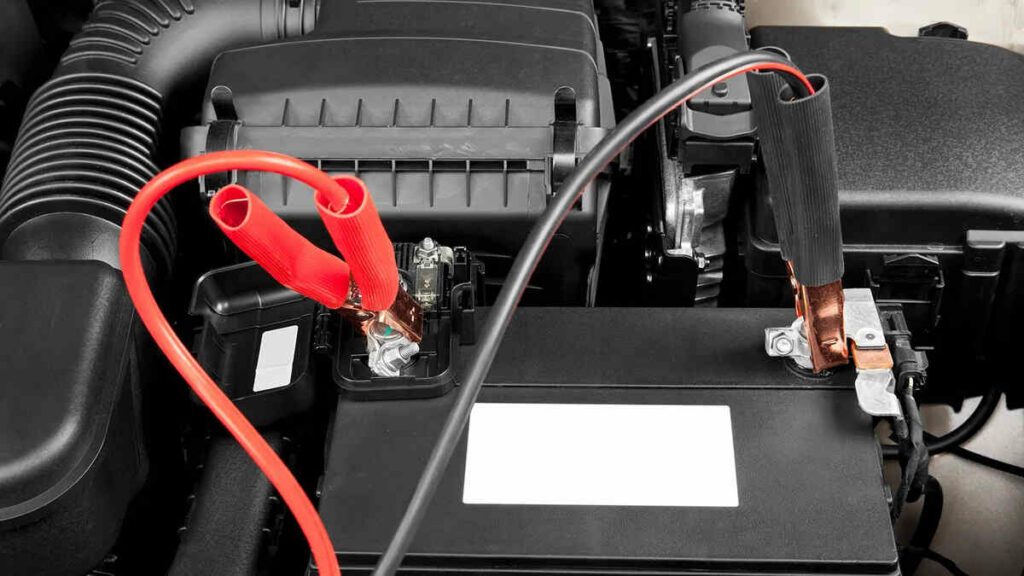
Proper jump-start cable connection order: red to positive terminals first, black to ground last.
Credit: heartautocare.com
Frequently Asked Questions
How do I know if my car battery is charging?
Use a multimeter on the battery terminals with the car off. A fully charged battery reads about 12.6–12.8 volts. With the engine running, the alternator should push the voltage to 13.7–14.7 volts. If the reading stays below 13 volts while running, the alternator is not charging properly. You can also check the battery's condition and charging system with the diagnostic resources on our main blog.
Can I charge a car battery without removing it from the car?
Yes, in most cases. Turn off the ignition and all accessories, then charge as normal. Some European and luxury models have sensitive electronics that prefer the battery to be disconnected—check your owner's manual. If you are unsure, a professional can advise you.
Is it safe to charge a car battery overnight?
It is safe with a smart charger or battery maintainer, which stops automatically when the battery is full. Never leave a manual charger running unattended. If you are charging a battery in a vehicle that will sit unused, a battery maintainer is the right tool for the job.
What is the best charger for my car battery?
A smart charger with adjustable modes is the best all-around choice for flooded lead-acid, AGM, and gel batteries. It handles the charging logic automatically and prevents overcharging. Lithium-ion batteries require a dedicated charger—only use the one recommended by the manufacturer.
Why does my car battery keep dying?
The usual suspects are a parasitic drain (a light or module left on), a failing alternator, frequent short trips, extreme temperatures, or old age. If the problem is recurring, have the charging system tested. Replacing the battery is not a fix for an underlying electrical fault.
Conclusion
Charging a car battery is one of the most useful skills a driver can learn. The process comes down to three things: knowing your battery type, following correct connection order, and choosing the right charger.
For most people, the smart move is to own a smart charger and a portable jump starter. The jump starter gets you moving in an emergency, and the smart charger restores the battery fully when you are back home. Pair that with routine maintenance—clean terminals, regular drives, and a maintainer for long-term parking—and your battery will last its full lifespan.
Start by inspecting your current battery and picking up the tools you need. The next time your car refuses to start, you will know exactly what to do. If you run into warning signs like swelling, leaks, or recurring drains, trust your instincts and get professional help before the problem escalates.

Leave a Reply