
When your check engine light turns on, an OBD2 scanner is the fastest way to find out what's wrong — without paying a shop $100 for the privilege. But prices span from $15 to over $1,000, and figuring out how much you actually need to spend can feel confusing.
Here's the bottom line: most car owners will do perfectly well with a scanner between $30 and $150. Professional shops spend $400–$1,000+ on advanced tools. The right price for you depends entirely on what you plan to diagnose. This guide breaks down every price tier, what you get at each level, the hidden costs that catch people off guard, and how to choose a scanner that fits your real needs — without overspending. You can also read our guide on how to use obd2 scanner.
What Is an OBD2 Scanner, Really?
An OBD2 (On-Board Diagnostics II) scanner plugs into your car's diagnostic port — typically under the dashboard near the steering wheel — and reads the trouble codes your vehicle's computer generates. These codes tell you which system is malfunctioning: engine, transmission, emissions, brakes, airbags, or something else. The port is standard equipment on every petrol and diesel car sold in the US since 1996, a requirement introduced by the Environmental Protection Agency to standardise emissions monitoring. That's why even a $20 scanner can read basic engine and emissions codes on virtually any car on the road today.
What actually varies between a $20 and a $1,000 scanner isn't the ability to read codes — it's everything that happens after that: how many vehicle systems it covers, the depth of the diagnostics, whether it can send commands to components, how much live data it streams, and how usable the interface is. For more on this, see our guide on obd2 scanner for hybrid vehicles guide.
OBD2 Scanner Price Ranges at a Glance
| Price Range | Typical Capabilities | Best For |
|---|---|---|
| $20–$50 | Basic code reading & clearing, some live data, mobile app support | Everyday drivers |
| $50–$150 | Live data streaming, ABS/SRS codes, resets, better displays | DIY mechanics |
| $150–$400 | Multi-system diagnostics, wireless connectivity, resets, updates | Serious enthusiasts, semi-pros |
| $400–$1,000+ | Bi-directional control, advanced coding, professional support | Workshops, professional mechanics |
Now let's look at each tier in practical terms.
Entry-Level Scanners ($20–$50): Enough for Most Drivers
What you get: Compact code readers that connect via wire or Bluetooth to a phone app. They read and clear engine codes, show the code definitions, and provide a basic snapshot of freeze-frame data (the conditions present when the code was set).
What you don't get: No ABS or airbag diagnostics, no reset functions, no deep live-data analysis, and no ability to test individual components. For more on this, see our guide on what is vpwr on obd2 scanner.
Popular models:
- Autel AL319 — around $35–40: reliable basics, clear screen, one-button operation
- BlueDriver Bluetooth Pro — around $40–60: pairs with your phone, well-designed app
Who should buy: If you own a car, want to know why the check engine light is on, and clear codes after a simple fix (like a loose gas cap), this is all you need. In practice, a huge proportion of drivers never need anything beyond this tier.
Mid-Range Scanners ($50–$150): The Sweet Spot for DIY
What you get: Live data streaming — real-time engine RPM, coolant temperature, oxygen sensor readings, and fuel trim while the car runs. Many models also read ABS and airbag codes, and some can reset service lights like oil or battery indicators.
What you don't get: No bi-directional control (you can't command actuators to run), and no deep module programming.
Popular models:
- FOXWELL NT301 — around $70–90: solid build, reads live data, one of the best value picks on the market
- Innova 6100P — around $120–140: adds ABS/SRS codes plus oil and battery reset functions
Who should buy: The DIY mechanic who wants to genuinely understand what's happening in real time — not just what code popped up. If you plan to diagnose intermittent problems or simply want to monitor how your engine is performing, this tier will serve you well for years.

Credit: thinkcarus.com
A typical mid-range handheld scanner like the ThinkScan Plus S2 — simple enough for driveway use, capable enough for real diagnostics.
Advanced Scanners ($150–$400): For Serious Enthusiasts
What you get: Full system scans across multiple modules (engine, transmission, ABS, airbags, and more), Wi-Fi or Bluetooth connectivity, colour touchscreens, and support for a wide range of reset functions — oil service lights, brake pads, electronic parking brakes, and battery registration on some models. Most include subscription-free updates for at least the first year.
What you don't get: True bi-directional control is sometimes present on higher-end models in this range, but usually at a fairly basic level. Advanced module coding and programming are still out of reach.
Popular models:
- Launch CRP129E — around $280–320: multi-system diagnostics, Wi-Fi updates, user-friendly interface
- Autel MaxiCOM MK808 — around $380–420: touchscreen, extensive reset functions, solid software support
Who should buy: If you own several vehicles, or you've moved well beyond basic DIY into serious troubleshooting, this tier's depth pays for itself quickly — especially when you start factoring in what a shop charges for a single ABS diagnosis.
Professional Scanners ($400–$1,000+): Workshop-Grade Power
What you get: Bi-directional control (sending commands like activating a fuel pump or cycling an ABS valve), advanced coding and module programming, vehicle-wide scanning, secure gateway access for newer cars, and typically ongoing software updates.
What you don't get: An inexpensive experience. Updates after the first year are usually paid subscriptions, and the upfront price is a serious investment.
Popular models:
- Snap-On Solus Edge — $900–$1,200: the industry benchmark for professional shops
- Autel MaxiSys MS906 — $1,000–$1,300: deep coding capability, exceptional vehicle coverage
Who should buy: Professional mechanics and shop owners, where diagnostic speed and accuracy directly affect income. For a home user, this tier is overkill — unless you're restoring or heavily modifying vehicles.
What Actually Drives OBD2 Scanner Prices?
Understanding pricing comes down to six key factors:
1. System Coverage
Basic scanners read only engine (powertrain) codes. Each additional system — ABS, airbags (SRS), transmission, body control modules — adds hardware and licensing costs. That's why a scanner that reads airbag codes can cost three times more than one that only handles engine codes.
2. Bi-Directional Control
Being able to send commands to your car (e.g., "activate fuel pump" or "cycle ABS solenoid") requires software capable of two-way communication. This is one of the biggest price jumps in the industry — and one of the few features that clearly separates DIY tools from professional ones.
3. Brand and Build Quality
Autel, Snap-On, and Launch charge premium prices for proven reliability, long software support, and warranty backing. Budget brands often cut corners on build materials and update cycles. That said, the gap in basic code-reading reliability between a $30 and a $300 scanner is genuinely small.
4. Software and Update Policy
This is the most overlooked cost factor. Some brands offer free updates for life; others charge $100–$200 per year after a free trial. A scanner that can't be updated gradually loses usefulness as newer car models hit the road. Always read the fine print.
5. Wireless Connectivity
Bluetooth and Wi-Fi models cost more because they add antenna hardware and mobile app development costs. They're convenient but can sometimes struggle with live data stability — a wired connection is still the gold standard for steady data streams.
6. Display and Interface
Colour touchscreens, multilingual support, and well-designed UIs add cost but dramatically improve the user experience. If you're going to use a scanner regularly, a good interface matters more than an extra diagnostic function you'll never touch.
Hidden Costs That Catch Buyers Off Guard
The sticker price is rarely the whole picture. Here's what often adds up:
| Cost Item | Typical Range | Notes |
|---|---|---|
| Software updates | $0–$200/year | Free-for-life is rare; check the policy carefully |
| Adapter cables | $10–$50 | Some European and Asian cars need extra cables |
| App subscriptions | $0–$30/year | Required for full features on some wireless models |
| Replacement parts | $10–$100 | Higher-end units may eventually need battery or screen replacements |
Before buying, add up the two-year cost — scanner price plus update fees. That's your true investment.
Wired vs. Wireless OBD2 Scanners
Wired scanners are plug-and-play, lag-free for live data, and never lose connection. The trade-off: no remote use, and you have to be physically at the port with the cable reaching.
Wireless scanners (Bluetooth or Wi-Fi) let you use your phone or tablet as the display, which is convenient for test drives and makes it easy to share data with a remote mechanic. The downside: occasional connection hiccups, noticeable latency in live-data graphs, and battery drain on your device.
My practical recommendation: for routine garage work, wired is more reliable. For mobile diagnostics or professional workflows, wireless wins. If you're buying your first scanner, a wired model removes one variable from the learning curve.
How to Choose the Right OBD2 Scanner: Step by Step
- List your use case. Will you use it once a year or once a week? Do you own one vehicle or several?
- Decide which systems matter. Engine codes only? Add ABS/SRS? Do you need reset functions?
- Set a realistic budget that includes updates. Remember the two-year cost, not just the upfront price.
- Check your car's compatibility. Most OBD2 scanners work with 1996+ vehicles, but newer cars — especially 2018+ models from some brands — may have secure gateway modules that require special adapters or a higher-end tool.
- Compare update policies. A $300 scanner with free lifetime updates can easily outvalue a $200 one with a $150/year subscription.
- Read reviews for real-world reliability. Look for repeated patterns like "drops connection" or "can't read my 2023 truck" rather than dismissing one-off complaints.
OBD2 Scanner vs. Repair Shop Fees: The Honest Math
| Diagnostic Service | Shop Cost Per Visit | With Your Own Scanner |
|---|---|---|
| Check engine light diagnosis | $75–$120 | $0 (after scanner purchase) |
| Full system scan | $150–$250 | $0 |
| Reset service lights | $40–$80 | $0 (if supported) |
If you visit a shop twice a year for diagnostics, a $150 scanner pays for itself within 12–18 months. Even a $30 budget unit breaks even on the first visit.
For serious DIYers, the savings are dramatic — especially once you add resets, live data, and the ability to test components in real time.
Where to Buy OBD2 Scanners (and Avoid Getting Scammed)
Trusted sources: official brand websites, major retailers like Amazon and AutoZone, and specialised automotive tool suppliers. Stick to sellers with a clear return policy and warranty backing.
Red flags to watch for:
- "Too good to be true" prices on name-brand units — counterfeits are genuinely common in this category
- Sellers with no warranty support or no way to contact them
- Scanners that advertise features but offer no software update path
- Listings with generic stock photos and zero customer reviews
If you're budget-conscious, buying a slightly older but genuine model from a known brand beats a suspiciously cheap copy of a popular tool every time.
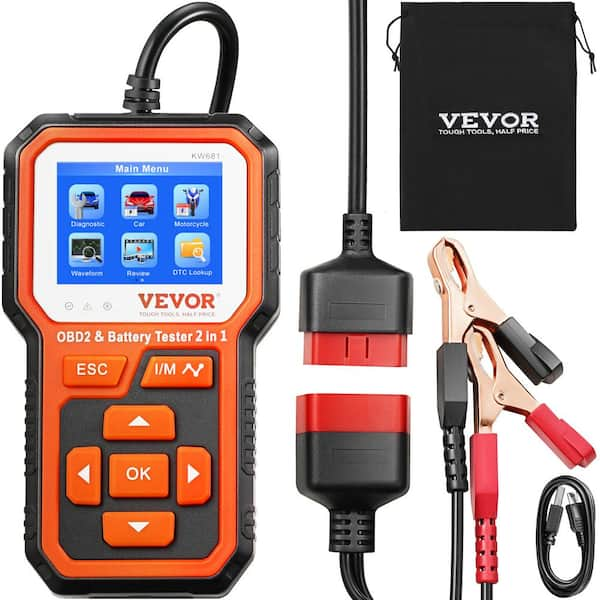
Credit: www.homedepot.com
Budget-friendly scanners like this Vevor unit often look identical to pricier models — check the software update policy before committing.
Beyond Diagnostics: Building Your Full Car Care Routine
An OBD2 scanner is arguably the single most valuable diagnostic tool a car owner can have, but it works best as part of a complete maintenance routine. Reading trouble codes is step one — actually keeping the vehicle in shape means regular attention to other areas too.
For example, keeping the cabin clean protects resale value and day-to-day comfort. Simple jobs are much easier with the right equipment — like tackling debris under the seats without wrestling with a heavy household cleaner. The selection logic mirrors buying a scanner: match the level of power to your actual cleaning needs, and prioritise the capabilities you'll genuinely use rather than paying for features that sound impressive on paper.
The same applies to any tool purchase. Whether you're deciding on a car vacuum or something else entirely, it pays to shortlist the right essentials before you spend. And when you're ready to go deeper into car ownership, browse our full library of automotive guides for more hands-on, practical advice.
Frequently Asked Questions
How much should I pay for a good OBD2 scanner?
For most car owners, $30–$150 is the realistic sweet spot for a quality unit that reads and clears codes, streams live data, and offers some resets. Professionals and serious DIYers should budget $250–$500 for advanced multi-system diagnostics.
Are cheap OBD2 scanners reliable?
Yes, for basic tasks. A $30 scanner will reliably read and clear engine codes on any 1996+ vehicle. Just don't expect it to diagnose ABS faults or run resets — that's what separates the budget tier from the next one up.
Do OBD2 scanners work on all cars?
Nearly all scanners work with vehicles made after 1996 in the US. However, some newer models (2018+) from certain brands use secure gateway modules that require special adapters or a higher-end tool. Always verify compatibility with your exact make and model before purchasing.
Wired or wireless — which is better?
Wired gives you the most stable connection and reliable live data, with zero battery concerns. Wireless offers convenience and phone-based interfaces but can suffer from lag and connection drops. For most home users, wired is the safer recommendation.
Do I really need to pay for software updates?
Not always. Some brands include free updates for the tool's lifetime on certain models. Others, especially professional-tier tools, charge annual subscription fees. This is a critical detail to check before buying — it can double the cost of a scanner over three years.
Can an OBD2 scanner fix problems, or just diagnose them?
A scanner diagnoses — it doesn't repair. Some functions, like activating components during testing or resetting service lights, go beyond diagnosis, but the fix itself is always mechanical or electrical work you have to perform.
Final Verdict: What Should You Actually Buy?
Here's a straightforward recommendation:
- Casual driver: a $30–$50 scanner (Autel AL319 or BlueDriver) is enough to demystify warning lights and clear simple codes.
- Enthusiast who works on their own car: a $70–$150 model (FOXWELL NT301 or Innova 6100P) delivers live data, ABS/SRS coverage, and resets — the ideal balance of capability and cost.
- Multi-vehicle owner or semi-professional: a $250–$400 unit (Launch CRP129E or Autel MaxiCOM MK808) offers real depth, convenience, and update support.
- Shop owner: invest in a $900+ professional tool — it justifies itself on the first complex job.
Buy a scanner that fits your actual use case, not the most impressive spec sheet. Check the update policy, confirm your car's compatibility, and purchase from a trusted source. If you're just starting out with DIY car care, a solid mid-range unit is the best $100 you can spend on car ownership — it pays for itself within a year and keeps paying for years after. Compare a few models from established brands before you commit, and you'll have a tool that serves you for a decade or more.

Leave a Reply