
You’ve just found your bike dead in a parking lot, and the only thing nearby is a friend’s car with a set of jumper cables. The question on your mind is simple: can you jump a motorcycle battery with a car battery? The short answer is yes, but the longer answer involves real risk to your bike’s electronics, your safety, and a few steps most people get wrong.
Using a car battery to jump a motorcycle requires specific precautions. As of 2026, most motorcycles run on 12V electrical systems, which matches a standard car. But the current output and charging behavior differ significantly.
A typical car alternator can push up to 14.5 volts at idle, while a motorcycle’s regulator is designed to handle around 14.0 volts from its own stator. That half-volt difference, combined with amperage mismatches, is where problems start.
Image source: Bing (Web (fair-use with source credit))
Quick Answer
Yes, you can jump a motorcycle battery with a car battery. The car engine must be completely off. Connect positive to positive, then negative to a metal frame point on the bike.
Wait two to three minutes before starting. Never jump a lithium motorcycle battery this way. The voltage spike can fry your bike’s regulator, rectifier, or ECU.
Why This Is Riskier Than It Sounds
The danger isn’t the battery itself. It’s the electrical surge that comes from the car’s charging system when the engine is running. A car alternator at idle produces roughly 14.2 to 14.5 volts.
A motorcycle’s regulator rectifier expects input from its stator, typically around 14.0 to 14.2 volts maximum. That extra half-volt might not seem like much, but modern motorcycle electronics are sensitive. The ECU and ABS modules operate on tight tolerances.
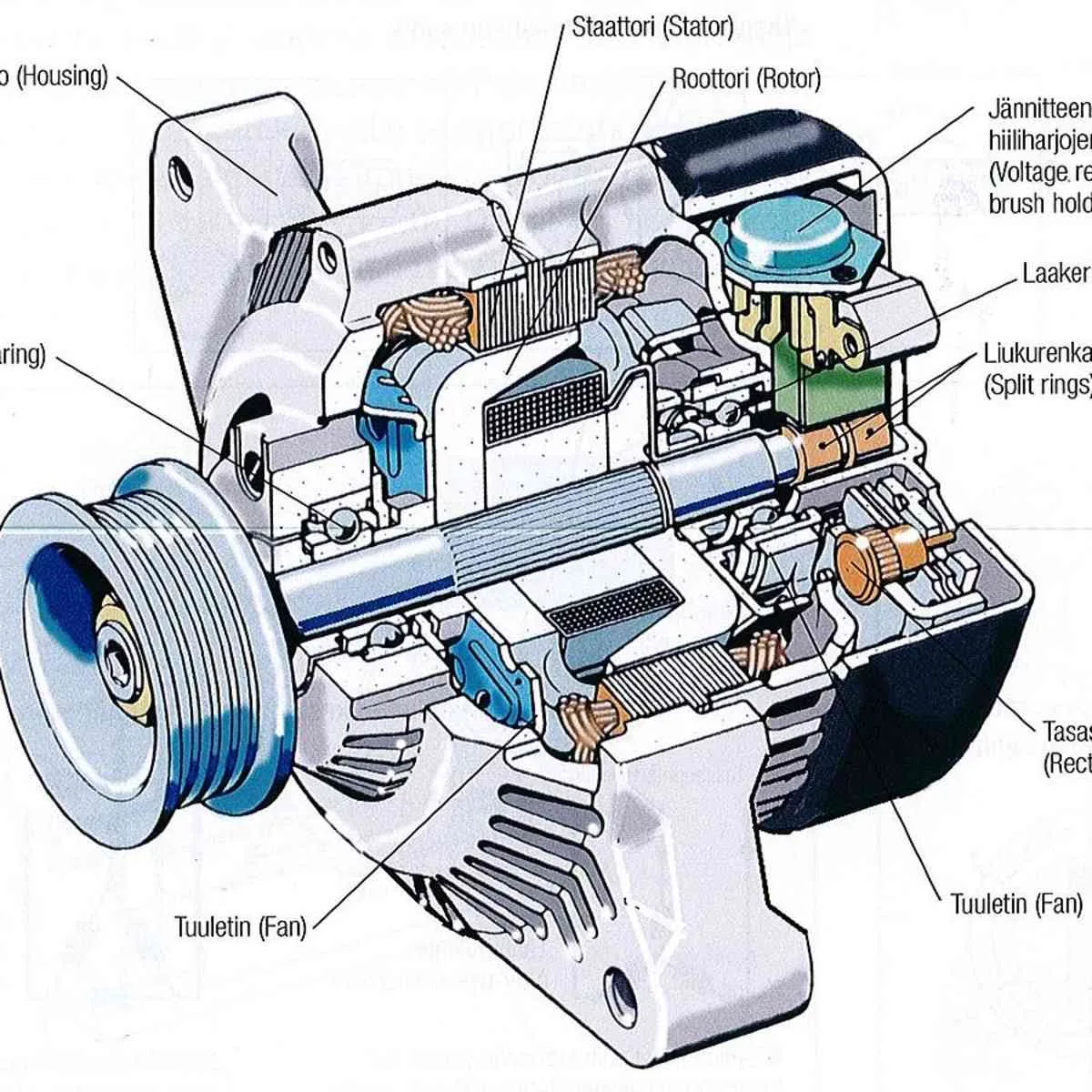
Image source: Web (Bing) / circuitdiagram.co (Web image (fair-use with source credit))
When you connect a running car to a motorcycle battery, the alternator’s output can spike to 15 volts or more before the bike’s regulator can compensate. Those spikes are what kill components. Our research shows that regulator rectifier damage is the most commonly reported failure after an improper jump start.
The repair often costs more than a new battery or a tow.
Another issue is amperage. A car battery delivers hundreds of cold cranking amps (CCA), often 400 to 800. A motorcycle starter motor only draws around 20 to 40 amps.
The bike doesn’t need that extra current, but the car battery will happily supply it. This doesn’t immediately damage anything if the car is off, but it creates conditions where mistakes become expensive.
The real problem is that most people leave the car running. They assume it helps. It doesn’t.
It just pumps unregulated voltage into a system not built for it. If you’re going to do this, the car engine stays off. No exceptions.
What You’re Actually Dealing With: Battery Chemistry 101
Motorcycle batteries come in three main chemistries, and each reacts differently to a jump start. Knowing which one you have changes everything about the procedure.
Lead-acid flooded batteries are the old standby. They contain liquid electrolyte that can vent hydrogen gas during charging. These are the most forgiving when jumped, but they still require care.
The gas is explosive if it accumulates near a spark.
AGM (Absorbent Glass Mat) batteries are sealed and don’t vent under normal conditions. They’re common in modern bikes because they handle vibration well and need no maintenance. They tolerate a jump start fairly well as long as you follow the proper sequence.
Lithium-ion batteries are a different animal entirely. They use lithium iron phosphate (LiFePO4) chemistry and include a battery management system (BMS). The BMS controls charging and discharging.
A car’s electrical system can confuse or overwhelm that BMS. Many manufacturers explicitly prohibit jump-starting lithium batteries from a car. The voltage spike can trigger a thermal runaway, which is a fancy way of saying the battery can catch fire.
Here’s a quick reference for what you’re likely dealing with:
| Battery Type | Common in | Jump from car? | Risk level |
|---|---|---|---|
| Flooded lead-acid | Older bikes, budget models | Yes, with care | Moderate |
| AGM | Most modern bikes since 2010 | Yes, with care | Low |
| Lithium-ion | Aftermarket upgrades, new high-end bikes | No, use a lithium-compatible charger | High |
The battery chemistry also affects cold cranking amps. A lead-acid bike battery typically delivers 150 to 230 CCA. A lithium battery delivers similar cranking power at a fraction of the weight.
Car batteries start around 400 CCA and go up from there. The mismatch isn’t a problem if the car is off, but it’s another reason to avoid a running car.
Before you connect anything, check your owner’s manual for the battery type. If it says lithium, your options are limited. A portable jump starter designed for powersports is a safer choice than a car battery.
The Real Danger: What Happens When It Goes Wrong
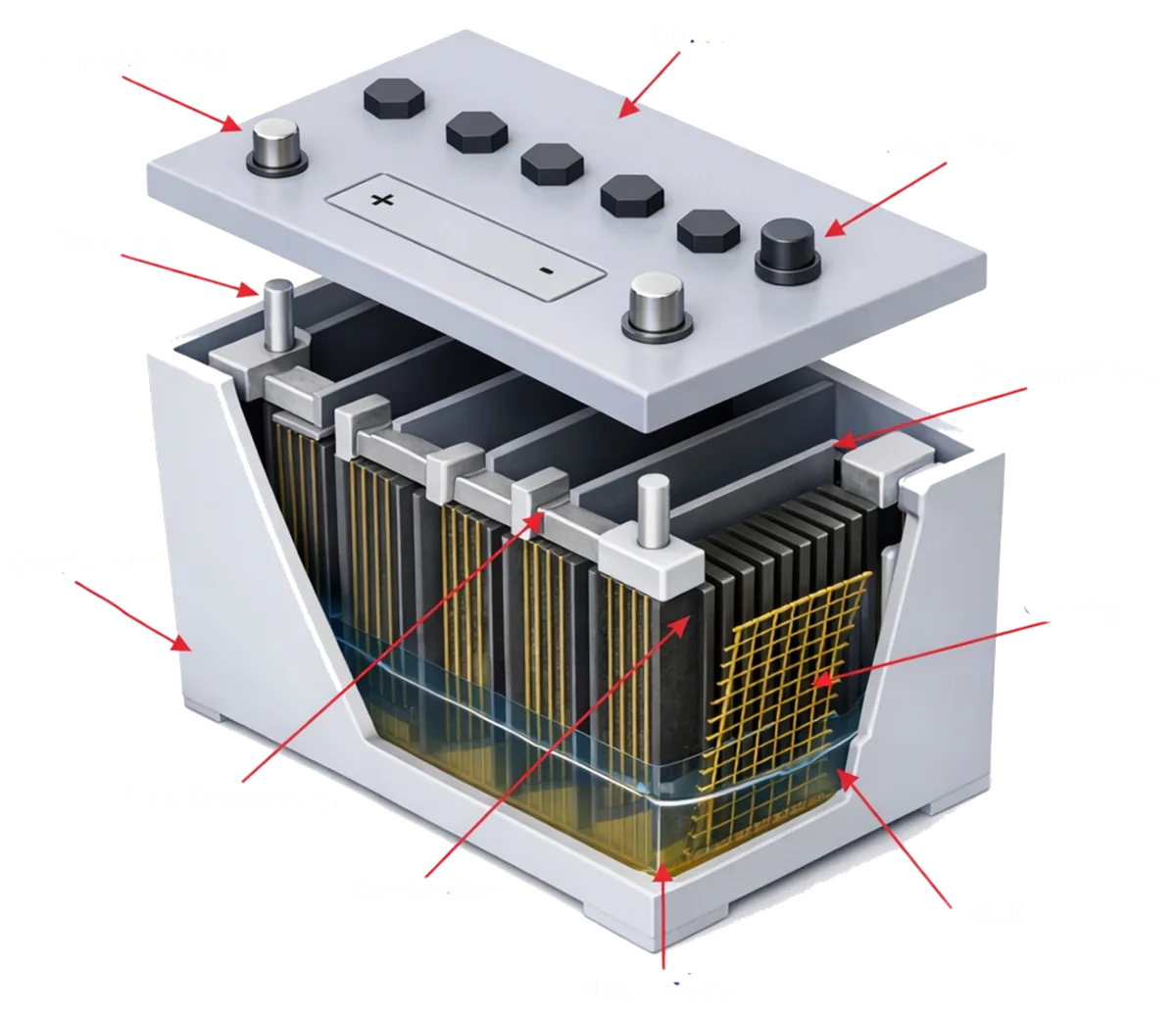
Image source: Web (Bing) / teralumensolutions.com (Web image (fair-use with source credit))
The most dramatic risk is an explosion. Lead-acid batteries release hydrogen gas during charging, especially when they’re deeply discharged and being recharged rapidly. That gas is highly flammable.
A single spark from a loose cable connection can ignite it. The result is a battery casing cracking open and spraying sulfuric acid. It’s not common, but it happens more than you’d think.
The National Fire Protection Association documents battery-related fires and explosions every year.
The more common damage is electronic. Modern motorcycles have computers that control ignition timing, fuel injection, and sometimes traction control. These ECUs operate on a narrow voltage range.
A surge from a car’s electrical system can fry them instantly. Replacing an ECU on a Japanese sport bike can run $500 to $1,200. On a European bike, it can be more.
That’s a lot more expensive than buying a proper battery charger.
Reverse polarity is another killer. Connect the cables wrong, and you’ll know immediately. Sparks fly, components smoke, and in the worst case, the battery explodes.
The reason we connect positive first and negative last is to minimize spark risk at the battery itself.
Frozen batteries are another hazard. If the bike has been sitting in freezing temperatures and the battery is dead, the electrolyte could be frozen. Jumping it can cause the casing to crack.
It’s better to warm the battery slowly and charge it properly before attempting a start.
Here’s what to check before you connect anything:
- Verify your battery type (lead-acid, AGM, or lithium)
- Inspect the battery casing for cracks or bulging
- Check for corrosion on the terminals
- Ensure the battery isn’t frozen
- Confirm your jumper cables are in good condition with no exposed wire
If any of those checks fail, don’t jump the bike. Call a tow or use a portable jump starter.
Step-by-Step: How to Jump a Motorcycle Battery Safely
If you’ve confirmed you have a lead-acid or AGM battery and everything looks intact, here’s the safe procedure. The car engine stays completely off. The car key should be removed to prevent any accidental starting.
What you’ll need:
- Quality jumper cables (8-gauge or thicker)
- Safety glasses and gloves
- A clean metal surface on the motorcycle frame
The connection sequence:
- Place the car and motorcycle close enough that cables reach comfortably, but ensure they’re not touching each other.
- Turn the car completely off and remove the key.
- Connect one red clamp to the motorcycle battery’s positive terminal. It should have a red cover or a “+” mark.
- Connect the other red clamp to the car battery’s positive terminal.
- Connect one black clamp to the car battery’s negative terminal.
- Connect the other black clamp to an unpainted metal surface on the motorcycle frame, not the battery’s negative terminal. This creates a path for the current while reducing spark risk near the battery.
- Wait two to three minutes. This lets the car battery slowly charge the motorcycle battery.
- Start the motorcycle. If it doesn’t start within a few seconds, wait another minute and try again.
- Once the bike starts, disconnect in reverse order. Remove the black clamp from the bike frame first, then the black clamp from the car, then the red clamp from the car, and finally the red clamp from the bike.
The goal is to transfer enough charge to start the bike, not to fully charge the motorcycle battery. The bike’s own charging system will handle that once it’s running, assuming its stator and regulator are working properly.
After the bike starts, let it idle for a few minutes. Don’t immediately shut it off. The alternator needs time to replenish the charge you drew from the battery.
If the bike stalls or won’t restart later, the issue might be a bad battery or a failing charging system. That’s a separate problem from the jump itself.
If the motorcycle battery is deeply discharged, a car battery jump might not provide enough current to crank the starter. In that case, you’ll need a dedicated battery charger. Leaving a deeply discharged battery connected to a car battery for extended periods can overheat it.
Keep the connection time short and monitor the battery temperature.
For a quick reference, here’s the process in a nutshell:
| Step | Action | Notes |
|---|---|---|
| 1 | Position vehicles | Don’t let them touch |
| 2 | Turn car off | Remove the key |
| 3 | Connect red to bike battery positive | Verify polarity |
| 4 | Connect red to car battery positive | Firm connection |
| 5 | Connect black to car battery negative | Clean post |
| 6 | Connect black to bike frame | Unpainted metal |
| 7 | Wait 2–3 minutes | Slow trickle transfer |
| 8 | Start motorcycle | Short crank attempt |
| 9 | Disconnect in reverse order | Black off bike first |
This procedure won’t work with a lithium battery. The BMS can reject the current and shut down entirely. You’ll see a completely dead bike with no lights, no dash, nothing.
That’s your sign to switch tactics.

Leave a Reply