
That moment when your car finally roars to life after a jump-start brings genuine relief. But what you do in the next hour determines whether you'll be calling for help again tomorrow. Many drivers shut the engine off after just a few minutes, only to find themselves stranded once more.
The short answer: leave your car running for at least 30 minutes after a jump-start. However, the ideal time depends on your battery's age, the weather, and whether you idle or drive. This guide breaks down exactly what happens after those cables come off, how long you truly need, and the steps that protect your battery for the long haul. You can also read our guide on how to check car battery health with obd2 scanner.
Why Your Car Needs Time After a Jump-Start
A jump-start delivers a surge of power that cranks your engine, but it barely scratches the surface of a discharged battery. Think of it like giving someone a sip of water when they're dehydrated—it helps in the moment, but they still need time to recover.
The alternator does the real work. Once your engine is running, this component generates electricity to power your vehicle's systems and replenishes the battery. But here's the catch: alternators charge at different rates depending on engine speed and electrical load. For more on this, see our guide on how long can a car radio run on.
A battery drained completely needs significant time to recover. Turn the engine off too soon, and you're back to square one. The alternator simply hasn't had enough time to restore a usable charge.
How Long Should You Leave a Car Running After Jumping?
Most automotive experts recommend running your car for 30 to 45 minutes after a jump-start. This window gives the alternator enough time to push meaningful charge back into the battery. For more on this, see our guide on how long does it take to charge a.
The exact time varies based on several factors:
- Battery age and overall condition
- Alternator health and output
- How deeply the battery was discharged
- Outside temperature
Here's a practical guideline based on common scenarios:
| Battery Condition | Recommended Running Time |
|---|---|
| New or recently replaced | 20–30 minutes |
| 2–4 years old | 30–45 minutes |
| 5+ years old | 45–60 minutes |
| Cold weather (below 32°F / 0°C) | 40–60 minutes |
| Suspected alternator issues | 60+ minutes or drive to a mechanic |
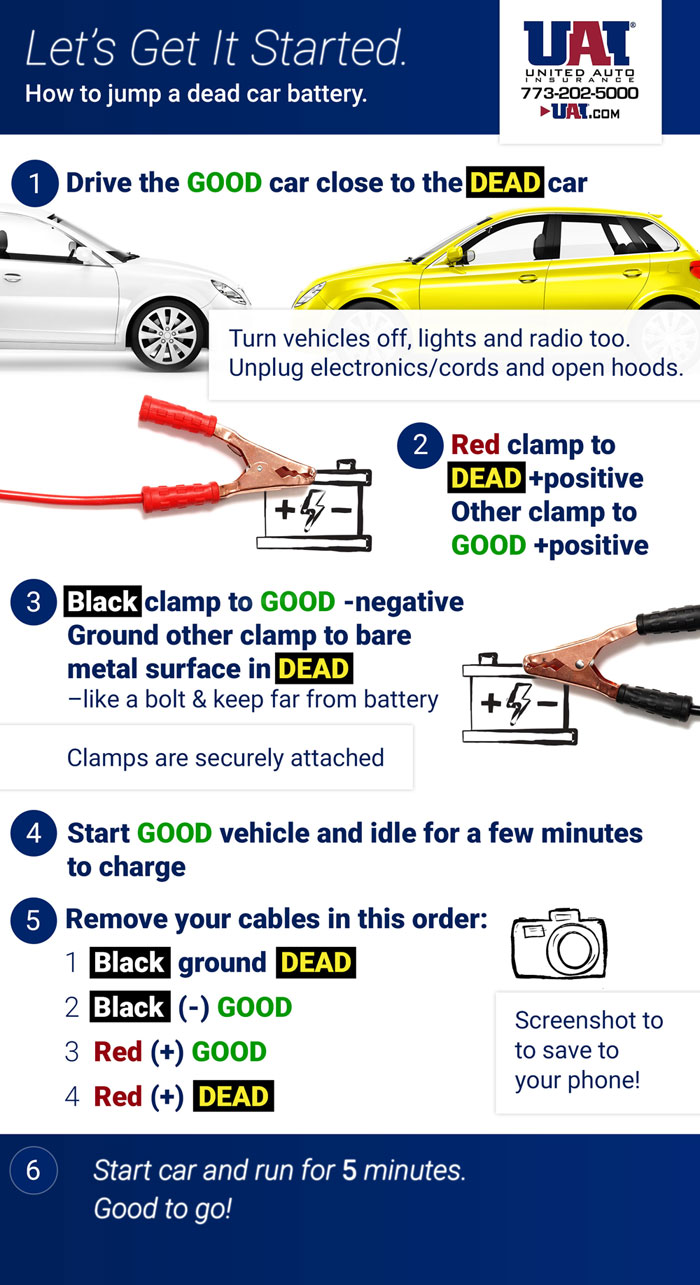
Credit: www.unitedautoinsurance.com
Jump-starting correctly matters, but what you do afterward matters just as much.
Idling vs. Driving: Which Recharges Faster?
If you have the choice, drive the car rather than letting it idle. The alternator spins faster at normal driving RPMs, which means it produces more electricity and charges the battery more efficiently. Idling produces just enough output to maintain the battery's current state, not restore it.
| Action | Charging Efficiency | Recommendation |
|---|---|---|
| Idling | Low—slow charge | Acceptable if you can't drive |
| Driving at normal speed | High—efficient charge | Best option |
| Driving at highway speed | Maximum output | Good for a final top-up |
After a jump-start, take a 30-minute drive. Keep it steady—avoid short stop-and-go trips, and hold off on heavy electrical loads like the air conditioning, heated seats, or an upgraded stereo system for the first stretch. These accessories draw power that would otherwise go toward recharging the battery. For more on this, see our guide on normal battery voltage when car is running.
Step-by-Step: What to Do After Jump-Starting
Once your engine is running, follow this sequence to give your battery the best chance of recovery:
- Remove the jumper cables safely. Turn off both vehicles. Remove the negative (black) cable first, then the positive (red) cable.
- Keep the engine running. Don't shut it off to "check" if it works. Give it time.
- Check the dashboard. If the battery or alternator warning light stays lit, you have a deeper problem.
- Drive for 30–45 minutes. This is the single most effective way to restore charge.
- Limit electrical accessories. Radio, air conditioning, and phone chargers all compete for alternator output.

Credit: swiftbatteryspecialist.sg
A quick visual inspection can reveal corrosion or loose connections that affect charging performance.
Signs Your Battery Needs More Than a Jump
Not every battery recovers. Some are too old, damaged, or simply done. Watch for these warning signs after you've let the car run:
- The engine struggles to start again after being shut off
- Dashboard warning lights stay illuminated
- Headlights appear dimmer than usual
- Power windows move sluggishly
- You hear a clicking sound when turning the key
If you experience any of these, your battery likely needs replacement. Alternatively, a failing alternator could be the culprit—a battery that constantly dies despite regular driving points to charging system problems rather than the battery itself.
How Your Car's Charging System Works
Understanding the components helps you diagnose issues with confidence. The alternator is a belt-driven generator that produces electricity whenever the engine runs. It powers all electrical systems and sends excess current to recharge the battery. For more on this, see our guide on how long do hybrid car batteries last.
The battery's primary job is starting the engine and stabilizing voltage. It's not designed to power your car for extended periods while the engine is off. That's why leaving headlights on overnight drains it completely.
A healthy charging system operates in a careful balance. If the alternator fails, the battery becomes the sole power source—and it empties quickly. If the battery is weak, it can't hold the charge the alternator produces.
Factors That Affect Battery Recovery Time
Several variables determine how quickly your battery recovers after a jump:
Battery Age and Health
A battery in its first year recovers faster than one approaching its fifth birthday. As batteries age, they lose capacity and can no longer hold a full charge. If your battery is 4+ years old, expect slower recovery—or no recovery at all.
Temperature Extremes
Cold weather thickens engine oil, requiring more cranking power. It also slows the chemical reactions inside the battery, reducing its effective output. A battery that starts your car easily in summer may struggle in winter. After a jump-start in freezing temperatures, err on the side of longer running times.
Depth of Discharge
A battery drained by leaving the dome light on overnight is less stressed than one drained completely flat over several weeks. Deeper discharge means more recovery time needed.
Driving Conditions
Short trips of 5–10 minutes barely recharge a battery after starting the engine. The alternator spends most of that energy just replacing what the starter motor consumed.
Common Mistakes After a Jump-Start
Many drivers repeat the same errors, leading to repeat breakdowns:
Turning the engine off too soon. The most common mistake. A few minutes simply isn't enough time for the alternator to restore a useful charge.
Idling instead of driving. Idling charges slowly. If you idle for 15 minutes thinking you're charging the battery, you're barely keeping pace with the parasitic draw of the car's electronics.
Using electrical accessories immediately. Running the AC, radio, and heated seats while the battery recovers slows the process significantly.
Ignoring warning lights. That battery icon on your dashboard isn't just decorative. It's telling you the charging system isn't working properly.
Repeated jump-starts. Each deep discharge stresses the battery, shortening its life. If you need a jump more than once in a few weeks, address the root cause.
A common mistake is assuming a jump-start "fixed" the battery. In reality, a deeply discharged lead-acid battery never fully recovers its original capacity. This is especially true for batteries over three years old—each full drain permanently reduces their ability to hold a charge.
How to Confirm Your Battery Recovered
After running the car for the recommended time, there's one simple test: turn the engine off, wait a few minutes, then start it again. If it cranks with authority, the battery likely recovered. If it sounds sluggish or clicks, the battery wasn't recharged adequately—or it's reached the end of its life.
For a more definitive answer, have the battery tested. Most auto parts stores offer free battery testing that checks:
- Voltage: A fully charged battery should read 12.6 volts or higher with the engine off
- Cold cranking amps (CCA): Measures the battery's ability to start the engine in cold weather
- State of charge: Indicates how much usable capacity remains
Knowing how to assess your car battery's health before problems arise prevents unexpected breakdowns.
What If Your Car Dies Again After Running?
If your car won't restart after 30–45 minutes of running, you're dealing with more than a discharged battery. Possible causes include:
- A dead battery that can no longer hold a charge
- A failing alternator that isn't producing enough output
- A parasitic drain—something in your car draws power even when parked
- Corroded or loose battery terminals that prevent proper charging
Don't keep jump-starting and hoping for the best. Repeated jump-starts damage both the battery and the alternator. A professional diagnosis will pinpoint the problem and prevent further issues.
Battery Maintenance to Prevent Future Jump-Starts
An ounce of prevention beats repeated jump-starts. Here's how to keep your battery healthy:
- Clean the battery terminals regularly to prevent corrosion buildup that blocks charging
- Drive at least 15–20 minutes on a regular basis to maintain charge
- Avoid short trips that drain more power than the alternator replaces
- Use a battery maintainer if you let the car sit for extended periods
- Replace your battery proactively once it reaches 4–5 years old
Modern vehicles with advanced electronics—navigation systems, security features, remote start—draw more power when parked than older models. If your car has these features, be especially mindful of battery health.
For routine interior upkeep, keeping your car clean, including the space around the seats, makes maintenance checks easier. And if you're dealing with any cleaning tasks, having the right tools matters—choosing a vacuum with adequate suction power makes quick work of debris that could otherwise hide corrosion or wear.
Frequently Asked Questions
How long should I idle my car after a jump-start if I can't drive?
If you can't drive, let the car idle for at least 30 minutes. Idling charges more slowly than driving, so longer is better. Avoid using any electrical accessories during this time.
Can I turn on the AC or radio after a jump-start?
Avoid turning on the AC, radio, or other electrical accessories for at least 30–45 minutes after a jump-start. These devices draw power that would otherwise go toward recharging the battery.
Is it safe to jump-start a car more than once?
Jump-starting repeatedly is not ideal. If your car needs a jump more than once in a short period, your battery or alternator may be failing. Have both checked to avoid further damage.
How can I tell if my alternator is bad?
Signs of a failing alternator include dim headlights, a battery warning light on the dashboard, unusual noises from the engine bay, or the car dying shortly after starting. A professional can test alternator output quickly and accurately.
How long does a car battery last?
A typical car battery lasts 3–5 years, depending on climate, driving habits, and maintenance. Extreme temperatures and frequent deep discharges shorten battery life.
Conclusion
Leaving your car running for 30–45 minutes after a jump-start is the difference between a one-time inconvenience and a recurring problem. The alternator needs time to restore the battery's charge, and driving beats idling every time. Watch for warning signs, avoid electrical accessories during recovery, and test your battery if you're concerned about its condition.
If your battery has died even once, don't ignore it. Take the car for a proper drive, then get the battery and charging system tested at a local auto parts store—most offer free testing. Addressing a weak battery early saves you from the frustration of another dead car, especially on a cold morning when you need it most.

Leave a Reply