
A rough idle, a sluggish throttle response, or that dreaded check engine light — these are often the first signs that something is wrong with your engine's combustion. While many drivers immediately assume the worst, the culprit is frequently a simple, inexpensive spark plug.
The good news? You don't need to be a master mechanic to find out. With an OBD2 scanner, you can pinpoint spark plug problems in minutes — without pulling a single plug out of the engine. This guide will walk you through the entire process of checking spark plugs with an OBD2 scanner, from connecting the device to interpreting the codes and fixing the issue. You can also read our guide on freeze frame data on obd2 scanner.
By the end, you'll be able to diagnose misfires with confidence, save money on unnecessary repairs, and keep your engine running at its best.
What Spark Plugs Do — And Why They Fail
Spark plugs are the tiny components that ignite the air-fuel mixture inside your engine's cylinders. Each cylinder has its own plug, so a typical four-cylinder engine uses four. When they fire correctly, combustion is smooth, power is consistent, and fuel economy is optimal. When they don't, the entire engine suffers. You can also read our guide on how to diagnose misfire using obd2 scanner.
Spark plugs don't last forever. Their lifespan depends on the material they're made from:
- Copper plugs: 20,000 – 30,000 miles
- Platinum plugs: 60,000 – 80,000 miles
- Iridium plugs: 80,000 – 100,000 miles
But age isn't the only factor. Driving conditions, fuel quality, and engine health all play a role. A plug can foul prematurely due to oil leaks, running too rich, or even just short trips that prevent the engine from reaching full operating temperature.
Common Symptoms of Failing Spark Plugs
Watch for these warning signs:
- Rough idling or visible engine shaking
- Hesitation or stumbling during acceleration
- Difficulty starting, especially in cold weather
- Fuel economy dropping noticeably
- The check engine light illuminating
If you're experiencing any of these, an OBD2 scan should be your first move.
What an OBD2 Scanner Can (and Can't) Detect
An OBD2 scanner connects to your car's diagnostic port and communicates with the engine control unit (ECU). Since 1996, all vehicles sold in the US are required to have this standard port, making it easy for anyone to access diagnostic data. For more on this, see our guide on how to check fuel injectors with obd2 scanner.
Here's the key distinction: an OBD2 scanner does not directly measure spark plug condition. It can't tell you if an electrode is worn thin or if there's carbon buildup on the ceramic insulator. What it can do is detect the symptoms of a failing plug — misfires, irregular combustion, and fuel trim issues.
When a cylinder misfires, the ECU notices a slight drop in crankshaft speed at the moment of the misfire. It logs the event, stores a trouble code, and often flashes the check engine light. By reading these codes, you can determine which cylinder is misfiring — and that tells you exactly which spark plug to inspect. For more on this, see our guide on obd2 scanner for hybrid vehicles guide.
This is why OBD2 scanning is the smart first step. It narrows a broad problem down to a specific cylinder, saving you time and guesswork.
The Step-by-Step Process
Let's walk through the actual process of checking spark plugs with your OBD2 scanner.
Step 1: Locate the OBD2 Port
The diagnostic port is almost always located under the dashboard, within reach of the driver's seat. Look for a trapezoid-shaped, 16-pin connector. If you can't find it, check your owner's manual or search online for your specific make and model. For more on this, see our guide on how to check engine temperature with obd2 scanner.
Step 2: Connect the Scanner
With the ignition off, plug the scanner into the port. Then turn the ignition to the "ON" position. Do not start the engine yet — this powers up the ECU and allows the scanner to communicate.
Step 3: Read the Diagnostic Trouble Codes (DTCs)
Navigate the scanner's menu and select "Read Codes" or "Diagnostic Trouble Codes." The scanner will retrieve all stored codes. Write them down — don't rely on memory. For spark plug issues, you're most interested in codes starting with "P03."
Step 4: Interpret the Misfire Codes
This is where the diagnosis happens. Here are the most common codes you'll encounter:
| Code | Meaning |
|---|---|
| P0300 | Random / multiple cylinder misfire |
| P0301 | Cylinder 1 misfire |
| P0302 | Cylinder 2 misfire |
| P0303 | Cylinder 3 misfire |
| P0304 | Cylinder 4 misfire |
| P0305 – P0308 | Cylinders 5 – 8 misfire (larger engines) |
A code like P0302 tells you that cylinder 2 is misfiring. The spark plug on that cylinder is the prime suspect. However, it's not the only suspect — ignition coils, fuel injectors, and vacuum leaks can also cause misfires. That's why live data and physical inspection are important.
Step 5: Check Live Data for Misfire Counts
 Credit: www.foxwelldiag.com
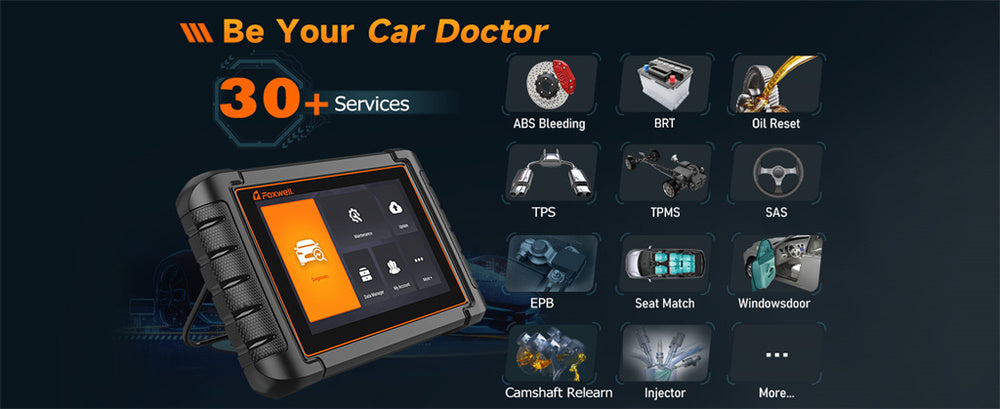
A basic scanner will read codes, but a more advanced model lets you view live data. Look for the "misfire counter" or "misfire monitor" parameter. This shows real-time misfire counts for each cylinder. If you see the count climbing on one cylinder, you've confirmed the problem.
Some misfires only appear under load. If your live data shows no misfires at idle, rev the engine gently (or take a short test drive with the scanner connected) and watch the counters. This often reveals intermittent issues that are otherwise invisible.
Step 6: Clear the Codes and Re-Test
After noting the codes, use the scanner's "Erase Codes" function to clear them. Then drive the car for a distance of 10–15 miles under normal conditions. Scan again.
If the same codes return, the problem is present and needs fixing. If they don't return, it may have been a one-time event (like a single misfire from moisture or a weak battery).
Step 7: Perform a Physical Inspection (confirmed cylinder)
If the scanner points to a specific cylinder, now is the time to physically inspect the plug. Use a spark plug socket and ratchet to remove it. Look for:
- Worn electrodes — rounded edges instead of sharp, square edges
- Carbon deposits — black, sooty buildup
- Oil fouling — wet, oily film on the electrode
- Cracked ceramic — visible lines or chips
Credit: www.124spider.org
These visual signs confirm what the scanner was telling you.
Understanding Cylinder Numbering
One of the most confusing parts of this process — especially for beginners — is knowing where cylinder #2 is located. There's no universal standard, but most engines follow one of these patterns:
- Inline 4-cylinder: cylinders are numbered 1-2-3-4, front to back
- V6/V8 engines: usually prefixed by bank (e.g., driver's side vs. passenger side)
- Some European brands: numbering can start from the flywheel instead of the front
Always check your owner's manual or a reliable online diagram for your engine. Replacing the wrong plug is a waste of time and money.
Why the OBD2 Scanner Beats Guesswork
The traditional way to diagnose a misfire was to replace all the spark plugs, then all the ignition coils, and hope the problem went away. That shotgun approach is expensive and wasteful.
Using an OBD2 scanner gives you:
- Speed: Diagnosis takes minutes, not hours
- Specificity: You know exactly which cylinder is affected
- Cost savings: Replace one plug instead of four or six
- Historical data: Track misfire counts over time to see if a problem is developing
For routine vehicle maintenance, having a scanner also lets you spot issues early. Many drivers check their engine's health alongside other upkeep tasks, like keeping the correct fluid level or cleaning out debris.
Common Mistakes to Avoid
Even experienced DIYers make errors when checking spark plugs with a scanner. Here are the biggest pitfalls:
1. Ignoring related codes. A P0301 code doesn't exist in a vacuum. Check for other codes like P0171 (system too lean) or P0420 (catalyst efficiency). These provide context and may reveal underlying causes.
2. Replacing the plug without checking the coil. On many modern engines, ignition coils fail just as often as spark plugs. If a new plug doesn't clear the code, the coil is the next suspect.
3. Using a scanner without live data. A $15 scanner that only reads codes is better than nothing, but it won't show misfire counts. Without that data, you're working blind on intermittent issues.
4. Forgetting to clear codes after repair. If you fix the issue but never clear the codes, the check engine light may stay on for days. Clear the codes, then verify the light stays off.
5. Skipping the gap check. New spark plugs aren't always pre-gapped correctly for your engine. Check the gap with a feeler gauge and adjust it before installation.
Advanced OBD2 Features for Deeper Diagnosis
If you want to go beyond basic code reading, two advanced features are worth knowing:
Freeze Frame Data
When a misfire code is stored, the ECU also records a freeze frame — a snapshot of engine conditions at the exact moment the code was set. This tells you things like engine RPM, coolant temperature, speed, and fuel trim at the moment of the misfire. This data is invaluable for diagnosing intermittent issues: was the engine cold? At high RPM? Under load? These clues point you toward the root cause.
Mode 6 Data
Mode 6 is an advanced diagnostics mode that shows internal test results from the ECU's self-monitoring systems. For misfires, it can display the exact misfire count history for each cylinder. This is the gold standard for confirming a cylinder-specific problem that isn't yet bad enough to trigger a code.
Each of these tools — freeze frame, live data, and Mode 6 — reveals a different layer of information. Used together, they can diagnose problems that leave even experienced mechanics stumped.
OBD2 Scanning vs. Physical Inspection: Which Is Better?
The honest answer is that you need both. Here's a breakdown:
| Method | Best For | Speed | Limitations |
|---|---|---|---|
| OBD2 Scan | Identifying the problem cylinder | 5–10 minutes | Can't see physical wear |
| Physical Inspection | Confirming plug condition | 30–60 minutes | Must remove all plugs to compare |
| Professional Diagnosis | Complex or recurring issues | 1–2 hours | Most expensive |
Use the scanner first. It tells you where to look. Then pull the plug. It tells you what went wrong. Together, they give you the complete picture.
How Often Should You Check Spark Plugs?
A general rule is to scan your engine for misfire codes at least once a year, or every 20,000 miles — whichever comes first. If you notice performance issues or the check engine light comes on, scan immediately rather than waiting.
With modern iridium plugs lasting up to 100,000 miles, you won't need to replace plugs often. But that doesn't mean you should ignore them. A small misfire that you catch early can save you from a major repair: unburned fuel from a misfiring cylinder can damage your catalytic converter over time.
The Cost of Ignoring Spark Plug Problems
Faulty spark plugs don't just cause a rough idle. Left unaddressed, the effects compound:
- Reduced fuel economy — your engine works harder to compensate for incomplete combustion
- Catalytic converter damage — unburned fuel entering the exhaust system causes overheating
- Higher emissions — misfiring engines pollute far more than normal
- Potential engine damage — severe misfires can damage pistons or valves
Replacing a single spark plug costs anywhere from $10 to $40 for the part. A catalytic converter can cost $1,000 or more. Regular scanning is cheap insurance.
Choosing the Right OBD2 Scanner
If you don't already own a scanner, choosing the right one matters. Here's what to look for:
- Code coverage: Must read P0300–P0308 misfire codes at minimum
- Live data: Essential for viewing misfire counts
- Freeze frame: Important for intermittent issues
- Compatibility: Make sure it works with your vehicle's make and model
- Update capability: Software updates keep the scanner current with new codes
Entry-level scanners with live data start around $50–$100. Professional-grade models with full Mode 6 access run $150–$500. For most DIYers, a mid-range model with live data is the sweet spot.
When to Call a Professional
Even with the best scanner, some problems are beyond DIY repair. If you find yourself in any of these situations, it's time to see a mechanic:
- Misfire codes return after replacing all spark plugs and coils
- You suspect compression loss or mechanical engine damage
- The scanner shows codes you can't interpret
- You're uncomfortable performing physical spark plug removal
A professional has specialized tools like compression testers, borescope cameras, and professional-grade scan tools that can dig deeper into engine health.
Frequently Asked Questions
Are OBD2 scanners accurate for diagnosing spark plug issues?
Yes, they're highly accurate for detecting misfires and identifying the affected cylinder. However, the scanner can't confirm that the spark plug itself is the culprit — it could be a coil or injector. Physical inspection confirms the cause.
Can a Bluetooth OBD2 scanner work for this?
Absolutely. Bluetooth scanners that connect to your smartphone can read codes and display live data, including misfire counts. Just ensure the companion app supports misfire monitoring — not all apps do.
What if I scan and there are no codes, but the engine still runs rough?
No stored codes can mean several things: the misfire is too intermittent to trigger a code, the misfire isn't detected by the ECU, or the problem isn't misfire-related at all. Try monitoring live misfire counters while driving, and if that doesn't reveal anything, it's time for manual inspection.
How do I find out which cylinder is #1?
There's no universal standard. Check your owner's manual. Many vehicles follow a front-to-back numbering pattern, but V6 and V8 engines vary. A quick search for your engine code will give you a clear diagram.
Is a $50 scanner good enough, or do I need an expensive one?
For basic misfire code reading, a $50 scanner is sufficient. If you want live data and freeze frame capabilities — which are genuinely useful for diagnosing intermittent spark plug issues — step up to a $100–$150 model. Professional-grade tools are overkill for most DIYers.
Conclusion
Checking spark plugs with an OBD2 scanner is the smartest, most efficient way to diagnose engine misfires. The scanner points you directly to the problem cylinder, saving you hours of guesswork and potentially hundreds of dollars in unnecessary parts.
Remember the process: connect the scanner, read the codes, check live data, and then physically inspect the plug on the affected cylinder. This combination of electronic and manual diagnosis gives you a complete picture of your engine's health.
The next time your check engine light comes on or your engine starts running rough, don't panic. Grab your scanner, follow the steps in this guide, and you'll know exactly what's wrong — and what it takes to fix it.

Leave a Reply