
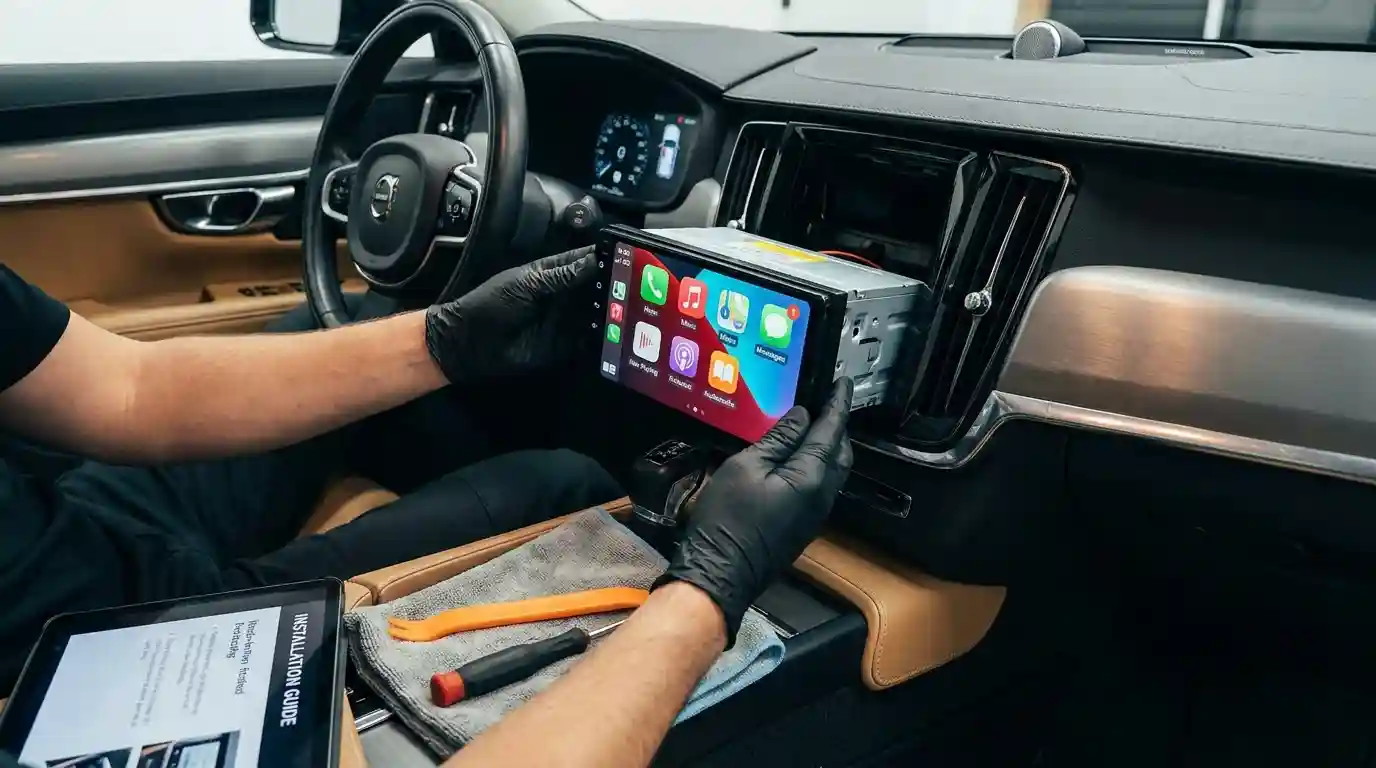
Most people start a stereo upgrade by comparing touchscreens, wattage, and smartphone apps. Professional installers start with a tape measure. Why? Because the most reliable predictor of a smooth installation is the size of the radio opening in your dashboard. If you are asking, “What size car stereo fits my car?” the answer starts with your car’s DIN slot, wiring, and trim — not with the newest model on the shelf. These proven tips show you how to check compatibility before you spend a cent.
Why Fitment Comes Before Features
A new stereo can have every feature you want and still be useless if it does not fit. Car radio openings are not universal. The metal cage behind your dashboard was designed for a specific radio shape, and aftermarket stereos are built to match a few standard sizes. Choosing the wrong size can mean returned parts, damaged trim, expensive fabrication, or a radio that sticks out of the dash. You can also read our guide on how to wire a car stereo without a harness.
Fitment is also more than the front opening. You need to consider mounting depth, wiring connectors, antenna plugs, and the plastic trim that surrounds the radio. In practice, fitment problems cause more abandoned installs than dead head units. Sorting out size first makes everything else easier.
DIN and ISO Standards: The Language of Car Stereo Fitment
Every successful car stereo purchase starts with two letters: DIN. The term comes from the German standards body that gave DIN its name, and the dimensions used by car audio manufacturers are based on that design. You can also read our guide on single din vs double din car stereo.
The same physical opening is also described by an international standard for car radio dimensions, which is why a Double DIN radio built in Asia fits the same dash opening as one built in Europe or North America.
| Slot type | Height | Width | Typical use |
|---|---|---|---|
| Single DIN | About 2 inches (50 mm) | About 7 inches (180 mm) | Older cars, basic radios, some commercial vehicles |
| Double DIN | About 4 inches (100 mm) | About 7 inches (180 mm) | Most cars from the mid-2000s onward, touchscreen units |
These are nominal dimensions. Real openings vary slightly by a few millimeters, so measuring in millimeters is more accurate than eyeballing inches. A few vehicles also use a non-standard 1.5 DIN opening that sits between the two common sizes; those cars usually need a special adapter plate. For more on this, see our guide on what car stereo fits my car.
Single DIN vs Double DIN at a Glance
| Consideration | Single DIN | Double DIN |
|---|---|---|
| Physical height | 2 inches | 4 inches |
| Typical screen | Small or no screen | 6 to 10-inch touchscreen |
| Smartphone integration | Limited | Wireless CarPlay and Android Auto are common |
| Best for | Older dashes, simple upgrades | Modern dashes, multimedia features |
| Price range | Lower | Higher |
The width is the same in both formats, so the extra height of a Double DIN is what gives manufacturers room for a large display and more processing hardware.
How to Check What Size Stereo Fits Your Car
Do not rely on memory or what a friend installed in the same model from a different year. Trim levels matter. The base model may have a Plain Jane radio opening, while the top trim has a factory navigation screen with a completely different shape.
1. Check Your Owner’s Manual
Look in the audio or navigation section for the radio dimensions, DIN size, or factory radio part number. Many automakers also publish owner’s manuals online if you no longer have the printed copy. Search using your exact year, make, model, and trim level.
2. Measure the Dashboard Opening Yourself
If you want certainty, measure instead of guessing.
- Park with the steering wheel straight and lower the tilt column for access.
- Use a plastic trim tool to gently remove the trim panel around the radio. Do not use a metal screwdriver; it can scratch plastic and leave pry marks.
- Measure the empty slot, not the outer decorative bezel.
- Measure the height at the center of the opening, from the top of the metal cage to the bottom.
- Measure the width from left to right inside the cage.
- Check the depth: how much space is available behind the opening before you hit metal, air ducts, wire bundles, or the firewall.
A quick shop trick: run your fingers along the inside top and bottom of the opening. If the cage stops at roughly 2 inches, it is a Single DIN. If it continues for another 2 inches, you have a Double DIN opening. Obviously, you should still confirm with a ruler.
3. Use a Vehicle Fitment Tool
Most major car audio retailers and brands offer free fitment tools. Enter your year, make, model, and trim, and the tool lists the stereo sizes that fit, plus the dash kit, wiring harness, and antenna adapter you need.
Do not stop at the first result. Check the trim level and whether your car has a factory premium sound system. That can change the wiring harness even when the physical opening is the same.
4. Ask a Local 12-Volt Installer
A professional installer can often confirm your stereo size by looking up your VIN. Shops that sell and install car audio are usually happy to answer this question because it is the first step toward a sale. You do not have to buy anything to get the answer, but you will probably want to buy from them if they save you the headache.
Typical Stereo Sizes by Vehicle Category
Use this table as a starting point, not a guarantee. One model can have different openings depending on the year, market, and option package.
| Vehicle category | Typical size | Fitment notes |
|---|---|---|
| Older compact cars (2000s Civic, Corolla, Focus) | Single DIN | Dash kit usually required; some higher trims used Double DIN |
| Modern compact and midsize sedans (Civic, Mazda3, Camry, Accord) | Double DIN | Most are Double DIN; newer oversized factory screens need special integration kits |
| Full-size trucks (F-150, Silverado, Ram 1500) | Double DIN | Many trucks fit Double DIN; factory large screens need extra modules |
| Chrysler, Dodge, and Jeep models from the 1990s to early 2010s | Non-standard or Double DIN | Special adapters are common; confirm before ordering |
| Luxury vehicles (BMW, Mercedes, Audi, Lexus) | Custom integrated | No true DIN opening; installation is more involved and can affect other systems |
The lesson is simple: the car model name alone is not enough. Verify the exact trim level and factory audio package.
Single DIN or Double DIN: How to Choose
Once you know the size that fits, decide which features matter to you.
- If you want a large touchscreen with smartphone-style navigation, choose a Double DIN if the dash opening allows it.
- If your car has a Single DIN slot and you want a clean, straightforward upgrade, a quality Single DIN with Bluetooth is still a strong option.
- If your car has a Double DIN opening, there is no reason to install a Single DIN unless you want to add a storage pocket below the radio.
- In 2026, wireless Apple CarPlay and Android Auto are expected on most new Double DIN head units. For many people, that feature alone justifies the upgrade.
Proven Tip
Make a short list of must-haves before shopping. Then subtract everything your car cannot support. For example, a Single DIN slot in an older truck will usually not support a 10-inch touchscreen. A Double DIN slot in a modern car may support one, but only if the dash kit leaves enough depth and ventilation.
Can You Upgrade From Single DIN to Double DIN?
Physically, a Double DIN radio is twice the height of a Single DIN, so it cannot drop into a true Single DIN opening without dashboard modification. In some vehicles, there is a large hidden cavity behind the plastic trim, and a special dash kit can convert the opening. In most cases, however, conversion requires cutting or grinding, which can damage clips, air ducts, and resale value.
The reverse is much easier. A Double DIN opening can accept a Single DIN radio using a pocket or storage tray to fill the space below. That is a clean, reversible installation and a popular option for older radios with modern Bluetooth.
Dash Kits, Wiring Harnesses, and the Parts People Forget
DIN size is only the beginning. The plastic trim around the radio is car-specific, and the same slot shape rarely lines up perfectly with an aftermarket radio without a dash kit.
A dash kit is a molded plastic or metal frame that fills the gap between the factory dash opening and the new radio. Prices range widely, but it is not a part to skip. Without it, the radio will look unfinished and may rattle loose.
A wiring harness adapter is equally important. It plugs into your car’s factory connectors and then into the new radio, which means you do not have to cut into your vehicle’s original wires. That is safer, cleaner, and easier to reverse. You may also need an antenna adapter, a steering wheel control module, or a camera retention module if your car has a factory backup camera.
When you use an online fitment tool, it should list all of these parts for your exact vehicle. If it does not, call an installer before ordering anything.
Common Car Stereo Fitment Mistakes to Avoid
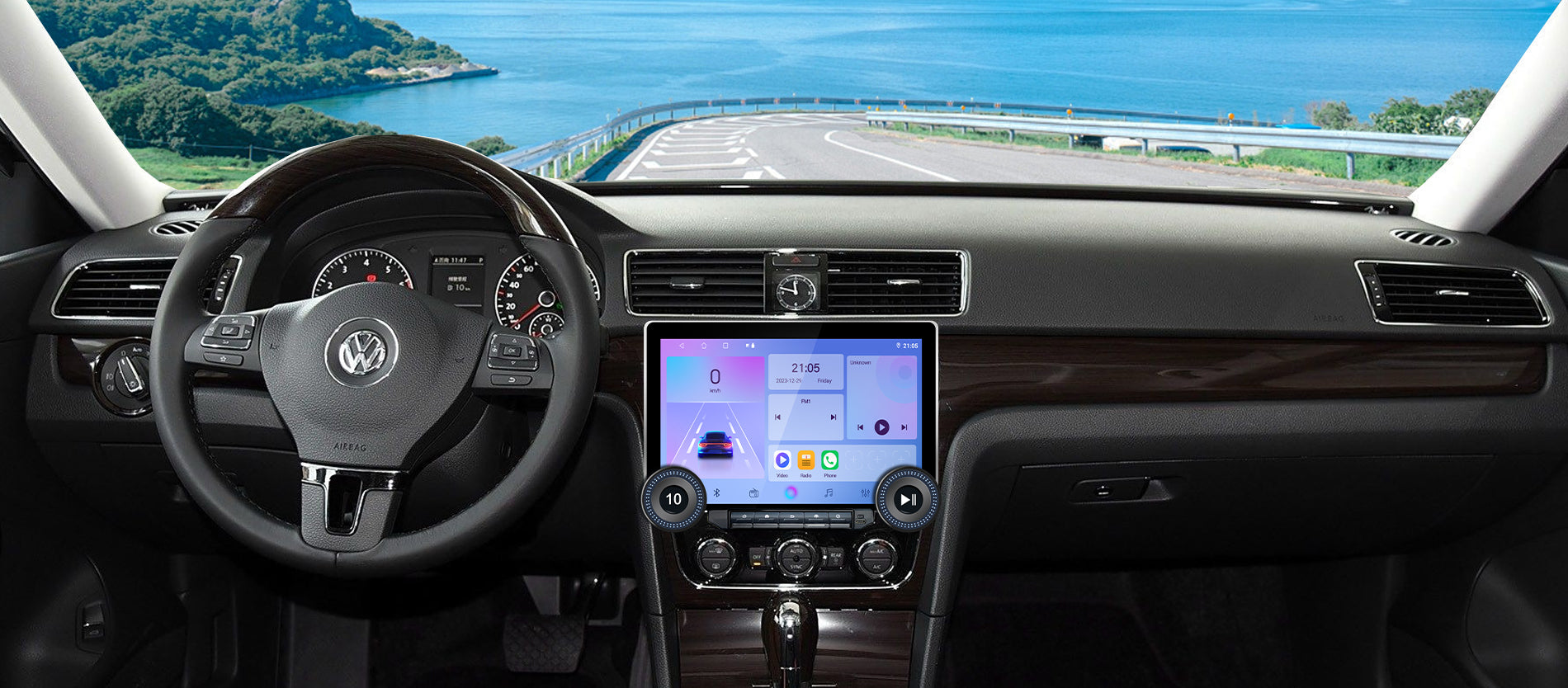
Credit: mcxcarplayer.com
Buying a “Universal” Radio Without Checking Your Dash
Universal radios still need car-specific dash kits and wiring adapters. The word universal only means the radio uses a standard DIN size, not that it will bolt into any dashboard.
Forgetting That Trim Level Matters
Two cars from the same year and model can have different radio openings. One may have a standard Double DIN slot while the upgraded trim has an oversized factory screen with climate controls built into it.
Assuming All Wire Colors Are the Same
Aftermarket radios use standard-ish wire colors, but car manufacturers do not. Your factory harness may convert power, ground, and speaker wires in unexpected ways. A plug-and-play wiring harness adapter removes the guesswork.
Ignoring Mounting Depth
A radio can have the correct height and width yet still be too deep. Check how much space is behind the dash before you buy. Shallow-mount units exist for tight vehicles.
Forgetting About Steering Wheel Controls and Backup Cameras
If your current stereo uses factory features like steering wheel controls, warning chimes, or a backup camera, a basic replacement may disable them. You may need a data adapter or a specifically compatible head unit.
Installing the Right-Size Stereo: Step-by-Step
Once you have confirmed the size, gathered the dash kit, and picked up the correct wiring harness, installation is a manageable weekend job for most people.
Tools and Parts You Need
- The new stereo
- Dash kit for your exact vehicle
- Wiring harness adapter
- Antenna adapter
- Trim removal tools
- Screwdrivers and socket drivers
- Electrical tape or heat-shrink connectors
- Shop vacuum or handheld vacuum
Before you start, pull out the obvious debris around the radio cavity. With the trim panels already loose, this is also a good moment to reach the debris under the seats with a narrow crevice tool. If you do not already own a suitable vacuum, choosing a practical car vacuum before you begin will make the cleanup easier and faster.

Credit: www.youtube.com
Installation Steps
- Disconnect the negative battery cable. This is not optional. It prevents shocks and avoids shorting out the new stereo while you connect wires.
- Remove the trim panel. Work slowly and use plastic trim tools. Panels often have clips that can break if you force them.
- Unbolt the factory radio. Slide it out far enough to unplug the harness and antenna. Take a photo of the connectors before disconnecting.
- Connect the wiring harness adapter to the new radio. Use butt connectors or solder, and wrap every connection securely. The adapter then plugs into your car’s factory harness.
- Connect the antenna adapter and any optional modules. This is the time to add steering wheel control modules or backup camera retention interfaces.
- Mount the radio in the dash kit. Screw the radio to the kit, slide it into the dash, and fasten it securely. Do not force a Double DIN unit; it should slide in straight with no unusual pressure.
- Reconnect the battery and test everything. Check power, volume, balance, fader, radio reception, microphone, backup camera, and steering wheel controls before you put the trim back on.
- Reinstall the trim panel. Once every function works, snap the trim into place and do a final visual check.
A Note on Wires
If the radio does not power on after installation, check the battery connections, the radio fuse, and the wiring harness adapter. Many DIY problems trace back to a loose ground wire or a reverse polarity connection. If you are not comfortable reading a wiring diagram, professional installation is worth the cost.
Does Stereo Size Affect Sound Quality?
Not directly. A bigger stereo does not automatically produce better sound. Sound quality depends more on speaker quality, amplifier power, and tuning features.
When comparing radios, look at RMS wattage rather than peak wattage. A unit rated at 22 watts RMS per channel is more honest than one advertising 200 watts peak. If you plan to add an external amplifier, check the number of preamp outputs and their voltage. Higher preamp voltage helps send a cleaner signal to the amp.
For most factory speakers, the weak link is the speaker itself. Upgrading speakers will often improve sound more than upgrading the head unit. Still, a modern stereo with a good equalizer, time alignment, and high-pass filters gives you far more control over how the audio sounds in your specific car.
Frequently Asked Questions
How do I know what size stereo fits my car?
Check your owner’s manual, measure the dashboard opening with a tape measure, or look your vehicle up in a fitment tool. The two standard sizes are Single DIN, about 2 inches tall, and Double DIN, about 4 inches tall.
Is a Double DIN always better than a Single DIN?
No. Double DIN units allow larger screens and more features, but they only fit cars with a Double DIN opening. A good Single DIN unit is still a solid upgrade for older vehicles and simple installations.
Can I install a Double DIN radio in a Single DIN slot?
Usually not without modifying the dashboard. Because a Double DIN is twice the height of a Single DIN, it cannot drop into a standard Single DIN cage. Some vehicles can be converted with a special dash kit, but most conversions require cutting and are not worth the cost.
What if the radio fits but the wiring does not match?
Buy a vehicle-specific wiring harness adapter. It connects the new radio to the factory wiring without cutting the car’s original wires. If your car has a factory amplifier or premium audio, you may need additional interface hardware.
Do I absolutely need a dash kit?
In most cars, yes. A dash kit fills the gap between the radio and the dashboard, and it provides the mounting holes that hold the radio in place. Skipping it often leaves the radio loose or visibly ugly.
Will a new stereo affect my backup camera or steering wheel controls?
It can. Many modern vehicles integrate those functions into the factory radio. To keep them working, you may need a compatible head unit or a separate interface module. Check this before buying.
Final Thoughts
The shortest path to a successful stereo upgrade is preparation. Measure the opening, confirm the DIN size, note the factory connectors, and order the right dash kit and wiring harness at the same time as the radio. Before you order anything, spend ten minutes measuring your dash opening and writing down the trim level of your car. That small effort will save you more time, money, and frustration than any other step.
If you are working with a complex vehicle, or if the dashboard integrates climate controls and safety features into the radio, professional installation is a sensible investment. If you have a standard slot and the right parts, a careful DIY install can be done in an afternoon. Once the new radio is in, work through the setup menu, adjust the on-screen interface language, and configure the sound to match your speakers. If children ride in the car, avoid letting loose tools or trim pieces interfere with the rear seat area, and review how to install a car seat correctly after any deep interior project. For more hands-on help with your car, explore the car care library with practical guides on audio, cleaning, and everyday maintenance.

Credit: www.youtube.com
Find the right size, buy the right parts, and your new stereo will look factory-installed — not like a rectangle you forced into the wrong square hole.

Leave a Reply