
Yes — driving a car charges the battery. The alternator pushes power back into it every time the engine runs. But my multimeter test revealed a messier truth: how far you drive, what you have switched on, and how healthy the battery is determine whether you end the trip with a full charge or a car that won't start tomorrow morning.
In practice, a healthy charging system sends between 13.5V and 14.7V to the battery while the engine runs, in line with standard automotive electrical specifications. Everything else — trip length, electrical load, battery age, temperature — changes the math. You can also read our guide on how long does it take to charge a car battery.
Below, I'll show you what the test revealed, explain how the charging loop actually works, and walk through every real-world scenario, from a dead battery after a jump start to a battery light flickering on the highway.
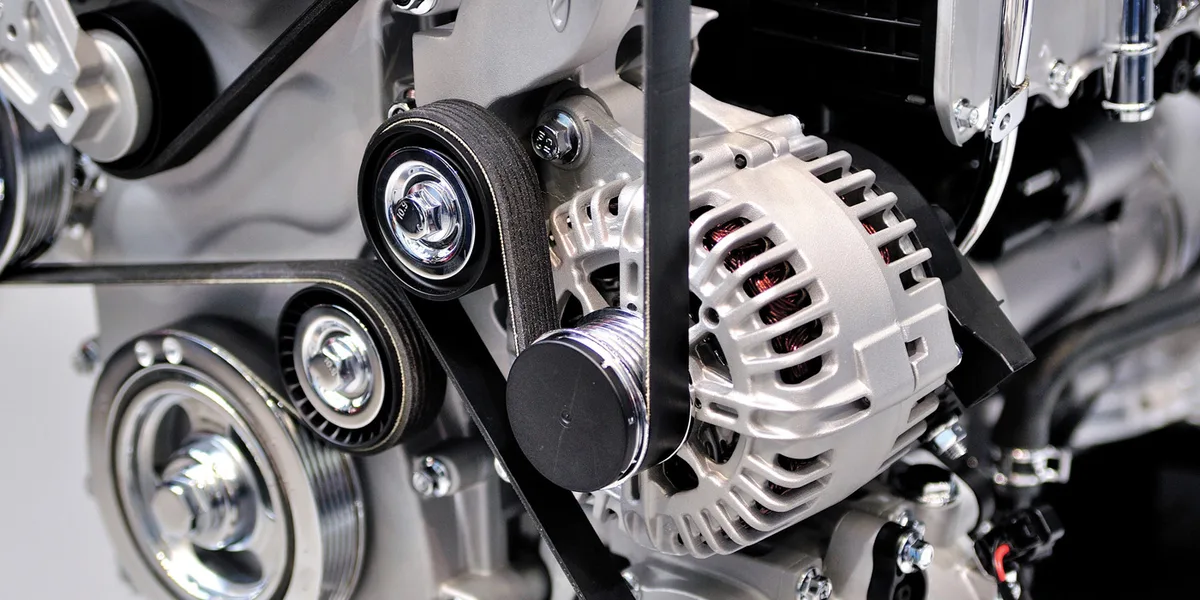
A healthy charging system should send 13.5–14.7V to the battery with the engine running.
Image source: Web (Bing) / hitchesguide.com (Web image (fair-use with source credit))
Quick Answer
Yes, driving charges your car battery. The alternator generates electricity whenever the engine spins and sends the surplus back into the battery. You can also read our guide on how to install a car battery correctly.
But three caveats decide whether driving is enough:
- Short trips often replace less power than the starter used to crank the engine.
- Idling produces only a fraction of the alternator's full output.
- A deeply discharged or damaged battery may never fully recover from driving alone, no matter how long you drive.
As a working baseline: about 30 minutes of highway driving restores a moderately discharged battery. A battery drained below 12.0V usually needs a proper wall charger instead.
How Car Battery Charging Actually Works
Your car's charging system is a closed loop with three main players: the battery, the alternator, and the voltage regulator.
The battery stores power for starting and for running accessories when the engine is off. The alternator is a small generator driven by a belt connected to the engine's crankshaft. Once the engine spins, the alternator spins too, producing alternating current (AC) that gets converted to direct current (DC) for the car's electrical system.
The voltage regulator keeps output in a safe range. Too high, and you'll cook the battery. Too low, and it won't charge at all. Most modern regulators are built into the alternator or managed directly by the engine computer.
Here's the part most people miss: the alternator doesn't charge the battery first — it powers the car first. Headlights, radio, AC blower, heated seats, wipers, and the engine computer all draw power before anything is left over for the battery. That's why running every accessory affects how fast the battery recharges.
The serpentine belt matters too. If it's loose, glazed, or slipping, the alternator spins slower than it should and produces less output — even if the alternator itself is brand new.
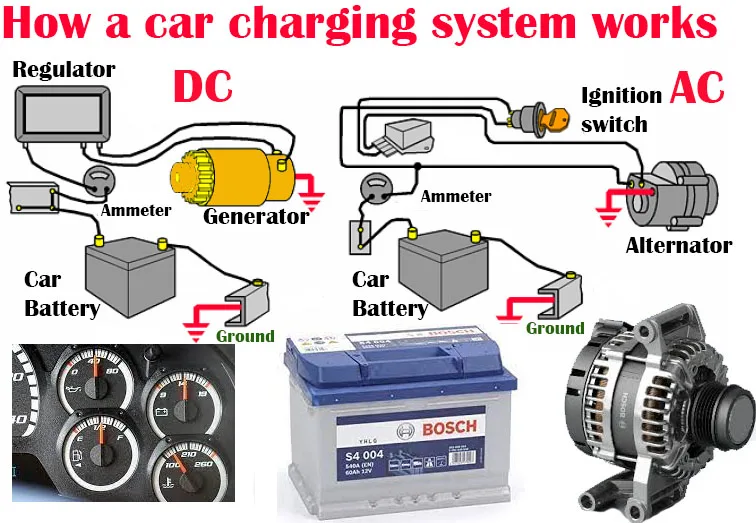
The alternator powers the car's electrics first; the battery gets whatever is left over.
Image source: Bing (Web (fair-use with source credit))
The Test: What My Numbers Showed
To put real numbers on this, I ran a simple three-reading test with a digital multimeter, then repeated it after draining the battery. Here's what a healthy system looked like:
| Check | Reading |
|---|---|
| Resting voltage, engine off (after sitting overnight) | 12.6V — fully charged |
| Voltage at idle | ~13.8V |
| Voltage at 2,000 RPM | ~14.2V |
| Idle with headlights, blower, and rear defroster on | ~13.1V |
The revealing part was the drain test. After letting the car sit with the blower and interior lights running until resting voltage fell to 12.2V (roughly a 50% discharge), a single 30-minute drive only brought it back to about 12.4V. It took a second 30-minute drive — with the electrical loads kept off — to reach around 12.5V.
Three lessons came out of it:
- Load costs real charging headroom. Switching on headlights and the blower ate nearly half a volt of charging voltage at idle.
- Time at speed matters more than the ignition being on. The recovery between drive one and drive two was slow and incremental.
- RPM variation helps. The battery gained charge fastest during highway stretches, not stop-and-go sections.
Your exact numbers will vary by vehicle, but the pattern will look familiar if you test your own car.
What Affects How Fast Your Battery Recharges
Not all drives are created equal. These are the variables that decide the outcome:
| Factor | How It Affects Charging |
|---|---|
| Drive length | Short trips may not replace the starting draw |
| Engine RPM | Higher RPM means more alternator output |
| Electrical load | AC, headlights, and heated seats steal charging power |
| Battery age | Older batteries accept charge more slowly |
| Temperature | Cold slows the chemistry; heat accelerates wear |
| Battery chemistry | AGM charges faster and more efficiently than flooded |
The starter motor is the hidden villain here. It can pull 150 to 250 amps for several seconds every time you crank the engine — more than most alternators produce at idle. A ten-minute trip to the store can genuinely use more power than it replaces.
Battery chemistry matters as well. A standard flooded lead-acid battery charges differently from an AGM (absorbent glass mat) battery. AGM units accept charge faster and tolerate higher charge rates, which is why modern cars with stop-start systems use AGM or EFB batteries from the factory.
Modern Cars Use Smart Charging Systems
One 2026-era wrinkle: many vehicles built in the last decade use computer-controlled "smart" alternators that deliberately vary charging voltage to save fuel and reduce emissions. On these cars, voltage may legitimately swing between roughly 12.7V and 15V depending on driving conditions, battery temperature, and whether the system is in regeneration mode.
If your readings fluctuate on a newer vehicle, don't assume the alternator is failing. Check the manufacturer's stated charging range before diagnosing a fault — a fixed "13.5–14.7V or bust" rule can lead you to replace good parts.
Decision Tree: Find Your Scenario
The answer to "does driving charge the battery?" depends entirely on your situation. Find yours below and follow the branch.
1. The car won't start and needs a jump
Once the engine runs after a jump start, the alternator begins charging almost immediately — but the battery was deeply discharged and needs time to rebuild.
Drive for at least 30 minutes at highway speeds with electrical loads kept to a minimum. No AC, no heated seats. After parking, let the car rest for a few hours and recheck the voltage: it should read 12.4V or higher with the engine off. Below that, the battery needs a proper external charge rather than more driving.
2. The battery light came on while driving
This is a red flag. The battery light means the charging system isn't keeping up — most commonly a failing alternator, a slipping belt, or a snapped belt.
Drive directly to a shop, but understand that you're running on battery power alone. Shut off every non-essential accessory and don't kill the engine if you can avoid it, because a weak battery may not restart the car. Before paying for the repair, get written confirmation that both the alternator and the belt were tested — either one can produce the same symptom.
3. The car sat for weeks and won't crank
Every car bleeds charge while parked through parasitic draws like the clock, memory settings, and alarm systems. A little loss is normal, but after three or four weeks it can drop below starting voltage.
Jump-start it, then drive for a meaningful stretch to recover. If the battery is more than four years old, though, treat the no-start as a warning: it may have lost capacity permanently, and driving won't restore what sulfation has already taken.
4. The battery dies every few days
If the battery keeps dying even with regular driving, something is structurally wrong: a parasitic draw, an undercharging alternator, or an internally shorted battery. Driving cannot fix any of these.
A free battery and alternator test at an auto parts store is the fastest first step. If both pass, you're chasing a parasitic draw — a drain that continues with the car off — which usually needs a mechanic with the right metering setup to trace.
How Long Should You Drive to Recharge a Low Battery?
The honest answer depends on how low the battery actually is. Here's a practical guide based on resting voltage and typical alternator output:
| Resting Voltage (engine off) | State of Charge | Approximate Drive Time Needed |
|---|---|---|
| 12.6V or higher | 100% | None needed |
| 12.4V | ~75% | 15–30 minutes |
| 12.2V | ~50% | 30–60 minutes |
| 12.0V | ~25% | 1–2 hours |
| Below 12.0V | Danger zone | Driving alone likely won't fully recover it |
A battery resting below 12.0V is where sulfation begins damaging the lead plates — and no amount of highway driving reverses that. At 11.5V or lower, the battery has almost always sustained permanent capacity loss.
The takeaway: driving works well for topping off and moderate discharges. For deep recovery, hours of controlled charging from a wall-powered unit beat any commute. Our breakdown of realistic charging timelines covers exactly what to expect at each discharge level before you decide whether to drive it back or plug it in.
Is Idling Enough, or Do You Need to Actually Drive?
Idling does charge the battery — just badly. Alternator output scales with engine speed, and at idle most units produce only a fraction of their rated amperage. Many 120–150A alternators manage a third of that or less at idle speed. Add headlights and the AC blower, and almost nothing is left for the battery.
| Method | Typical Alternator Output | Time to Recharge a 50% Battery |
|---|---|---|
| Idling | 20–40 amps | 2–4 hours |
| City driving | 40–70 amps | 60–90 minutes |
| Highway driving | 60–100+ amps | 30–60 minutes |
That's why idling for hours to replace what a single cold start pulled out is impractical.
The smart sequence after a jump start: let the car idle for a few minutes to stabilize the system, then drive. Highway miles are the fastest way to put real charge back. And if you genuinely can't drive — say the car is parked where a loop isn't possible — 20–30 minutes of idling still beats nothing. It just won't rescue a deeply discharged battery.
Can a Completely Dead Battery Be Saved by Driving?
Sometimes yes, often no. It depends on why the battery died and how far its voltage dropped.
When a lead-acid battery sits discharged below roughly 12.0V, sulfate crystals form and harden on the internal plates. This is sulfation, and it permanently reduces capacity. The deeper the discharge and the longer the battery sits that way, the worse the damage. A battery reading 11.5V or less has almost certainly taken damage that no drive can undo.
If the battery reads 0V or won't hold any charge at all, at least one internal cell is likely shorted or destroyed. That battery is finished.
Here's the practical pass/fail test:
- Jump-start the car, drive 30+ minutes, then let it rest for a few hours.
- Pass: resting voltage holds at 12.4V or higher — the battery is probably fine.
- Fail: voltage sags back below 12.0V within hours — the battery can't hold a charge, and replacement is the only fix.
If you're not sure whether the battery is even the problem, the classic signs of a drained battery help you rule out alternator and connection faults before you spend money.
How to Test If Your Car Is Actually Charging
Measuring beats guessing. A basic digital multimeter costs $15–$25 and tells you in five minutes whether the charging system works.
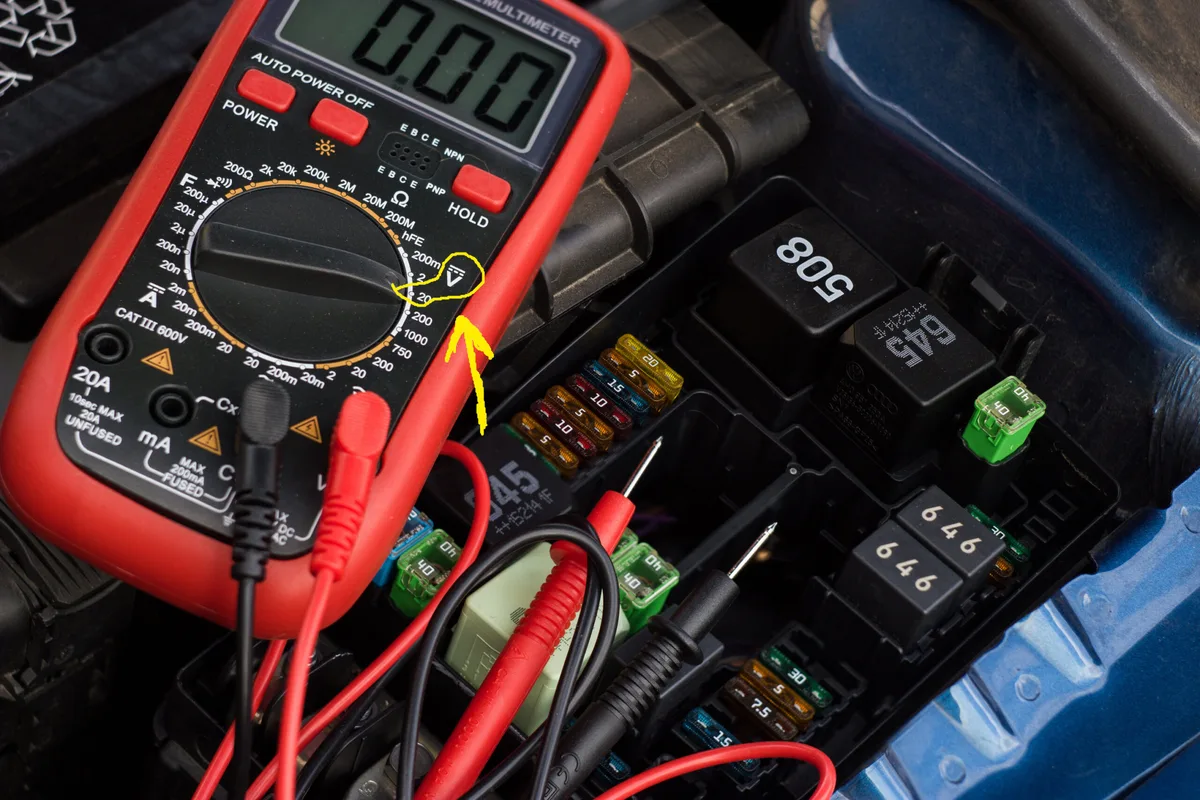
Three quick multimeter readings tell you whether the alternator is doing its job.
Image source: Web (Bing) / lastingcar.com (Web image (fair-use with source credit))
- Engine off. Connect the red probe to the positive terminal and the black probe to the negative terminal. A healthy battery reads 12.6V or higher. Below 12.4V means it isn't fully charged.
- Start the engine and let it idle. You should see 13.5–14.7V. That proves the alternator is producing current and sending it to the battery.
- Rev to about 2,000 RPM. Voltage should hold in the same range. A drop below 13.5V suggests undercharging; a climb above 14.8V points to a failing voltage regulator.
- Add load. Switch on the headlights and blower at idle. A small dip is normal; a big plunge to 13V or lower means the system is struggling.
If you'd rather not probe terminals yourself, most auto parts stores run free battery and alternator tests and hand you a printed pass/fail result in about ten minutes.
When Driving Will Not Fix the Problem
Driving isn't a cure-all. Four situations defeat it every time:
A failing alternator. If the alternator is dead or weak, the battery charges nothing no matter how long you drive. Warning signs include dimming headlights, a battery warning light, and flickering accessories. A worn or loose belt can produce identical symptoms on a perfectly good alternator.
A battery with internal damage. Sulfation from deep discharges, cracked plates, or a shorted cell means the battery physically can't store energy — even with perfect alternator output. This is why batteries older than five years often get replaced even when the alternator tests fine. When shopping, it pays to know which brands last longest soyou're not buying the same problem twice within a couple of years.
Parasitic draws. Aftermarket alarms, infotainment units with constant memory, dashcams plugged into always-live sockets, a glovebox or trunk light that never switches off — any of these can pull a battery flat overnight. If the battery dies repeatedly despite regular driving, a constant drain will always outpace charging. Tracking one down means measuring current flow with the car off and pulling fuses one at a time until the draw disappears. It's methodical, slightly tedious work, and there's no shame in handing it to a mechanic.
Corroded or loose connections. This one trips people up because the battery and alternator can both be perfect. Corrosion on the terminals acts as an insulator, blocking current from flowing into the battery even when the alternator is working exactly as designed. Clean the terminals with a wire brush and a baking-soda paste, torque the clamps back down, and sometimes that's the entire fix — for the cost of a brush.
If that crusty buildup keeps coming back, it's worth understanding why that coating keeps forming in the first place, because recurring corrosion often points to overcharging or battery gassing rather than just dirty terminals.
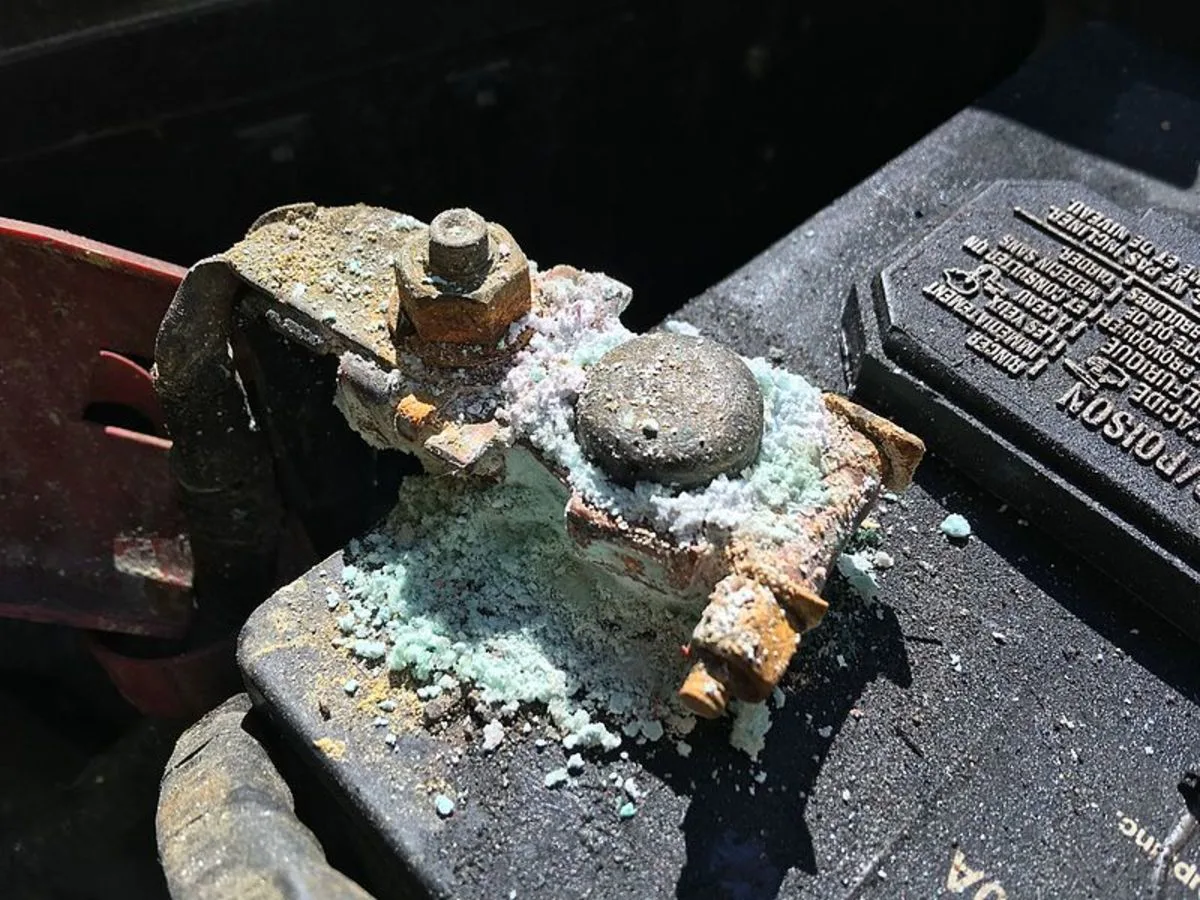
That white, crusty coating is corrosion — it can block charging current even from a healthy alternator.
Image source: Web (Bing) / welfareburn20.pythonanywhere.com (Web image (fair-use with source credit))
Driving vs. Battery Charger vs. Jump Starter
When the battery is low, three tools are on the table — and each does a different job:
| Tool | Best For | Time Required | Effort |
|---|---|---|---|
| Driving | Topping off a slightly low battery | 30–60 minutes | Minimal |
| Battery charger | Fully recovering a deeply discharged battery | 4–12 hours | Moderate |
| Jump starter | Getting a dead engine to crank | Minutes | Low |
Driving is a maintenance habit, not a rescue tool. A 20-minute commute keeps a healthy battery topped up, and that's about the limit of what it should ever be asked to do.
A plug-in battery charger is the right call for deep discharges. It delivers controlled, low-current charging over several hours, restoring the battery gently and completely. Many modern smart chargers also include a desulfation (reconditioning) mode that pulses elevated voltage to break up sulfate crystals — it won't resurrect a destroyed battery, but it can genuinely extend the life of a borderline one. If you own a second car, a seasonal vehicle, or anything that sits for long stretches, a battery maintainer is the single most useful accessory you can own.
A jump starter is emergency equipment and nothing more. It supplies just enough current to crank the engine; it recharges nothing. Think of it as the spark. Once the engine is running, the alternator takes over — and you still need a real drive or a wall charger to finish the job.
Common Mistakes to Avoid
A handful of errors show up again and again, and every one of them is avoidable:
- Shutting the engine off right after a jump start. The battery is still nearly dead at that point, and you'll need a second jump within minutes. Give it at least 15–20 minutes of driving before you stop.
- Loading up the electrical system during the recharge drive. Blasting the AC, heated seats, and headlights diverts alternator output away from the battery exactly when you need it most. Keep loads minimal until the voltage has recovered.
- Automatically blaming the battery. The alternator and the belt are just as likely to be at fault, and a five-minute voltage test costs nothing. Never buy a battery before you've measured.
- Rushing the replacement itself. Modern cars hold radio codes, window calibrations, and start-stop settings that can be lost if the battery is yanked out carelessly. Following the correct swap procedure — disconnecting the negative terminal first, memory kept intact — protects both the electronics and your fingers.
Maintenance Tips to Keep Your Battery From Dying
Routine care beats emergency jumps every time:
- Clean the terminals every six months. A wire brush and baking-soda paste remove buildup before it turns into an insulator. If corrosion keeps returning, treat that as a clue — the battery may be gassing excessively or the system may be overcharging.
- Inspect the serpentine belt. Cracks, glazing, or slack mean a slipping belt and a lazy alternator, which shows up as a battery that's always slightly low.
- Drive the car 20 minutes a week if it would otherwise sit for more than two weeks. That single habit prevents most discharge problems and keeps the alternator and its internals exercised.
- Watch the resting voltage. A cheap battery monitor or a monthly multimeter check catches decline long before the car refuses to start.
- Respect the lifespan. Most batteries last three to five years. Past that, replacement is cheaper than a tow — and when the time comes, it pays to know which battery manufacturers actually hold up, because bargain cells are a false economy. Knowing what a professional swap involves also helps: most shops finish the job in well under an hour.
- Recycle the old one. Lead-acid batteries are among the most recycled products on the planet, but they never belong in household trash. The EPA's recycling guidance explains how and where to hand one off safely. If you'd rather have someone else take it, most parts stores and scrap yards will — it's worth knowing where old batteries actually go before they're sitting in your trunk.
- Budget realistically. Replacement pricing varies more than people expect, and understanding why replacement prices vary helps you spot a fair quote versus a padded one.
Frequently Asked Questions
Does revving the engine charge the battery faster?
Yes. Higher RPM spins the alternator faster, which directly increases its output. Revving to roughly 2,000 RPM produces noticeably more charging current than idling — that's why highway driving recovers a battery two to four times faster than letting it sit and run.
But you don't need to park and hold the throttle. Normal driving provides plenty of RPM variation, and sustained revving adds wear and fuel use for very little gain beyond what a short drive delivers.
Can I charge an AGM battery by driving?
Yes — in fact, AGM batteries accept charge more efficiently and slightly faster than conventional flooded batteries. The catch is voltage: AGM chemistry is sensitive to overcharge, so it needs the specific window your regulator is programmed to deliver. Those charging windows are defined by automotive electrical standards from bodies like the SAE, which is why factory-fitted AGM cars are calibrated for them.
If your car came with a flooded battery and you're considering an AGM swap, verify that the charging voltage is compatible first. Mismatched profiles can shorten an expensive battery's life quickly.
Does the battery charge while the car is parked?
No. With the engine off, nothing is generating electricity — the battery is only being drained, slowly, by parasitic draws like the clock, alarm, and stored settings. A healthy car might sit for two to four weeks before those small draws matter; an older battery can lose starting power in days. If a vehicle will sit longer than that, a maintainer or a weekly 20-minute drive is the fix.
How many times can I jump-start a worn battery before replacing it?
There's no fixed number, but repeated jumps are a diagnosis, not a solution. If the battery needs a jump more than two or three times in a month, it has lost the capacity to hold what driving gives it. Replace it on your schedule — not the morning it fails in a parking garage.
Is it bad to leave a car idling to charge the battery?
Not harmful in the short term, just inefficient. Idling charges slowly because the alternator produces only a fraction of its rated output at low RPM, and with accessories running, there may be almost nothing left for the battery. Twenty minutes of idling is fine as a top-up when driving isn't possible, but hours of idling wastes fuel, adds carbon buildup, and still can't rescue a deeply discharged battery.
How long should I drive after a jump start?
Plan on at least 30 minutes, with as much highway driving as you can manage so the alternator runs at higher output. Keep heavy electrical loads off during the drive. Afterward, let the car rest a few hours and recheck resting voltage — 12.4V or higher means the battery held what you gave it.
Final Decision Guide: What Should You Actually Do Right Now?
| Your Situation | Best Next Step |
|---|---|
| Engine won't start, battery reads above 12.0V | Jump start, drive 30+ minutes, recheck voltage after resting |
| Engine won't start, battery reads below 12.0V | Jump start, then use a wall charger overnight |
| Battery light is on while driving | Get the alternator and belt tested immediately |
| Battery dies every few days | Test battery and alternator, then hunt for parasitic draws |
| Battery is older than five years | Replace it, regardless of current symptoms |
| Car sits for weeks at a time | Weekly 20-minute drive or a battery maintainer |
Driving absolutely charges your battery — but it's a maintainer, not a rescuer. It excels at routine top-ups and moderate discharges, and my test confirmed that a single drive barely moved a 50%-discharged battery. For deep drains, aging batteries, or a failing charging system, you need a charger, a replacement, or a diagnosis — not more miles.
If the voltage reads healthy but the car still cranks slowly, start with the connections. Corrosion and loose cables cause a surprising number of "dead" cars, and fixing them costs almost nothing.
Conclusion
Here's the takeaway from the test and everything around it: yes, driving charges your battery — but only when the battery isn't too far gone, the drive is long enough, and the electrical load is low enough for surplus power to exist. A healthy alternator at highway speed sends 13.5–14.7V into the battery and can recover a moderate discharge in 30–60 minutes. Below 12.0V resting, driving stops working and a proper charger takes over. And if the battery dies repeatedly, the real fault is an alternator, a belt, a drain, or the battery itself — never something more driving will cure.
Your next step: this week, take five minutes with a multimeter — or ten at any auto parts store's free testing counter — and record two numbers: resting voltage with the engine off and charging voltage with it running. Those two readings tell you instantly whether your car is charging the battery and whether the battery can hold what it's given. That's the end of guessing.
If you want to go deeper on vehicle electrics, our other hands-on guides cover everything from testing sensors to troubleshooting infotainment — the same practical, measured approach applies across the whole car.

Leave a Reply