
You're standing in the parts aisle staring at a $280 price tag for something that looks like a heavy black box. If the last battery you bought cost $60, the number feels like a typo.
The short answer: your car changed, the battery inside it changed, and the raw materials going into both got dramatically more expensive. A modern battery isn't the same product your grandfather grabbed off the shelf — it's a sealed, precision-built chemical reactor designed to survive hundreds of engine restarts every week. You can also read our guide on how to install a car battery correctly.
Below is the full breakdown: where the money actually goes, what each battery type really costs, why the dealership quotes $400 for the same job, and — most usefully — how to make sure you never pay a dollar more than you have to.
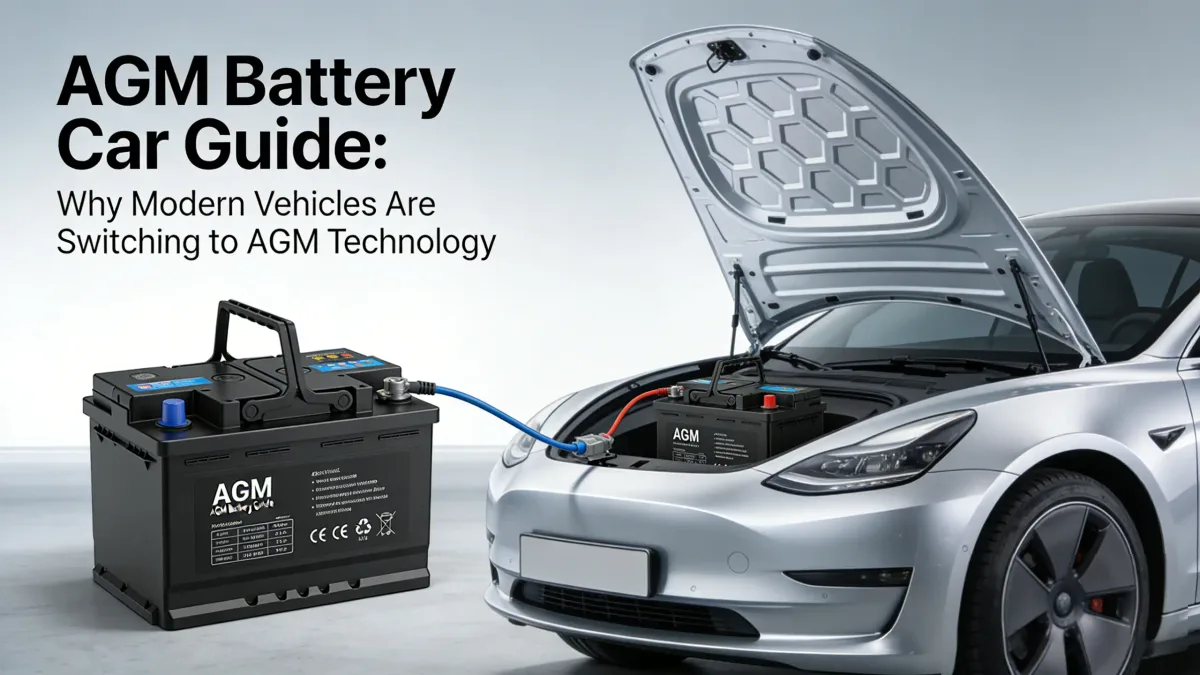
The sticker price is built from materials, engineering, and logistics — not just lead and plastic.
Image source: Web (Bing) / ayaatech.com (Web image (fair-use with source credit))
Quick Answer: Why Car Batteries Cost So Much
If you only read one section, make it this one. Five forces are stacked on top of each other:
- The technology shift. Start-stop systems made AGM and EFB batteries the default on most new vehicles, and those designs cost roughly two to three times as much to manufacture as the flooded batteries they replaced.
- Raw materials. Lead is the heaviest component — often 15 to 22 pounds per battery — and it has been through several volatile stretches in recent years.
- Tighter manufacturing. AGM construction demands glass-mat compression, calcium-alloy grids, automated assembly, and near-zero tolerance for leaks.
- Heavy, hazardous logistics. A 40-to-60-pound unit full of sulfuric acid ships as hazardous material, with special handling at every step.
- The core charge. A refundable $10–$25 deposit added at checkout to keep old batteries out of landfills.
The good news? A plain flooded battery is still one of the cheapest parts on your car to replace. Sticker shock almost always comes from being required to buy the premium version — not from the category as a whole.
What's Actually Inside the Box
Every 12-volt starting battery works on chemistry that hasn't fundamentally changed since 1859: lead plates submerged in sulfuric acid. When you turn the key, a reaction between the plates releases electrons, hundreds of amps flow through the starter, and the engine spins. The alternator then reverses the process to recharge the battery.
Lead-acid survived this long because it's brilliant at one specific job: delivering a massive burst of current cheaply, in freezing cold and blazing heat, for years. Roughly half the battery's weight is recoverable lead, wrapped in a polypropylene case — simple, dense, and durable.
What changed is the demand. Modern cars shut engines off at lights, run telematics and security systems while parked, and expect stable voltage for dozens of sensitive control modules. The old battery wasn't built for that, so the designs — and the prices — evolved.
Flooded vs EFB vs AGM: what the labels mean
When you shop, you'll meet three main types:
- Flooded lead-acid — The old standard. Liquid electrolyte, vented case, lowest price. Perfectly fine for older or basic vehicles, but it hates deep discharges and constant cycling.
- EFB (Enhanced Flooded Battery) — A toughened flooded design with reinforced plates and carbon additives. Handles light start-stop duty at a mid-tier price. Common as factory equipment on smaller start-stop cars.
- AGM (Absorbent Glass Mat) — The premium option. The acid is held in fiberglass mats between the plates, making it fully sealed and spill-proof. It cycles deeper, recharges faster, resists vibration, and can be mounted in the trunk or cabin. Most European cars and many modern American vehicles require it.
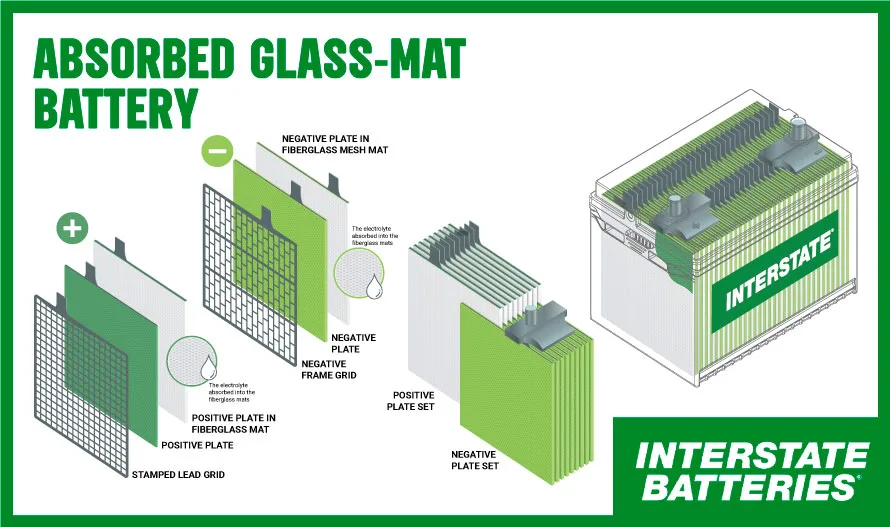
AGM's fiberglass mat locks the acid in place, which is what lets it cycle hard while staying sealed.
Image source: Web (Bing) / hitchesguide.com (Web image (fair-use with source credit))
The difference matters more than marketing suggests. A common mistake is dropping a cheap flooded battery into a car that specifies AGM: the charging profile won't match, the battery wears out early, and the alternator can run hotter than designed. Match the type your car was built with.
Why AGM costs two to three times as much to build
An AGM battery isn't a flooded battery with a fancier label — it's a different manufacturing problem entirely. The fiberglass mats must be saturated and compressed to exact density, because the entire design depends on the acid staying held against the plates. The grids use calcium alloys to minimize gassing, an internal valve regulates pressure, and every unit gets leak-tested before it ships.
That means more automation, tighter tolerances, and more scrap when a batch fails quality control. In practice, this is why two batteries that look nearly identical on the shelf can sit $140 apart: you're paying for precision, not just weight.
The Five Biggest Cost Drivers, Explained
1. Lead prices and commodity swings
Lead is the single heaviest and most expensive raw material in any conventional battery. When lead markets tighten — mine closures, smelter capacity limits, energy costs, or demand from grid-storage projects — battery prices follow within months. You can't redesign around it, either: no lead means no lead-acid battery.
2. The start-stop revolution
Start-stop systems shut the engine off at every red light, then demand a full cranking burst seconds later — dozens of times on a single commute, thousands of cycles per year. A conventional battery was designed for maybe one cold start a day. AGM and EFB designs exist specifically to absorb that workload, and the engineering is baked into the price.
3. Tighter tolerances and more automation
As covered above, modern battery construction trades cheap labor for expensive precision. Compression specs, alloy formulations, and automated welding all raise the floor on production cost — and that floor shows up on the shelf.
4. Heavy, hazardous shipping
A typical battery weighs 40 to 60 pounds and contains sulfuric acid, which classifies it as hazardous cargo. Freight carriers charge accordingly, packaging has to survive the trip, and returned cores travel back the same way. Those logistics costs are quietly baked into every price tag.
5. Core charges and the recycling loop
That "$15 core fee" isn't a tax — it's a deposit. Return your old battery and it's refunded in full. The program exists because lead-acid batteries are one of the great recycling success stories; the EPA's recycling programs treat used lead-acid batteries as a priority stream precisely because the recovery loop works so well. Most parts stores accept old batteries whether or not you bought the new one there, and our guide to recycling drop-off options covers the usual places that take them. A common mistake at the counter: forgetting the core is refundable and leaving free money behind.
What Batteries Actually Cost Right Now
Prices vary by brand, cold-cranking-amp rating, and region, but this is the realistic retail landscape:
| Battery Type | Typical Price Range | Typical CCA | Best For | Realistic Lifespan |
|---|---|---|---|---|
| Flooded lead-acid | $100–$180 | 400–700 | Older cars, basic commuters | 3–5 years |
| EFB | $160–$250 | 500–750 | Entry-level start-stop vehicles | 4–6 years |
| AGM | $200–$350+ | 600–1,000+ | Modern cars, luxury, trucks | 5–8 years |
| Lithium (LiFePO4) | $600–$1,200+ | 500–900 | Performance and weight-sensitive builds | 8–12 years |
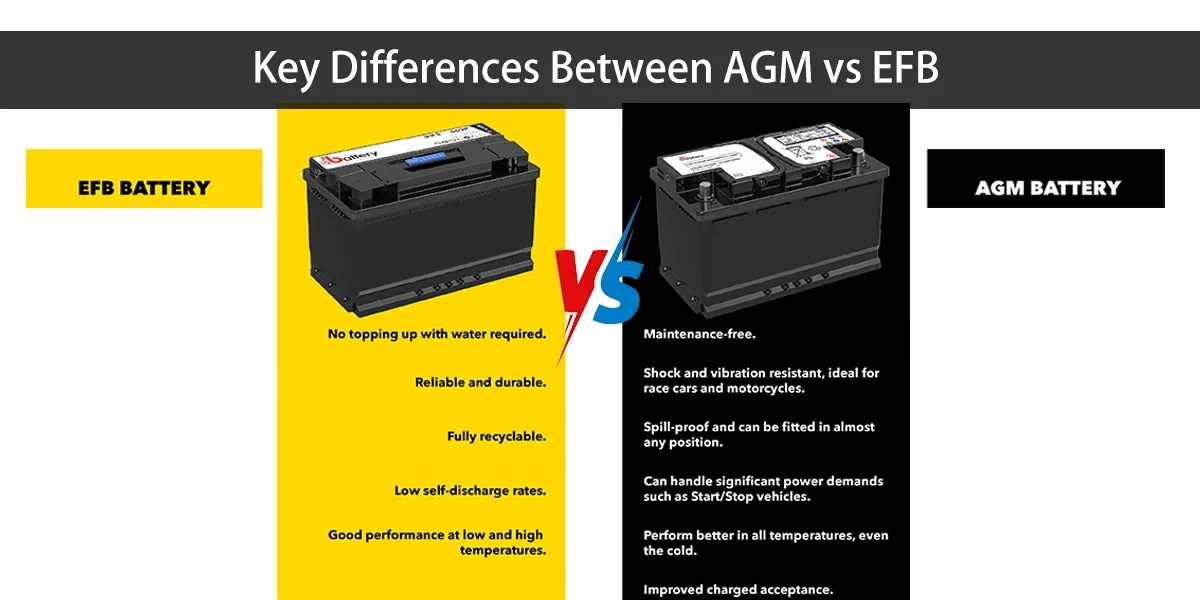
Shelf lineup, budget to premium: flooded, EFB, and AGM options with rising price tags.
Image source: Web (Bing) / batteryswapstation.com (Web image (fair-use with source credit))
What each price point actually buys you
The $120 flooded battery is a no-frills starter. It will crank your car reliably for years — aslong as its charging system keeps it topped up. What kills it early is deep discharge and constant start-stop cycling — precisely the jobs it wasn't built for.
The EFB middle tier is the honest compromise for entry-level start-stop cars: tougher than flooded, cheaper than AGM, and often the factory-fitted choice on smaller engines. If your owner's manual allows EFB, it's frequently the value pick.
The AGM unit is what modern vehicles actually need: deep-cycling, spill-proof, vibration resistant, and tolerant of partial discharge. It also holds voltage steadier under accessory load — exactly what the dozens of control modules in a modern car are quietly demanding.
Lithium (LiFePO4) is a niche buy: track cars, race builds, and anyone counting every pound. It cycles brilliantly and can last a decade, but at $600+, you're paying for weight savings and exclusivity, not everyday reliability.
Why the Dealership Wants $400 (and Whether It's Worth It)
When a dealership quotes $400 or more for a battery you can find online for $250, the gap isn't pure greed. Several separate costs stack on top of the shelf price you see at the parts counter.
OEM vs aftermarket branding
OEM batteries are built to your manufacturer's exact specification: dimensions, terminal placement, hold-down configuration, CCA rating, and sometimes proprietary electronics. That specificity costs money, and so does dealer overhead — parts inventory, trained technicians, warranty handling.
Aftermarket batteries are where most drivers should shop — our guide to which manufacturers last longest breaks down the dependable names — and a quality unit in the correct group size performs identically for most vehicles. The trade-off is fitment diligence: someone has to verify group size, terminal orientation, and CCA rather than trusting a part number to match.
Battery registration for modern vehicles
This is the sleeper cost most people miss. Many modern European vehicles and a growing number of American ones require the new battery to be registered with the car's computer — a scan tool tells the ECU a replacement is fitted so it can reset its charging algorithm to the new unit's condition. Skip the step and the car may quietly overcharge or undercharge the new battery for months, shortening its life and occasionally triggering warning lights. Shops typically charge $40–$80 for the procedure, and it's usually bundled into installed pricing.
Don't confuse this with the old disconnect trick of unplugging the battery to clear engine codes — one process writes new data into the ECU, the other erases learned values entirely. Different jobs, different tools.
Sensors built into some OE batteries
Some manufacturers — BMW and Mercedes-Benz most notably — integrate battery monitoring electronics directly into the unit itself, tracking temperature, voltage, and internal resistance in real time. When those fail, you're replacing circuitry along with lead and acid, and only the correct OE-spec part will communicate with the car properly. This is the single biggest reason certain German-car batteries cost far more than a same-capacity generic.
When the dealer premium actually makes sense
Pay it in three situations: the car is under warranty and you want OEM paperwork airtight; the vehicle requires battery registration and you don't own a scan tool; or the battery sits somewhere awkward — under the cowl, behind the wheel arch — where a five-minute swap becomes a two-hour teardown. For everything else, a matching-spec aftermarket AGM plus a proper registration is the better-value path.
Are You Overpaying? How to Know
Price only means something against need. Run this checklist before handing over $250.
Test before you replace
Plenty of perfectly good batteries get replaced because a weak alternator or a parasitic drain looked like battery failure. Most parts stores will load test your battery free in about five minutes. Check the real signs of failure first — slow cranking, dim lights at idle, clicking on startup — and confirm the battery is genuinely the culprit before spending anything.
Match the spec, not the price
Your owner's manual specifies two things: group size (physical fit and terminal layout) and CCA rating. Get the group size wrong and an unsecured battery vibrates itself into an early grave. Get CCA wrong and you're either paying for capacity you'll never use or straining a battery that's too small. Match the spec first, then shop brands.
Buy the tier your car demands
The classic overpayment trap is a $300 AGM in a basic commuter that will never cycle it. The equally common false economy is a $120 flooded battery in a car that requires AGM. Match the tier the vehicle was engineered for — if start-stop is fitted, EFB is the minimum; if the manual says AGM, there is no cheaper honest option.
When cheapest is genuinely smartest
On an older, basic car, cost-per-year math favors the budget unit. A $120 flooded battery lasting four years beats a $300 AGM lasting six on pure cost: $30 per year versus $50. Premium pays off only when the vehicle demands it — or when you'd rather never make a cold-morning roadside call than save $180 over six years.
The DIY route
Installation is the other half of the price. Shop fitting typically runs $50–$120 on top of the battery; doing it yourself costs a wrench and about twenty minutes on most vehicles. Our guide on typical fitting times covers what adds minutes — corroded brackets, awkward trays, electronics that need to relearn afterward. One non-negotiable if you go DIY: connect a memory saver before disconnecting anything, or plan to reset your windows, radio presets, and throttle learn.
How to Make an Expensive Battery Last Longer
Once you've paid AGM money, protect the investment. Three habits matter most:
Keep terminals clean. That crusty terminal buildup isn't just cosmetic — resistance at the post mimics a failing battery and forces the charging system to work harder. A wire brush twice a year is free insurance.
Drive long enough to recharge. A battery that only sees ten-minute school runs never fully recovers between starts. Our explainer on whether short trips restore it covers why the alternator needs sustained RPM to finish the job — and why idling barely counts.
Watch parasitic drains. Aftermarket dashcams, trackers, and cheap USB adapters can pull a battery flat overnight. If the car sits for weeks at a time, a smart maintainer or a disconnected negative terminal prevents the deep-discharge damage no battery chemistry shrugs off.
Conclusion
Car batteries got expensive for defensible reasons: start-stop technology forced a wholesale redesign, lead and precision manufacturing cost more than they used to, and hauling hazardous freight isn't getting any cheaper. None of that means you have to overpay. The drivers who save money are the ones who match the battery type to what the car actually requires, load test before replacing anything, and skip the dealer install when the job is simple.
Your next step: open the hood this week and read the label on your current battery — group size, CCA, and whether it says AGM, EFB, or flooded. That one label tells you exactly which tier to shop, and whether that $280 quote is honesty or a markup. And when you're ready to tackle the rest of the systems under your hood, our other maintenance walkthroughs apply the same no-nonsense approach.
Frequently Asked Questions
Why are AGM batteries more expensive than regular ones?
AGM batteries cost more because of how they're built: acid is absorbed into compressed fiberglass mats instead of sloshing freely, requiring calcium-alloy grids, pressure valves, and automated assembly with tight tolerances. More material, more precision, more scrap when a batch fails — those costs add roughly 50–100% over comparable flooded units.
Can I use a cheaper flooded battery instead of AGM?
In most cases, no. A car engineered for AGM expects its charging profile, and a flooded battery in that system typically undercharges, wears out prematurely, and can stress the alternator. Save the money only if your owner's manual lists flooded as an approved alternative — some do — otherwise the discount costs you more in the long run.
What is the core charge on a car battery?
It's a refundable deposit, usually $10–$25, added because used lead-acid batteries are hazardous in landfills but valuable to recyclers. Return your old battery to the retailer and the fee comes straight off your bill. Skip the return and you've effectively paid a small fine for keeping lead out of the recycling loop.
Do I really need to register a new battery?
On many modern European and some American vehicles, yes. Registration tells the car's computer a new battery is installed so it can reset charging voltage to match. Skip it and the system may chronically over- or under-charge the new unit, cutting its life and sometimes triggering dashboard warnings. Your owner's manual or a dealer can confirm.
Why do batteries cost more in winter?
Demand spikes when cold snaps kill marginal batteries, and prices on popular group sizes often firm up during cold months. Batteries also lose cranking power in freezing weather, so more people are buying at once. Shop in late summer or early fall if your battery is on borrowed time.

Leave a Reply