
So, how old to sit in front seat of car? You're not alone in asking. It's one of the most common car safety questions parents have as kids get bigger.
The short answer, according to the American Academy of Pediatrics, is 13. But that number isn't magic. It's a guideline built on crash data, airbag physics, and how seat belts fit growing bodies.
The deeper truth is that age is just a proxy for readiness. The real standard is whether the adult seat belt fits a child properly, and whether their body can tolerate airbag deployment. As of 2026, most state laws still set much lower minimums, which means the law can let you do things that safety experts strongly advise against.
That gap between legal and safe is exactly why this matters.
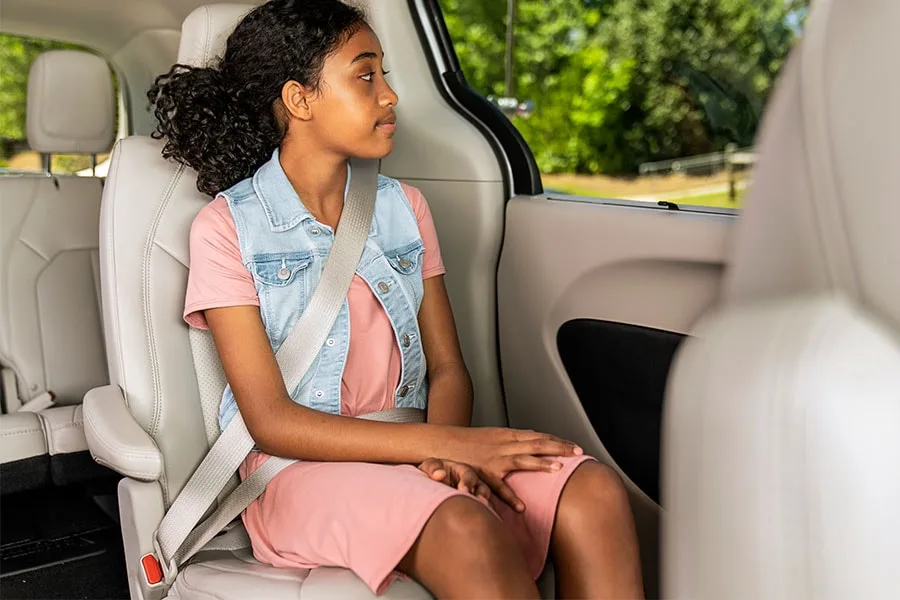
Image source: Web (Bing) / strong4life.com (Web image (fair-use with source credit))
The Short Answer: Why Experts Say 13 Is the Magic Number
Most safety experts say keep kids in the back seat until age 13. Airbags can seriously hurt smaller passengers. The back seat is safest for every trip.
That rule applies even after a child hits 13.
Why 13 specifically? Crash data shows that kids under 13 are significantly more likely to be injured by a front-seat airbag than older passengers. The recommendation comes from both the American Academy of Pediatrics and the National Highway Traffic Safety Administration.
It's based on bone development, not just weight. A 13-year-old's skeleton is stronger and better able to handle the forces of a crash. That's why the AAP's official guidance centers on keeping children under 13 in the back of the vehicle.
That said, 13 is the floor, not the finish line. A small 13-year-old may still not fit properly. Height and seat belt position matter more than the birthday.
So think of 13 as the earliest safe age, not the automatic green light.
What Actually Determines Front-Seat Readiness (Not Just Age)
Age is just a shortcut. The real test is whether the adult seat belt fits a child correctly, and whether their body is developed enough to handle a front impact. The five-step seat belt fit test is the gold standard for checking this at home.
It's the same method pediatricians and child passenger safety technicians use.

Image source: Web (Bing) / walmart.com (Web image (fair-use with source credit))
Here's what readiness really comes down to:
- Height: Most kids need to be at least 4 feet 9 inches tall before the belt fits properly.
- Weight: Heavier doesn't necessarily mean safer, but most experts look for at least 80 to 100 pounds.
- Bone development: Pelvic bones aren't fully formed until the late teens, which affects how the lap belt protects them.
- Sitting posture: The child must be able to sit all the way back against the seat with knees bent over the edge.
A quick way to check is the knee bend test. Have the child sit against the seat back. If their feet don't touch the floor and their knees hang awkwardly, they're not ready.
If the belt rides up on their stomach or neck, they're still in booster territory.
This is also where many parents wonder about car seat timing. The transition from a forward-facing seat to a booster, and then to the adult belt, follows the same readiness rules. The car seat transition timeline is a helpful guide if you're trying to figure out where your child falls.
The Big Risk: How Airbags Injure Smaller Passengers
Here's the part that scares safety experts. A deploying passenger airbag moves at speeds up to 200 miles per hour. It's designed to protect an average-sized adult's chest and head.
For a smaller child, that same airbag hits in the wrong places, usually the neck, face, or upper chest. The force can be severe enough to cause head trauma, spinal injuries, or internal organ damage.

Image source: Bing (Web (fair-use with source credit))
The problem isn't just the airbag itself. It's the combination of the airbag and the seat belt. The adult seat belt is designed for someone who stands around 5 feet 9 inches.
When a shorter child rides up front, the shoulder belt typically cuts across the neck instead of the chest. The lap belt can sit too high and cause abdominal injuries during a crash. That's why even older kids who pass the age rule can still be at risk if the belt doesn't fit well.
Another overlooked factor is proximity. Kids naturally want to sit closer to the dashboard, which puts them in the airbag's deployment zone. Sliding the seat back helps, but it doesn't solve the core problem.
The safest position for a growing child is still the back seat.
If you're using aftermarket car seat covers or accessories, it's worth checking that they don't interfere with airbag deployment. A quick read on airbag-safe seat cover guidelines can prevent a hidden hazard.
The 5-Step Seat Belt Fit Test You Can Do at Home
This is the test that separates "age 13, so it's fine" from "age 13, but actually ready." It takes less than two minutes and requires no special tools. Just the car, the child, and the regular seat belt. If the child fails even one step, they're not ready for the front seat.
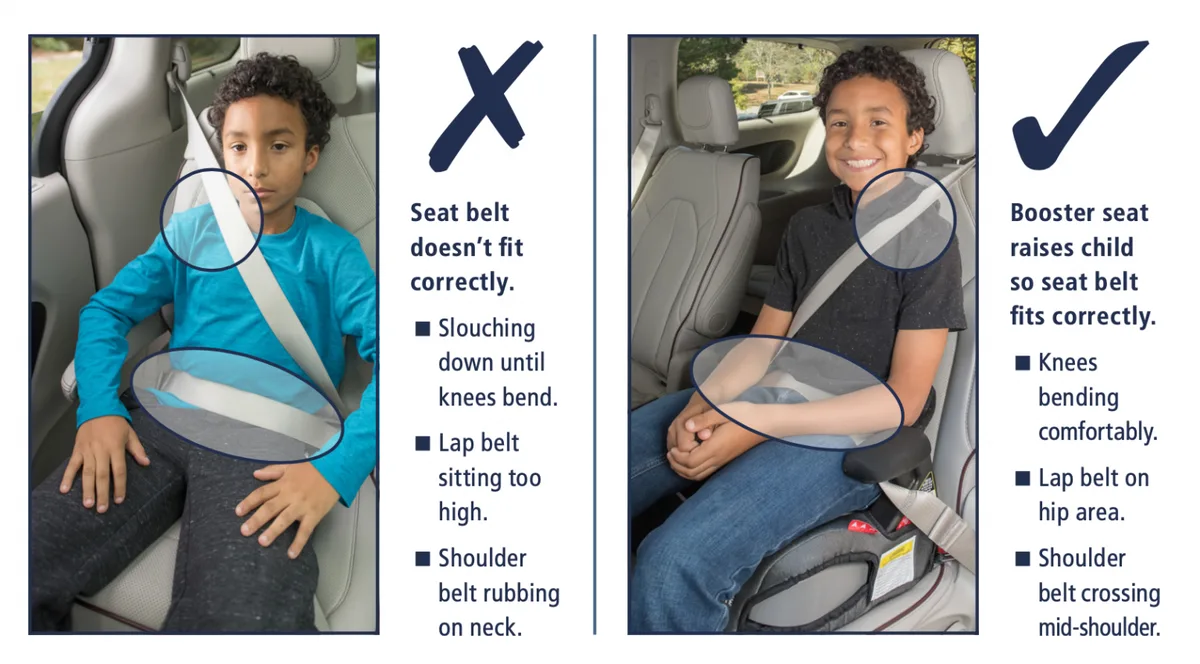
Image source: Web (Bing) / namibian.com.na (Web image (fair-use with source credit))
Here's the five-step check:
- Back flat: The child sits all the way back against the seat. No slouching, no leaning forward.
- Knees bent: Their knees bend naturally over the edge of the seat. Feet should touch the floor if they can.
- Lap belt low: The lap belt sits low across the upper thighs, not the stomach.
- Shoulder belt centered: The shoulder belt crosses the middle of the chest and shoulder, far from the neck.
- Comfortable for the ride: The child can sit this way for the whole trip without shifting or sliding under the belt.
That last step matters more than parents think. A child who physically fits the belt but slouches after two minutes is still unsafe. The belt stops working properly when the body moves forward.
Aggressive repositioning into a safer spot is a sign they're not ready.
If your child passes all five steps in the back seat, they're ready for the regular seat belt in the back. That's the real goal. Front-seat riding is a separate privilege, and passing this test in the back is step one.
For a deeper look at the booster-to-belt transition, including weight and height cutoffs, check our detailed guide on the car seat stages and when kids outgrow them.
State Laws vs. Best Practice: Know the Difference
This is where things get confusing for many families. Your state might legally allow a 7-year-old to ride up front, but that doesn't mean it's safe. State laws set the absolute minimum, not the recommended standard.
The gap between legal and safe is often several years.
Here's a breakdown of how the two compare:
| Factor | State Law Minimums | Best Practice |
|---|---|---|
| Age | Often 8 to 12, varies by state | 13 or older |
| Height | Some states require 4'9" or taller | Should pass the 5-step fit test |
| Seat belt fit | Not always reviewed | Must be correct in the back seat first |
| Airbag risk | Not usually addressed | A child under 13 should never be in front of an active airbag |
Many parents assume the law reflects the latest safety research. That's not always true. State laws are a patchwork of old codes and occasional updates.
The NHTSA's child safety page tracks each state's rules, but even that resource highlights how inconsistent they are.
If you're driving across state lines or renting a car, keep the federal recommendation in mind. The safest and most consistent rule is simple: back seat until 13. State law can tell you what's legal, but it can't tell you what's best for your child's safety.
When in doubt, default to the stricter standard.
You should also check your vehicle's owner's manual. Some car manufacturers list specific seat position guidelines for the front passenger seat, including how far back the seat must be. Those instructions are based on actual crash testing, so they're worth following exactly.
And if you're installing any seats or boosters in the back, make sure they're secured correctly, because a loose install undermines all the hard work. Our step-by-step car seat installation guide walks through the full process, including the differences between seat types.
Common Mistakes Parents Make When Moving Kids Up Front
Many parents move kids up out of excitement, not readiness. The biggest mistake is using age alone as the green light. A skinny 13-year-old can be less ready than a tall 11-year-old.
Here are the most common errors we see:
- Moving up too early, often at 8 or 9, because the child "begs for it."
- Skipping the seat belt fit test because the child looks big enough.
- Letting kids slouch or lean forward after they move up front.
- Leaving the seat too close to the dashboard.
- Forgetting to check the owner's manual for airbag warnings and seat position rules.
Another frequent slip is assuming the car seat stage is fully over. That's not always true. Even if a child passes the fit test in the back, the front seat is a separate decision with different risks.
Take both steps one at a time.
What About Booster Seats and When to Leave Them Behind?
A child is ready to leave a booster only when the adult seat belt fits properly without it. That means passing the five-step test we covered earlier. Most kids need a booster until somewhere between ages 8 and 12.
The 4'9" height rule is a minimum, not a guarantee.
The transition often fails because parents rush it. If the shoulder belt sits against the neck, or the lap belt rides high, the booster needs to stay. That's not a step backwards, it's an injury prevention tool.
For a deeper look at seat types and the full harness-to-booster process, check our guide on convertible car seats and how they work.
Another mistake is moving a child from booster to front seat at the same time. These are two separate thresholds. A child might pass the booster test in the back seat but still be too small for front-seat airbags.
Work through them one at a time.
How to Handle Pushback from Tweens and Teens
Here's the truth: your kid will probably argue about this. They want to sit shotgun, and they'll make a strong case. It usually sounds like "everyone else gets to" or "I'm not a baby anymore."
Stay calm and consistent. Explain that the rule isn't about trust, it's about physics. The back seat is fundamentally safer in every crash type.
In side-impact crashes, the back seat is further from the point of impact. In frontal crashes, the child is further from the steering wheel and dashboard.
Give them ownership in the decision. Have them take the five-step test themselves. Let them measure their height and check the belt fit.
When they understand what the standard actually is, they usually stop arguing.
If they're still unhappy, offer a compromise. They can be the first one out of the car, or they can ride the middle back seat, which offers strong crash protection. Research consistently shows the middle rear seat is the safest position for young passengers.
Special Cases: Airbag Switches, Trucks, and Two-Seaters
Some families genuinely can't use the back seat. A two-seater pickup truck has no rear row. A vehicle may have a back seat that's too tiny for a car seat, or the car might have a passenger airbag without a weight sensor.
In these cases, you need a different plan.
First, check the owner's manual. It explains the passenger airbag system and any restrictions. If a child must ride up front, push the seat all the way back, as far from the dashboard as possible.
This gives the airbag room to deploy before touching the child.
Image source: Bing (Web (fair-use with source credit))
A passenger airbag deploys at up to 200 mph. It can severely injure a child who's too close or too small. That's why safety groups say a child under 13 should never ride in front of an active airbag.
Some trucks have a key-operated airbag deactivation switch. The switch is rare and typically found in older models. You can use it to turn off the airbag when a child sits up front, but the vehicle must be serviced to do so properly.
Never attempt to disable an airbag on your own.
If you use a car seat or booster up front in an emergency, confirm the seat cover doesn't block the airbag. Our guide on airbag-safe seat covers explains what to look for.
What the Experts and Safety Organizations Recommend
The American Academy of Pediatrics is blunt about this. Keep children under 13 in the back seat, buckled properly. The National Highway Traffic Safety Administration agrees.
The CDC's child passenger safety guidance also recommends rear seating for all children under 13, regardless of the child's size.
These aren't random guidelines. They're based on crash test data and real-world injury tracking. As of 2026, no major safety organization recommends front-seat riding for kids under 13, even if the child is tall.
Here's a quick reference:
| Organization | Recommendation |
|---|---|
| AAP | Back seat until 13 |
| NHTSA | Back seat until 13 |
| CDC | Back seat until 13 |
| IIHS | Back seat safest for all young teens |
The message is consistent. If you're in doubt, keep them in the back. There's no penalty for being extra careful, and the safety benefit is real.
Quick FAQ: Front Seat Age, Height, and Weight Rules
Can my child sit in front at 12?
No, safety experts recommend waiting until 13. Regardless of how tall or mature they act, a 12-year-old's body is still developing. The risk of airbag-related injury remains significantly higher than in the back seat.
What height do you need to sit in the front seat?
The common guideline is 4 feet 9 inches tall. That's roughly the height where the adult seat belt starts fitting correctly. However, height alone isn't enough.
The seat belt must pass the five-step fit test we covered earlier.
Can a 10-year-old sit in the front seat?
Legally, yes in some states. But every major safety organization recommends against it. The back seat is the safest place for all children under 13, even if they're tall for their age.
How much should a child weigh to sit in the front seat?
Most safety guidelines suggest at least 80 to 100 pounds. Yet weight is a weaker predictor of readiness than height and bone development. A heavier child can still be too small for a proper seat belt fit.
Use the five-step test instead.
What if my car has no back seat?
Then the owner's manual is your guide. Slide the passenger seat as far back as possible. Check if your vehicle has an airbag deactivation switch.
In rare emergency cases, a child riding up front in a two-seater is safer than staying home, but this should never be the regular plan.
Final Plan: When and How to Make the Switch Safely
Making the switch is simple if you follow a clear order. Work through these steps one at a time.
- Check the fit. Have your child pass the five-step seat belt test in the back seat first.
- Check the law. Confirm your state's minimum age and height requirements.
- Check the owner's manual. Note any airbag warnings, seat position rules, or deactivation options.
- Take a trial run. Let them ride in the front passenger seat on a short, local trip first.
- Set the seat position. Slide the passenger seat as far back as it goes while still letting them reach the pedals if they're driving. For passengers, just slide it all the way back.
If they fail any check, they stay in the back. There's no shame in waiting a few more months. Re-test every few months until they pass.
If you're still working on getting the rear seats set up safely, our guide on car seat installation shows exactly where each piece should go.
The back seat isn't a punishment, it's protection. Most kids understand that when you explain it calmly and give them a clear target to reach. Their turn will come soon enough.
Making them wait until 13 is one of the easiest ways to keep them safe, and the data backs it up one hundred percent.

Leave a Reply