
You're 20 minutes from home, your two-month-old has been crying for five of them, and the bottle is sitting in the diaper bag within arm's reach. The question every parent has asked at highway speed: can you just feed the baby in the car seat and keep driving?
The answer is no — not while the car is moving, not while parked, and not even with the carrier sitting on the living room floor. The same semi-reclined angle that protects a baby in a crash works directly against safe swallowing. Feeding in that position turns a routine bottle into a choking and aspiration hazard. You can also read our guide on how to install a car seat.
This guide covers exactly why the angle is a problem, the risks beyond choking, what pediatric and traffic-safety authorities currently advise, and — most usefully — a simple stop-and-feed routine that adds only about 15 minutes to your trip.
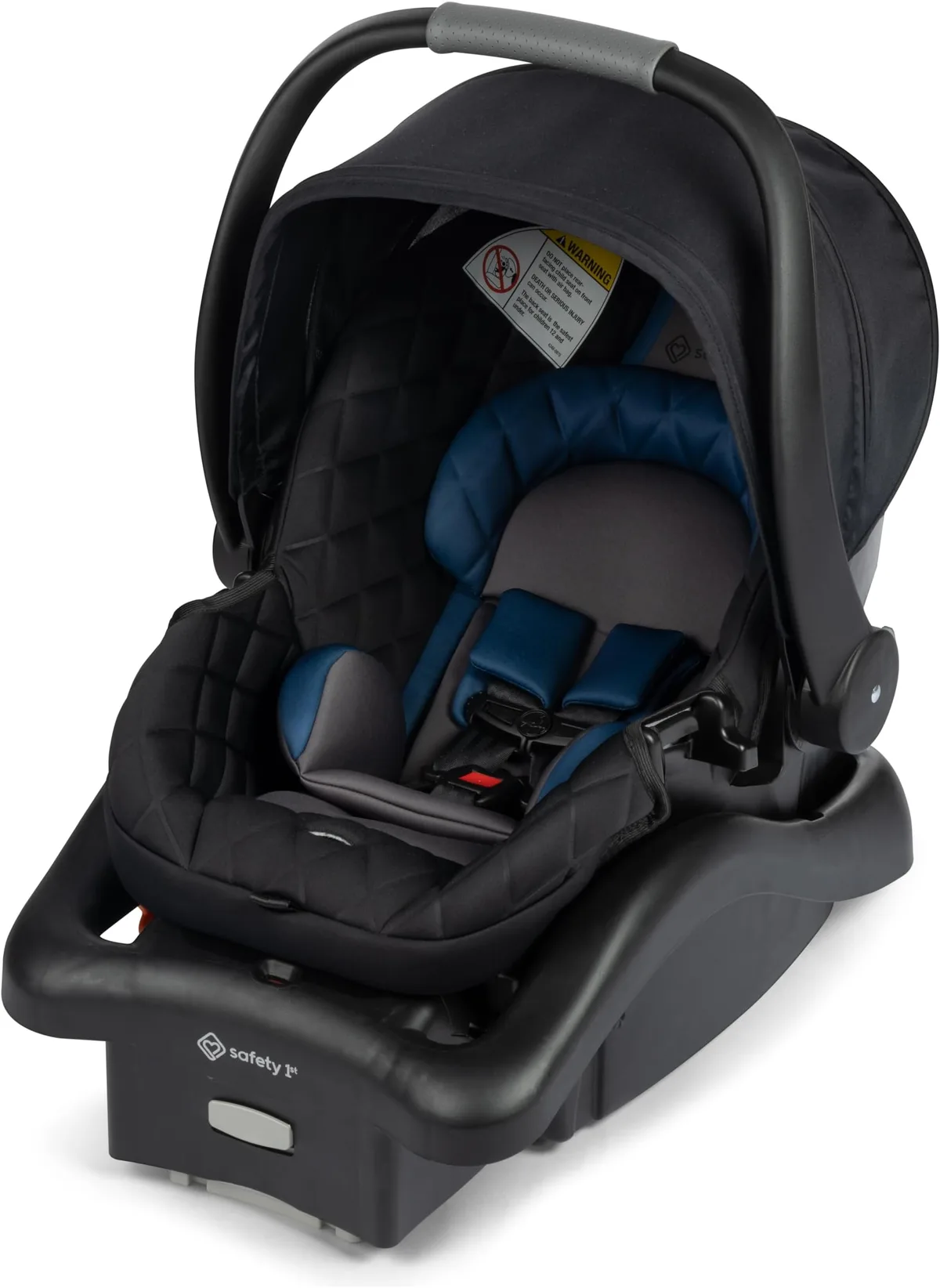
Upright feeding during a safe stop keeps gravity working with the swallow, not against it.
Image source: Web (Bing) / amazon.com (Web image (fair-use with source credit))
Quick Answer
No. You should not feed a baby in a car seat. Not in a moving vehicle, not while parked, and not on a stroller frame. Here's the reasoning in brief:
- The seat's semi-reclined angle — typically 30 to 45 degrees from vertical — is engineered to keep a baby's airway open in a crash, not to support safe swallowing.
- Feeding in that position raises the risk of choking, silent aspiration, reflux flare-ups, and ear infections.
- A drowsy baby in a reclined seat faces an additional danger: positional asphyxia, where the chin slumps forward and compresses the airway.
What to do instead: pull over somewhere safe, take the baby out of the carrier, and feed them upright in your arms. Done properly, the whole routine costs about 15 minutes — less time than you'd spend managing a baby who's crying from a failed feed. You can also read our guide on when to remove newborn insert from car seat.
Why the Semi-Reclined Angle Makes Feeding Unsafe
Infant carriers are built to hold a newborn at a carefully specified recline, usually between 30 and 45 degrees from vertical. That angle positions the head so the airway stays open and the harness and shell can manage crash forces correctly. It is one of the most life-saving design features in the baby products industry — for transport.
Feeding requires the opposite geometry. A baby drinking from a bottle or nursing should be held semi-upright, roughly 60 to 90 degrees. In that position, gravity moves milk down the esophagus, the jaw and tongue sit where the swallow reflex expects them, and the airway stays clear. You can also read our guide on how do you put car seat in shopping cart.
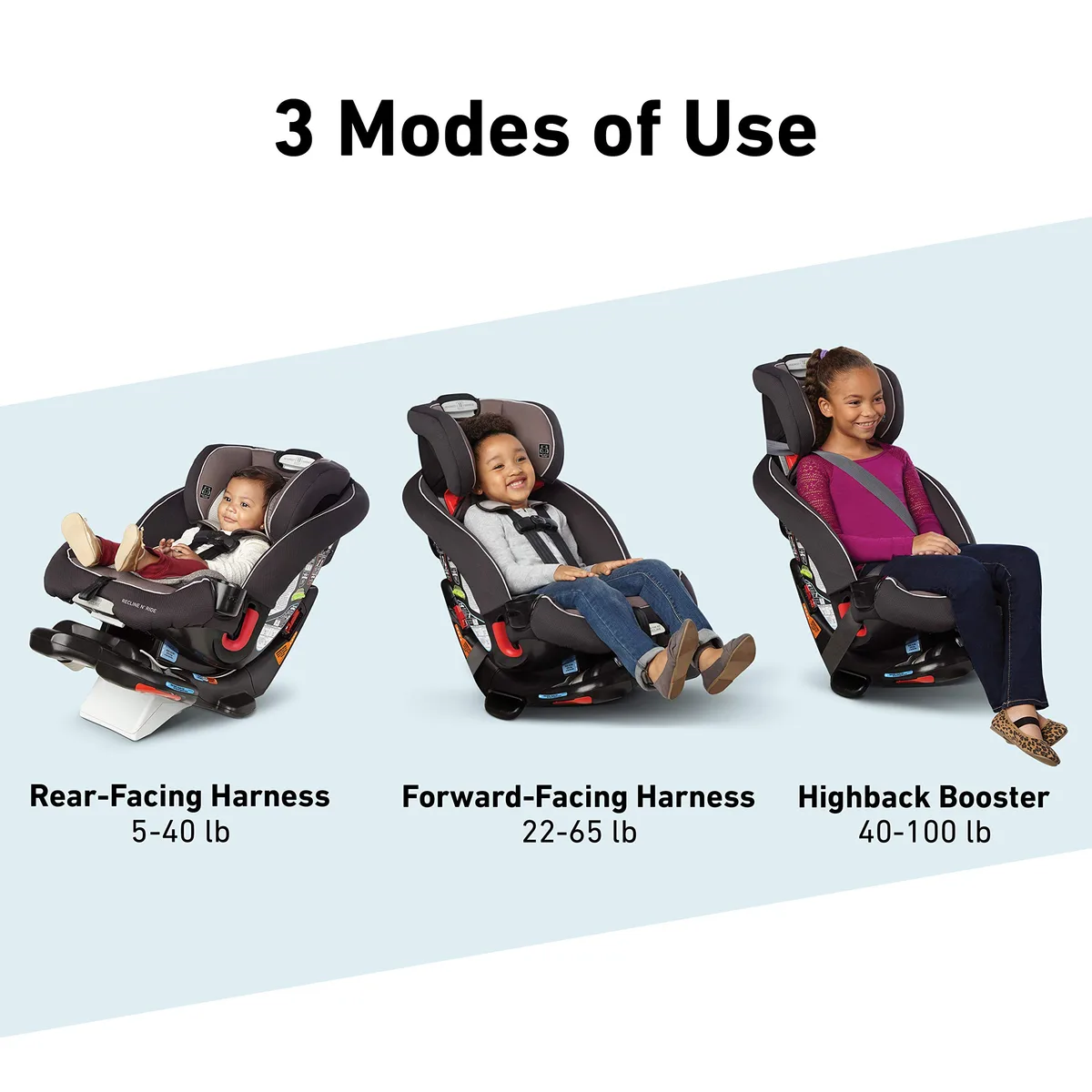
The 30–45 degree recline that protects in a crash is the same angle that works against swallowing.
Image source: Web (Bing) / storage.googleapis.com (Web image (fair-use with source credit))
Put a baby back into that recline with a bottle, and several things happen at once. The head tips back while the chin drifts toward the chest, narrowing the airway. Milk pools at the back of the throat because gravity is pulling it sideways, not down. And a newborn's swallow reflex — still immature in the first months — has to work overtime to keep up.
It's the same reason drinking from a straw while lying flat on your back is awkward. You can manage it, but some liquid always ends up where it shouldn't. For an adult, that's a cough and a sputter. For a two-month-old, it can be milk silently entering the lungs. You can also read our guide on what is a convertible car seat.
One thing to be clear about: adjusting the recline doesn't solve this. The angle is integral to the seat's crash performance, most manufacturers explicitly prohibit modifying it, and even a seat set at its most upright position is still steeper than a safe feeding position.
The Real Risks: Choking Is Only One of Them
Most parents think of choking when they hear "don't feed a baby reclined." Choking is real, but the most dangerous outcomes don't announce themselves with coughing at all. You can also read our guide on how to choose car vaccum cleaner.
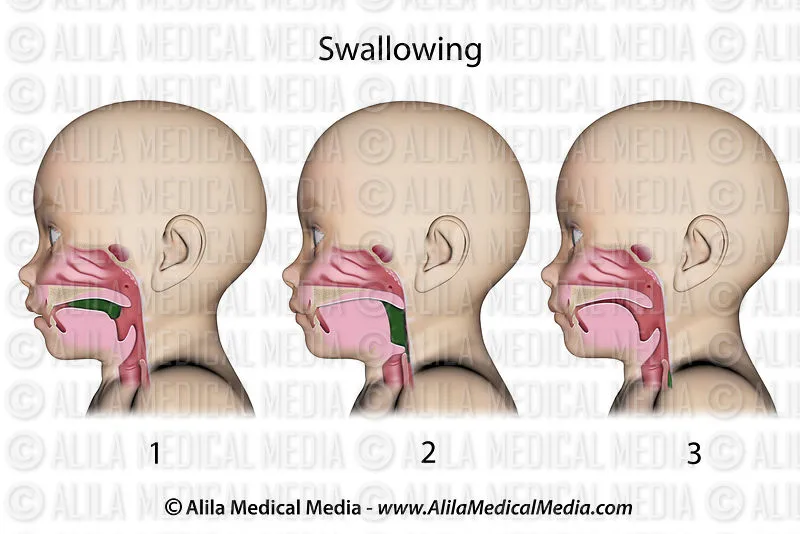
In a reclined position, milk can reach the airway entrance without triggering a cough.
Image source: Web (Bing) / alilamedicalmedia.com (Web image (fair-use with source credit))
- Obvious choking and gagging. The visible failure mode. The baby sputters, coughs, and recovers — or doesn't. This is the risk everyone knows about.
- Silent aspiration. Milk slips past the vocal cords into the airway without triggering a cough reflex. There may be no distress at all, which is what makes it dangerous: the milk sits in the lungs and can cause pneumonia or repeated respiratory infections.
- Reflux flare-ups. The lower esophageal sphincter isn't fully mature in newborns, so milk already tends to come back up. Reclining during and right after a feed makes it come up harder — more spit-up, more pain, a more miserable baby.
- Ear infections. A baby's eustachian tube is short and nearly horizontal. Milk that pools near its opening in a reclined feed creates ideal conditions for bacteria, and recurring ear infections are common in babies who are routinely fed lying down.
- Positional asphyxia. The most serious one. A newborn's chin slumping to the chest can compress the airway even with no bottle involved, which is why many child passenger safety technicians advise keeping newborns in the seat for short stints — roughly 30 minutes at a time on long drives, with a widely shared two-hour ceiling for young babies overall. Feeding adds a distraction on top of that risk.
| Risk | What's happening | Warning sign |
|---|---|---|
| Choking | Milk overwhelms the swallow reflex | Coughing, sputtering, pulling away |
| Silent aspiration | Milk enters airway without a cough | Often none — watch for wheezing later |
| Reflux | Stomach contents wash back up | Arching, spit-up, crying mid-feed |
| Ear infection | Milk pools near eustachian tube opening | Frequent infections, tugging at ears |
| Positional asphyxia | Chin-to-chest compresses airway | Quiet, slumped posture, color change |
The reassuring part: a single feed in the seat is very unlikely to cause harm. The goal is to stop making it a habit, because the risks compound with every reclined feed.
What Current Safety Guidance Says
This isn't a contested topic among the people who study it. Every relevant authority points the same direction, and it's worth knowing who says what. You can also read our guide on are car seat covers safe for babies.
The American Academy of Pediatrics advises feeding babies in a semi-upright position and cautions that car seats are travel devices, not places for babies to spend extended time — its guidance warns against using them for routine sleep outside the vehicle and encourages minimizing non-travel time in them, particularly for newborns.
The National Highway Traffic Safety Administration approaches it from the crash side. NHTSA's car seat guidance centers on correct installation, correct recline for the child's age and seat model, and a snug harness — the seat's entire tested purpose is protecting a child in a moving vehicle. Any use that departs from the manufacturer's instructions sits outside what the seat was validated for.
Manufacturer manuals reinforce the same message. Brands like Graco, Chicco, and Britax consistently describe the carrier as designed for use in motor vehicles and include warnings against modifying the recline or using the seat for purposes beyond transport. In practice, that language exists because the semi-reclined position has documented downsides for everything except travel.
None of these guidelines are about feeding alone — they cover the broader problem of young babies spending too long in any semi-reclined seat. Adding a bottle into an already-compromised position only compounds the danger. When every relevant authority agrees, this stops being a judgment call.
Hungry Baby or Just Fussy? Know Before You Stop
One skill that makes the whole system work: telling a hunger cry apart from every other cry, so your stops are deliberate rather than panicked.
Hunger builds in a pattern. Look for rooting (turning the head toward anything that brushes the cheek), sucking on fists, lip smacking, and a rhythmic fussing that escalates steadily rather than spiking. A baby who was fed 90 minutes ago showing these cues is probably genuinely hungry.
Gas, overstimulation, and a dirty diaper look different. Squirming with legs drawn up points to gas. A baby who quiets briefly when you sing or shush is usually looking for soothing, not milk. A pacifier, white noise, or the car's steady motion often resolves those without a stop.
The one thing not to do is use a bottle to "test" whether the baby is hungry while they stay strapped in the seat. If you suspect hunger, that's your cue to stop — not to try the feed in place and see what happens.
The Safe Routine: Stop, Unclip, and Feed Upright
Here's the alternative that keeps everyone fed and safe. Four steps, and the whole thing takes about 15 minutes.
Step 1: Stop somewhere genuinely safe. A rest area, gas station, or parking lot — somewhere flat, legal, and calm. The highway shoulder is a last resort for true emergencies only. You need a stable environment to handle a baby and a bottle.
Step 2: Unclip the carrier and set it down safely. Release the carrier from the base with one hand while supporting it with the other, then bring it to a flat, stable surface. Never leave it on an elevated surface unattended, and never feed the baby while they remain in it — the carrier is your transport tool, not the feeding chair. If your carrier is a lightweight carrier, this step gets noticeably easier at every stop.
Step 3: Take the baby out and feed upright. Unstrap completely, hold the baby at that 60 to 90 degree semi-upright angle, and feed normally. This is the position their swallow reflex is built for. Burp partway through and again after.
Step 4: Wait before re-strapping. Hold the baby upright for 10 to 15 minutes after the feed so the milk settles. A baby who goes back into a reclined seat with a full stomach and trapped gas is a baby who spits up and cries 10 minutes later.

The 60–90 degree hold is the position a baby's swallowing reflex is designed for.
Image source: Web (Bing) / theplaceforparents.com (Web image (fair-use with source credit))
The honest trade-off: yes, this costs more time than a five-minute feed in the seat. But a seat feed either can't finish safely or ends in spit-up and crying — and then you stop anyway, now with a soaked harness and an upset baby. Stopping properly is the faster route in real terms.
| Task | Time |
|---|---|
| Pulling over and parking | 2 minutes |
| Unclipping the carrier | 30 seconds |
| Unstrapping and positioning | 1 minute |
| Feeding | 10–12 minutes |
| Burping and holding upright | 10–15 minutes |
| Re-strapping and re-clicking | 1 minute |
Planning Feeds on a Road Trip
Newborns eat every 2 to 3 hours, sometimes more. That's not negotiable, so build the drive around it instead of hoping the baby sleeps through it.
Before you pull out of the driveway, do two things. Feed the baby, burp thoroughly, and give the milk 10–15 minutes to settle before strapping in. And confirm the seat itself is angled correctly — the recline-level indicator should be in the proper zone, and our walkthrough of a correct base setup shows exactly what that looks like before you roll.
Then plan your departure around that feed. A full stomach buys you a two-hour window, so schedule your first stop at the two-hour mark whether or not the baby has started crying. Proactive stops beat reactive ones every time.
Here's what a 3-hour drive looks like with a 2-month-old:
| Time | What happens |
|---|---|
| 9:00 AM | Feed, burp, wait, strap in, depart |
| 10:30 AM | Stop 1: feed upright, burp, hold upright |
| 11:00 AM | Back on the road |
| 12:00 PM | Arrive — one stop, ~30 minutes added |
Now compare that with skipping the stop. The baby wakes hungry at the 1.5-hour mark, the pacifier buys you four minutes, and then you're driving with a screaming infant for the next hour — which is its own distraction risk — only to stop anyway with a sturdier version of the same problem.
For longer trips, the pattern scales: stop every 2 to 2.5 hours. If you're traveling with a partner, swap roles at each stop so one person stays rested and the driver stays focused.
A short packing list makes every stop smoother:
- Pre-portioned bottles or a nursing cover, plus a cooler if the stop is far
- Burp cloths and a spare shirt for you
- A pacifier and a white-noise option for non-hunger fussing
- A window shade to keep direct sun off a drowsy baby
- In cold months, thin layers only under the harness — our take on thick cold-weather layers explains why puffy insulation belongs over the harness, not under it
Five Mistakes Even Careful Parents Make
Every one of these feels reasonable in the moment. That's what makes them dangerous — you're not being careless, you're being tired. But they deserve to be named.
1. Bottle propping. Wedging a bottle against the seat or the baby's chest for a hands-free feed removes your ability to monitor anything. A common mistake is assuming propping is only risky on long drives — in reality, you can't see or feel a choking episode from the driver's seat at any distance. Never do it.
2. Feeding at red lights. You're stopped, so it feels safe. But lights change fast, and you can end up mid-intersection with a bottle in one hand and a baby mid-swallow. Even a gentle brake tap shifts the bottle and startles the baby. Not a controlled environment.
3. Adjusting the recline "just a bit." The carrier's recline is part of its crash design. Changing it changes how the seat performs, most manuals prohibit it outright, and it still doesn't produce a safe feeding angle. There's no version of this that works.
4. Feeding in the seat on a stroller frame. A travel system puts the carrier more upright, so it feels like a different situation. It isn't — the seat is still semi-reclined, the airway mechanics are unchanged, and the same aspiration risks apply. The stroller is for transport too.
5. Feeding a drowsy baby in the seat. A sleeping-or-groggy baby has weaker swallowing coordination and less ability to protect their airway. If they've dozed off in the seat and wake hungry, take them out. A sleepy baby is exactly the baby who shouldn't feed reclined.
The quick version:
- Never prop a bottle, ever
- Never feed while the vehicle is moving, even in stop-and-go traffic
- Never modify the recline angle
- Never treat a stroller-mounted carrier as a feeding chair
- Never feed a drowsy baby in the seat
Spit-Up Happens: Cleanup That Doesn't Ruin the Trip
Even perfect upright feeds produce spit-up, so plan for it rather than pretending it won't happen. Blot anything wet as soon as you notice it — fresh spit-up lifts out far more easily than dried spit-up, and time is the enemy here.
The messes that matter are the ones that soak past the fabric cover into the foam underneath. If spit-up gets that deep, the smell lingers no matter how clean the cover looks; our method for stubborn spit-up stains and smells walks through flushing the foam and deodorizing it properly. And when reflux gets everywhere on a long drive, this cleanup routine handles the worst of the aftermath without a full teardown.
Two practical tips from experience: crack the windows during the drive rather than sealing in the smell, and make sure anything you've spot-cleaned is fully dry before you buckle a baby back in — a damp seat is a cold seat, and dampness trapped under the harness breeds odor fast.
Older Babies and Toddlers
Risk drops as head and neck control develops, usually somewhere in the 4-to-6-month range. A baby with good head control is far less likely to suffer airway compression, and the swallow reflex is mature enough to handle more positions.
But the car seat still isn't a feeding chair. Forward-facing seats sit more upright, yet the same logic applies — the seat's geometry is chosen for crash protection, and there's no adjustment that makes it a high chair.
Solids raise the stakes. Choking on a cracker or a slice of banana in a moving car, with a driver who can't turn around, is a genuinely serious scenario. Snacks in the car seat follow the same rule as bottles: stop first.
One more thing worth knowing as your child grows: they'll stay rear-facing in the current seat until they hit its height or weight limits — longer than most parents expect — and our guide to the next seat stage explains when that transition actually makes sense.
When to Get Medical Help
Even careful parents hit rough moments. Knowing which symptoms need a phone call and which need the emergency room makes a real difference.
| Symptom | What to do |
|---|---|
| Brief coughing that resolves quickly | Monitor, keep baby upright |
| Wheezing or noisy breathing after a feed | Call your pediatrician |
| Unusual lethargy or floppiness after a feed | Go to the ER immediately |
| Blue or pale lips, face, or fingernails | Call 911 |
| Choking with no cough, cry, or breath | Infant first aid, then 911 |
Two of these deserve extra explanation. Silent aspiration shows no dramatic symptom in the moment — which is why recurrent pneumonia or bronchitis, or frequent ear infections, should be mentioned to your pediatrician along with a description of your feeding positions. And for choking that doesn't clear, call 911 and begin infant back blows and chest thrusts as you were trained; this is the one situation where you act first and explain later.
The encouraging reality: most babies who feed in a car seat once are fine. It's repetition that builds risk. Don't wait for a bad outcome to change the routine.
Quick-Reference Checklist
Before the drive
- Feed, burp, and wait 10–15 minutes before strapping in
- Confirm the recline indicator is correct and the harness is at the right height
- Pack bottles, burp cloths, and a spare shirt
At every stop
- Park somewhere flat, legal, and calm
- Unclip the carrier, set it on a stable surface, and take the baby out
- Feed at a 60–90 degree angle, burping partway through
After every feed
- Hold the baby upright for 10–15 minutes
- Check snug harness positioning and the chest clip at armpit level before re-strapping
- Leave the stop with a settled baby, not a rushed one
Frequently Asked Questions
Can I feed my baby in a car seat while it's parked?
No. The seat's semi-reclined angle is identical whether it's in the car, on the floor, orclicked into a stroller frame. The angle is the problem, and location doesn't change geometry. Your baby's airway is compromised in exactly the same way on the kitchen floor as it is on the highway. If you're home, feed in a regular chair or hold the baby upright — skip the car seat entirely.
Does this apply to strollers too?
The seat's angle doesn't change on a stroller frame, so the same risks apply — a travel-system carrier is still a semi-reclined transport seat, not a feeding chair. If you want to feed while you're out, take the baby out of the carrier and hold them upright, or wait until your baby has solid head control and use a stroller with a fully upright seat.
Is it okay if I hold the bottle myself in the backseat?
No. The issue isn't supervision — it's position. Even with you watching closely, a reclined baby still has milk pooling at the back of the throat and a swallow reflex working against gravity. You'd be positioned to catch a choking episode, not prevent one. Pull over and feed upright.
What about a toddler in a forward-facing car seat?
Risk drops as head and neck control develop, but a forward-facing seat still isn't a feeding chair — the geometry is chosen for crash protection, and no adjustment turns it into a high chair. Solids raise the stakes further, because choking on a cracker in a moving car, with a driver who can't turn around, is a serious scenario. Stop first, every time. If you're weighing when a forward-facing seat becomes the right move, our milestone guide for the switch covers the age and size thresholds.
Does breastmilk or formula make a difference?
No. Both are liquids that pool behind the tongue in a reclined position and can cause aspiration, reflux, and ear infections. The feeding position matters regardless of what's in the bottle.
What if my baby falls asleep mid-feed?
If they doze off while you're holding them upright, that's fine — keep them upright for 10–15 minutes so the milk settles, then transfer them to a safe sleep surface. If they fall asleep mid-feed in the car seat, that's the exact scenario to avoid. A drowsy baby in a reclined seat has weaker swallowing coordination and less ability to protect their airway, so stop and reposition.
My baby is screaming in traffic right now. What's the first move?
Pull over at the first legal, safe spot — a parking lot or gas station, not the shoulder unless it's a genuine emergency. Calm the baby before offering a bottle, because a frantic baby gulps air and chokes more easily. A few minutes of soothing makes the feed itself faster and safer.
How long after feeding can I put the baby back in the seat?
Wait 10 to 15 minutes, burp well, and let the milk settle before re-strapping. A baby who goes back into a reclined seat with a full stomach and trapped gas is a baby who spits up ten minutes down the road.
Does the harness setup matter for feeding stops?
More than most parents realize. A harness that's too loose lets the baby slump forward during the drive, which narrows the airway even without a bottle involved. Before you re-strap after a feed, double-check the correct buckle placement — a buckle set too far forward creates slack that lets the baby slouch.
Is it safe to use a car seat cover in cold weather?
Padded inserts that sit between the baby and the shell compress in a crash and create dangerous harness slack, so thin layers under the harness are the rule. Blankets or a shell cover over the buckled harness are fine. Our review of winter cover safety explains which styles hold up.
How do I know if an older car seat is still safe to use?
Check the date stamped on the shell and the manufacturer's stated lifespan — plastic fatigues over time, and heat and UV exposure speed that up. If your seat is a hand-me-down or has lived in a hot garage, confirm whether the base has expired before trusting it for a long trip.
What's the easiest way to make every stop faster?
Practice the unclip-and-carry motion at home until it's one smooth movement, and stage your gear so the burp cloth and bottle are within reach before you park. If every stop still feels like a two-person wrestling match, switching to a lighter carrier model makes the whole routine noticeably easier.
Does any of this change if we're flying instead of driving?
The recline risk is identical, but the logistics differ — many airlines allow a car seat onboard, and if you do check one, the shell and harness need protecting in transit. Our air-travel packing guide covers padding and labeling for checked seats.
What should I do about spit-up that soaks into the seat?
Blot it the moment you notice, and don't assume a clean-looking cover means a clean seat — liquids wick into the foam underneath and the smell lingers. Our method for lifting milk stains handles the soaked-through cases.
The Bottom Line
No — you can't feed a baby in a car seat, and every authority that studies the question agrees. The seat's recline angle is a crash-safety feature that works against swallowing, and the risks stack up with repetition: choking, silent aspiration, reflux, ear infections, and positional asphyxia.
The safe routine is simple enough to run on every trip:
- Feed before you leave, then wait 10–15 minutes before strapping in
- Stop every 2 to 2.5 hours on long drives, whether or not the baby has started crying
- Unclip the carrier, take the baby out, and feed upright at 60 to 90 degrees
- Hold the baby upright after the feed, then re-strap with a snug harness
Yes, it adds time. But it's the only version of the routine that ends with a fed baby, a dry seat, and a clear airway — and after a few trips, the stops stop feeling like interruptions and start feeling like just how travel works now.
Before your next trip, it's worth skimming the rest of our car seat guides and how-tos so installation, cleaning, and sizing are second nature by the time you're on the road.

Leave a Reply