
A car that starts fine in the morning but won’t crank after a short drive is frustrating. When the last thing you used was the stereo, the stereo becomes the obvious suspect. Sometimes it deserves the blame; sometimes it is just the battery. The key is knowing how to tell the difference without throwing parts at the problem.
This guide covers every common cause of stereo-related battery drain, explains how to test for parasitic draw yourself, and shows which fixes actually work. You can also read our guide on how long do hybrid car batteries last.
How A Car Stereo Is Wired To The Battery
The car battery powers everything electrical when the engine is off. Once the engine runs, the alternator takes over the electrical load and recharges the battery. A stereo should normally draw from the alternator, not the battery, for long listening sessions.
In a properly wired car, the stereo has three important connections:
- Constant 12V wire — keeps the clock, presets, and memory alive when the ignition is off.
- Switched 12V wire — powers the stereo on when the key is turned to ACC or ON.
- Ground wire — completes the circuit and is usually black.
The constant wire should draw only a tiny "keep-alive" current. The switched wire is what actually turns the stereo on. Many battery drain problems happen when those two circuits get mixed up, either from a bad installation or a failing part.
What Is Parasitic Draw?
A parasitic draw is any electrical load that continues to drain power after the ignition is turned off. The stereo is only one possible cause. Modern cars also have computers, alarms, door modules, and telematics that draw small amounts of current while "asleep."
A normal sleeping car draws roughly 25 to 85 milliamps (mA). If you find a draw above 100 mA, there is likely a real problem. That could mean a stereo wired to the wrong power source, an amplifier that never turns off, or a separate issue like a glovebox light that stays on.
Top Causes Of Stereo Battery Drain
1. Listening With The Engine Off
The most straightforward cause is also the easiest to miss. If you sit in the car with the engine off and the stereo playing, the battery supplies every watt. A standard stereo may only draw a few amps, but a system with an amplifier can drain a battery in under an hour.
This is not a malfunction. It is normal use. A regular starting battery is not designed to power entertainment equipment for long periods without the engine running.
2. Aftermarket Stereo Wired To Constant Power
Aftermarket stereos use standard wire colors, but installers can easily swap them. The yellow wire is meant for constant memory power, and the red wire is meant for switched power from the ignition.
If the red wire is connected to a constant 12V source instead of a switched source, the stereo will stay powered all the time even if the screen turns off. It may not play music, but it can still draw several hundred milliamps. Over a night or two, that is enough to leave you stranded.
In practice, this is the most common aftermarket installation mistake.
3. Amplifiers And Subwoofers That Stay On
An amplifier needs a remote turn-on signal to switch on with the stereo. That signal usually comes from the stereo's remote wire or a dedicated trigger circuit.
If that remote wire is instead connected to constant 12V, the amplifier stays on even after the stereo is off. Many amplifiers draw 0.5 to 1 amp or more just sitting in standby mode. With a large system, that can kill a battery overnight.
4. Faulty Wiring, Short Circuits, And Bad Grounds
Crushed wires, exposed copper, and poor grounds can create a constant drain.
A common example is a power wire that rubs against bare metal and develops a partial short. Another is a ground wire connected to painted metal instead of a clean bolt. Both can keep current flowing long after the key is removed.
This kind of drain is harder to find because it may not follow the stereo's fuse. It can quietly pull a few amps until the battery dies.
5. Stuck Relay Or Failing Ignition Switch
Many cars route stereo power through a relay or the ignition switch. If a relay sticks in the closed position, power stays on even when the key is out. The same can happen when an ignition switch wears out and keeps the accessory circuit live.
You might notice the stereo stays on after you remove the key. If that happens repeatedly, the fault is usually wiring-related, not a music-listening habit.
6. Stereo Memory And Settings Drawing Too Much Current
Every stereo uses a small amount of power to remember radio stations, the clock, and user settings. In a factory unit, that memory draw is usually well under 20 mA, which is harmless.
An aftermarket stereo can draw more, especially if it has a large touchscreen or a built-in amplifier. Even then, 20 to 40 mA is rarely enough to kill a healthy battery on its own. But a faulty circuit board or damaged wiring can push that number much higher.
If you’re already exploring the stereo menus, you can also adjust the on-screen language while you are in there — but the memory setting itself is usually not the root cause.
7. Old Or Undersized Battery
Sometimes the stereo is innocent, and the battery is simply at the end of its life. Car batteries typically last 3 to 5 years in normal conditions. As they age, their capacity drops, and even a normal 30-minute listening session can leave too little power for starting.
An undersized battery causes the same problem. If you upgraded your stereo without upgrading the battery, the extra current demand can exceed what the battery can comfortably provide.
8. Other Parasitic Drains On The Same Circuit
The stereo may be sharing a circuit with something else. Dash cams, aftermarket alarms, phone chargers, and 12V accessories can all cause drain if they are wired to the wrong fuse.
The stereo fuse may drop the reading during testing, but the real culprit could be another device connected down the same line. That is why a full fuse-by-fuse check matters.
How Much Power Does A Car Stereo Use?
Knowing approximate power draw helps you understand how fast a battery will drain. Here are rough numbers for typical systems at normal listening volume:
| Stereo setup | Average power draw | Current at 12V |
|---|---|---|
| Basic factory stereo | 5–15 W | 0.4–1.3 A |
| Factory stereo with upgraded speakers | 10–25 W | 0.8–2.1 A |
| Aftermarket head unit only | 15–50 W | 1.3–4.2 A |
| Aftermarket head unit with amplifier | 50–200 W+ | 4–17 A+ |
These numbers vary with volume, music content, speaker impedance, and amplifier efficiency. A 60 amp-hour battery with a 5-amp draw could theoretically last about 12 hours, but you should not run a starting battery below about 50% capacity. That means a stock system might safely play for a couple of hours. A high-powered system with several amplifiers can drain the same battery in under an hour.
Signs Your Stereo Is Draining The Battery
- The engine cranks slower than it used to after a short stop.
- The stereo resets its clock or loses radio presets.
- You hear a rapid clicking sound when you turn the key.
- Interior or dashboard lights look dim after using the stereo.
- You need jump starts more often, especially after listening with the engine off.
- The battery voltage reads below 12.4 volts after the car has sat overnight.
None of these signs prove the stereo is guilty. They just tell you the battery is losing charge faster than it should.
How To Test For A Parasitic Battery Drain
This test is safe if you do it carefully. It does require a digital multimeter that can measure DC amps.
- Park the car, turn everything off, and remove the key.
- Open the hood and locate the battery.
- Close all doors, the trunk, and the hood latch — or use a screwdriver to push the door latches closed. Interior lights can ruin the reading.
- Wait 10 to 20 minutes so the car’s computers can go to sleep.
- Set the multimeter to DC amps and plug the leads into the 10A port.
- Disconnect the negative battery cable. Connect one meter lead to the negative battery post and the other to the disconnected cable clamp.
- Wait another minute or two for the reading to settle.
- A normal parasitic draw is below 50 mA. Some modern cars draw up to 85 mA. If you see more than 100 mA, you have a drain to investigate.
Never turn the key or try to start the engine while the meter is connected in series. Also never allow the negative cable to touch the battery post while the meter is connected.

Wait until the vehicle’s modules are asleep before trusting the reading.
Image source: www.youtube.com
How To Confirm The Stereo Is The Culprit
Once you know there is a parasitic draw, isolate the stereo circuit:
- Locate the stereo fuse in the fuse panel.
- With the multimeter still connected, remove the fuse.
- Watch the amp reading.
If the draw almost disappears, the stereo circuit is involved. If it stays high, the drain is somewhere else.
For aftermarket systems, also check the inline fuse on the amplifier power cable. Many amplifiers are wired directly to the battery and will not show up on the car’s fuse panel.
If the stereo has an aftermarket harness, unplug the stereo completely and repeat the test. If the draw stays high, the stereo itself is not the problem — the wiring behind it is.
How To Fix The Most Common Stereo Wiring Problem
The usual fix is to separate the constant and switched power wires.
- The yellow wire should be connected to a circuit that is always live. This keeps the memory alive.
- The red wire should be connected to a circuit that is only live when the key is in ACC or ON. This is the power that actually wakes the stereo up.
If the red and yellow wires inside the aftermarket harness are tied together, the radio will always have main power. Separate them and connect the red wire to the vehicle’s accessory wire.
Use a vehicle-specific wiring harness adapter instead of splicing wires with scotchloks. A proper harness reduces the chance of chafed wire, shorts, and bad grounds. Installers who follow automotive electrical standards from organizations like SAE International are far less likely to leave hidden drains behind.
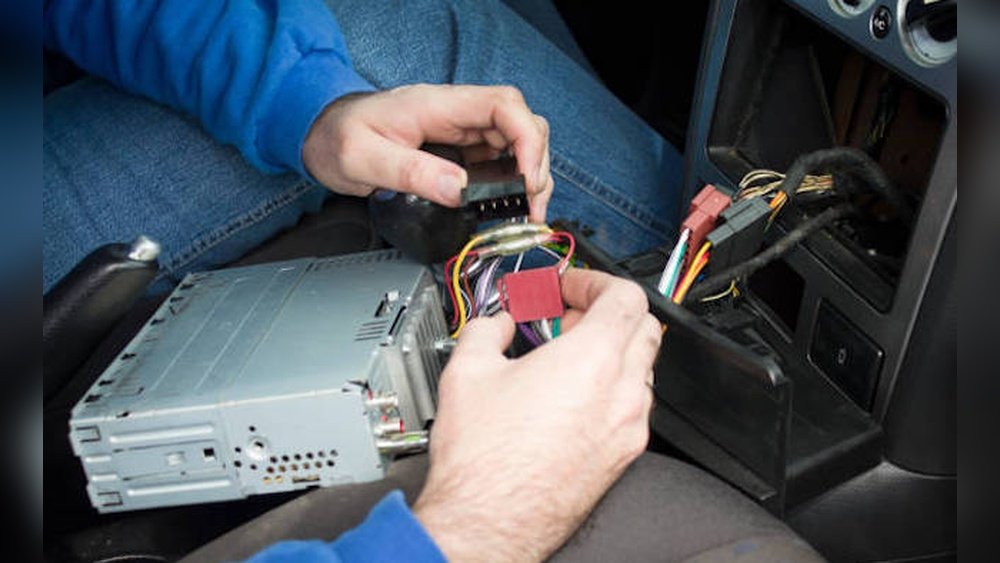
An aftermarket harness that carries constant power can keep drawing current when the key is out.
Image source: www.reddit.com
Should You Add A Capacitor, Bigger Battery, Or Second Battery?
These upgrades help in specific situations, but none of them fix a wiring fault.
- Power capacitor — A capacitor stores a small amount of energy for quick bass hits. It smooths voltage drops but does not stop parasitic drain. Do not buy one to fix a battery that keeps dying overnight.
- Bigger battery — A larger or AGM battery gives you more reserve capacity. It delays the problem, but a wiring short will still drain it eventually.
- Deep-cycle or dual-purpose battery — These can handle deeper discharges better than a standard starting battery. They make sense if you regularly listen with the engine off.
- Second battery with an isolator — This is the correct upgrade for serious sound systems. The isolator prevents the main battery from being drained by the audio system.
In practice, fix the wiring first, then decide if you actually need more battery.
Factory Stereos Vs Aftermarket Stereos
| Feature | Factory stereo | Aftermarket stereo |
|---|---|---|
| Power use | Low | Medium to high |
| Wiring | Plug-and-play harness | Requires adapter or splicing |
| Parasitic drain risk | Low unless a circuit fails | Higher if installed incorrectly |
| Sound options | Limited | Customizable |
| Memory draw | Very small | Can be higher |
Aftermarket stereos are safe when installed with the right harness and correct wire connections. The risk comes from shortcuts, not from the equipment itself.

A factory harness adapter is one of the easiest ways to reduce stereo-related drain.
Image source: www.reddit.com
How Weather Makes Battery Drain Worse
Cold weather makes any existing drain harder to handle. A battery’s chemical reactions slow down at low temperatures, so the engine needs more cranking current, while the battery has less capacity to give.
Hot weather hurts batteries differently. Heat speeds up internal corrosion and moisture loss. A battery that was already weak in summer can fail completely in winter.
That is why a stereo that was fine in September may leave you stuck in January. The stereo was always drawing the same current; the battery just lost its ability to cover it.
Other 12V Accessories That Can Drain Your Battery
The stereo is not the only accessory plugged into your car’s electrical system. Before blaming the radio, look around the cabin and cargo area.
- Dash cams with parking mode can draw power continuously.
- Phone chargers left in the cigarette lighter can drain the battery if the socket is always live.
- Aftermarket alarm systems with faulty sensors are a classic hidden drain.
- 12V vacuum cleaners used with the engine off can pull enough current to hurt the battery.
If you use a vacuum inside your car, pick the right tool for the job. It is worth comparing different types of car vacuum cleaners before buying one. You’ll also want to know what suction level actually works, because a weak model can make the job longer without helping your battery.
Some people use a regular household vacuum instead. That works in many cases, but it is not something you want running off the car’s power socket. For quick interior cleanups, compact handheld models are convenient, but they still have limits — the question is whether a compact handheld vacuum can handle your particular mess.
The point is simple: unplug anything that draws power when the engine is off, and test the battery drain before assuming the stereo is at fault.
Common Mistakes To Avoid
- Tying the red and yellow stereo wires together.
- Grounding the stereo or amplifier to a painted bolt.
- Using scotchlok connectors for high-power wires.
- Leaving the amplifier remote wire connected to constant 12V.
- Ignoring slow cranking because you assume the battery is old.
- Replacing the battery before testing for parasitic drain.
- Using the wrong fuse size for an aftermarket stereo.
Any one of these can create or hide a battery drain. Avoiding them is cheaper than a tow truck.
When To See A Professional
If your test shows a drain above 100 mA and pulling the stereo fuse stops it, you have confirmed the problem is on the stereo circuit. At that point you have two choices: trace and fix the wiring yourself, or take it to a professional. If you have any doubts about working near the car’s electrical system, a car audio installer or a trusted mechanic can run the same test and repair the wiring safely. Ask for a parasitic draw test specifically — not just “check the battery.” A proper repair costs far less than repeated jump starts or a premature battery replacement.
Myths And Facts About Stereo Battery Drain
A lot of well-meaning advice about car audio and batteries is wrong. Here are the myths that cause the most wasted money:
Myth: “Any stereo left off will still kill the battery.”
Fact: A healthy stereo in standby only draws a few milliamps for memory. That alone will not drain a good battery. A large, hidden draw usually means a wiring fault, a stuck relay, or an amplifier that never turns off.Myth: “A bigger battery fixes stereo drain.”
Fact: A bigger battery gives you more reserve time, but it does not stop the drain. If something is pulling 500 mA continuously, a larger battery just takes longer to die. Find the draw first.Myth: “Factory stereos never cause battery problems.”
Fact: Factory stereos are very efficient, but the wiring behind them can still fail. A worn ignition switch, a pinched wire, or a damaged harness can cause a factory unit to drain the battery too.Myth: “You need to disconnect the battery every night to be safe.”
Fact: That is a workaround, not a fix. Once the wiring is corrected, a modern stereo will not drain a healthy battery overnight.
How To Prevent Stereo Battery Drain In The Future
Prevention is mostly about clean installation and routine checks. These steps will keep your battery and stereo working together reliably:
- Turn the stereo off before the engine. Some cars automatically kill accessory power, but many do not. Make it part of your shutdown routine until you know your car’s behavior.
- Use a vehicle-specific wiring harness. A proper harness matches your car’s factory wiring colors and plugs in without guesswork. It is the single best way to avoid the constant-power mistake.
- Verify the accessory wire with a multimeter. Check that the stereo’s switched power wire reads 12V only when the key is in the ACC or ON position — and 0V when the key is out.
- Test the amplifier remote wire. If you have an amp, confirm its remote turn-on lead drops to 0V when the stereo is off. This one check prevents most amplified-system drains.
- Know your fuse map. Learn which fuses cover the stereo, amplifier, and 12V sockets. It makes isolating a future drain much easier.
- Load-test your battery yearly. Many parts stores will test a battery for free. Knowing your battery’s health means you won’t blame the stereo for a battery that is already weak. Battery lifespan and capacity are influenced by climate and driving habits — industry guidance from groups like the Battery Council International is a reliable reference for how batteries behave under different conditions.
- Revisit the install after any change. Adding an amp, replacing a head unit, or even installing a dash cam can create a new drain. Test after every modification, not just when something goes wrong.
Frequently Asked Questions
Why Does My Car Stereo Stay On After I Turn Off The Engine?
The stereo is almost certainly wired to a constant 12V source instead of a switched accessory circuit. It could also be caused by a stuck relay or a failing ignition switch. Check the red wire first — it should only have power when the key is in the ACC or ON position.
How Long Can I Safely Use My Car Stereo With The Engine Off?
With a healthy battery and a standard factory stereo, 30 to 60 minutes is usually safe. A large aftermarket system with amplifiers can drain the same battery in well under an hour. If you notice the dash lights dimming or the stereo cutting out, start the engine immediately.
Can A Car Stereo Drain The Battery Even When It Is Off?
Yes, but it is not normal. A tiny memory draw is expected and harmless. If the stereo pulls more than 100 mA while off, the cause is usually incorrect wiring, a fault inside the stereo, or an amplifier that stays powered. The parasitic draw test above will show you exactly what is happening.
Do Aftermarket Stereos Cause More Battery Problems Than Factory Stereos?
They can, but only because installation quality varies. An aftermarket stereo installed with the correct harness and properly separated constant and switched wires is no more likely to drain the battery than a factory unit. The problem is not the stereo — it is how it was wired.
What Should I Do If My Battery Keeps Dying After Using The Stereo?
Do not replace the battery first. Run a parasitic draw test, and if the stereo circuit shows excessive current, fix the wiring or have an installer do it. If the draw is normal, load-test the battery and check whether the alternator is charging correctly. One of those three checks will find the cause.
The Bottom Line
A car stereo can absolutely drain your battery, but it rarely happens on its own. In most real-world cases, the cause is one of three things: an installation mistake that leaves the stereo on constant power, an amplifier that never powers down, or a battery that was already near the end of its life.
The good news is that this is one of the most fixable car problems. A $15 multimeter, a wiring harness, and an hour of careful work will resolve the majority of stereo-related drains. If you are not comfortable doing it yourself, a professional parasitic draw test is still a bargain compared to the cost of repeated tow trucks and early battery replacements.
Start with the test, confirm where the current is going, and only then decide whether you need better wiring, a new battery, or nothing more than a habit of turning the stereo off before the key.

Leave a Reply